


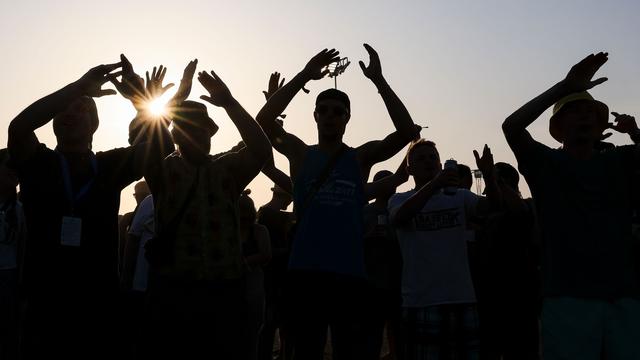
Youth party wants Highfield festival back in Thuringia
Translated from German, summarized and contextualized by DistantNews.
At a glance
News
Named sources
New plan
- The youth wing of Germany's CDU party, Junge Union Thüringen, wants the Highfield festival to return to its original home in Thuringia.
- The festival moved to Saxony in 2010 due to issues with trash and damage at the Hohenfelden reservoir site.
- Organizers announced a "creative pause" for 2027, citing high costs, leading to hopes for a potential return to Thuringia, which could boost local tourism and the economy.
The Junge Union (JU) Thüringen, the youth organization of the Christian Democratic Union (CDU) in the German state of Thuringia, is advocating for the return of the Highfield festival. The popular rock and pop music event was originally held at the Hohenfelden reservoir near Erfurt, Thuringia, from the late 1990s until 2010.
Highfield relocated to Störmthal Lake near Leipzig in Saxony after persistent problems with trash and damage at the Thuringian site. The festival's name itself originates from its founding location in Thuringia. The JU views the festival's departure as a significant loss for tourism and the regional economy, particularly for young people.
Recently, organizers Semmel Concerts and FKP Scorpio announced that the Highfield festival would hold its last event at the Störmthal Lake site this summer, citing unsustainable high costs. They declared a "creative pause" for 2027 to develop a new concept for the festival. This announcement has sparked optimism within the Junge Union.
Lennart Geibert, the state chairman of JU Thüringen, stated, "The opportunity for a return that has now arisen should be used to discuss the framework conditions for the festival location Thuringia." He proposed that discussions should take place between the festival organizers and the state government. Geibert believes that politics, culture, and local municipalities should collaborate to devise an economically viable concept that meets all requirements.
The Junge Union estimates that a festival could attract approximately 30,000 visitors annually, benefiting local businesses such as gastronomy, hotels, campsites, and retail. They hope that by returning to Thuringia, the festival can once again become a major cultural event for the region and provide a significant economic stimulus.
The opportunity for a return that has now arisen should be used to discuss the framework conditions for the festival location Thuringia.
DistantNews Editorial
Originally published by Die Zeit in German. Translated, summarized, and contextualized by our editorial team with added local perspective. Read our editorial standards.
More Stories
From Our Blog

What Gets Lost (and Found) When News Is Translated

How the Same Story Looks Different in Different Countries

The Critical Role of Diaspora Media in Global News

What Travellers Should Know About Countries with Restricted Press

A Digital Nomad's Guide to Following Local News
