


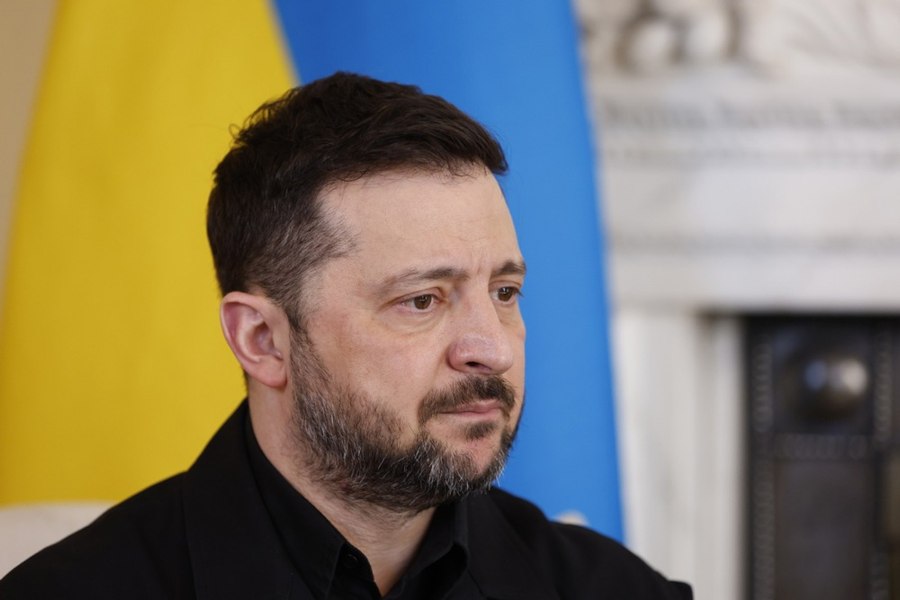
Zelenskyy signs law revoking Russian's protected status in Ukraine
Translated from Romanian, summarized and contextualized by DistantNews.
At a glance
News
From a news agency
New plan
- Ukrainian President Volodymyr Zelenskyy signed a law revoking Russian's protected language status in Ukraine.
- The law restricts the use of Russian in education and public services, reflecting a decline in its usage since the 2022 invasion.
- This move aligns with Ukraine's efforts to protect its linguistic space and fulfill European obligations, despite ongoing territorial occupation by Russia.
Ukrainian President Volodymyr Zelenskyy has enacted a new law that strips the Russian language of its protected status within Ukraine. This significant legislative change aims to safeguard Ukraine's linguistic landscape and uphold the country's European commitments, according to parliamentary speaker Ruslan Stefanchuk.
"The language of an aggressor state cannot benefit from protection tools designed to support the languages of indigenous peoples and national communities," Stefanchuk stated on Facebook, emphasizing "linguistic justice and security for Ukraine." The law effectively eliminates the special status previously afforded to Russian and permits limitations on its use in crucial areas such as education and public services.
The language of an aggressor state cannot benefit from protection tools designed to support the languages of indigenous peoples and national communities.
Surveys indicate a notable decrease in Russian language usage since the full-scale invasion began in 2022. Prior to the conflict, Russian was the primary language for approximately one-third of Ukrainians, particularly in the eastern and southern regions. However, the ongoing occupation of 19% of Ukrainian territory by Russia complicates the linguistic situation.
Disputes over the status of the Russian language have been a recurring point of tension, notably cited as a reason for the Moscow-backed separatist rebellion in eastern Ukraine starting in 2014. In a related development, Estonia announced last year a plan to phase out Russian as a language of instruction by 2030, treating it solely as a foreign language thereafter. Many native Russian speakers in Estonia support this reform, believing it will enhance educational and career opportunities for their children.
linguistic justice and security for Ukraine.
DistantNews Editorial
Originally published by Adevărul in Romanian. Translated, summarized, and contextualized by our editorial team with added local perspective. Read our editorial standards.
More Stories



From Our Blog

What Gets Lost (and Found) When News Is Translated

The Critical Role of Diaspora Media in Global News

What Travellers Should Know About Countries with Restricted Press

A Digital Nomad's Guide to Following Local News

How the Same Story Looks Different in Different Countries
