


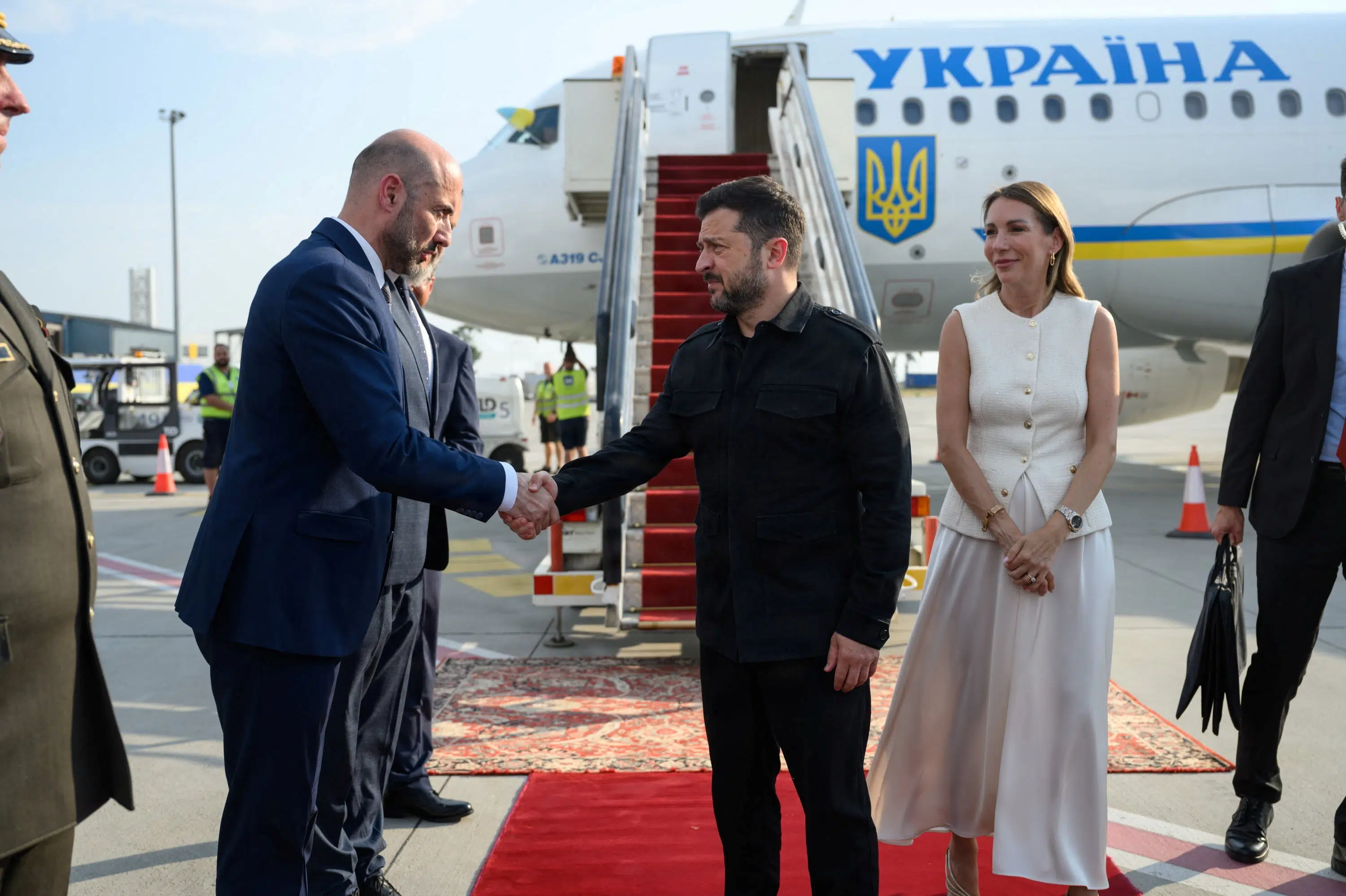
Zelenskyy visits Serbia, a country with close ties to Russia
Translated from Danish, summarized and contextualized by DistantNews.
At a glance
News
From a news agency
Context piece
- Ukrainian President Volodymyr Zelenskyy is visiting Serbia, a country with close ties to Russia.
- The visit, Zelenskyy's first to Serbia since becoming president, aims to discuss expanded economic ties, EU relations, and security.
- Serbia has historically maintained close relations with Russia, relying on its gas and refusing to impose sanctions, despite its EU membership aspirations.
Ukrainian President Volodymyr Zelenskyy arrived in Serbia on Friday for his first visit since taking office, a trip that a senior Ukrainian official described as a "slap in the face to the Russians." Serbia is one of the few European nations maintaining close ties with Moscow.
Zelenskyy met with Serbian President Aleksandar Vucic for dinner on Friday and is scheduled for further discussions on Saturday at the presidential palace. On the social platform X, Zelenskyy stated the talks are "extremely important" and will cover expanded economic relations, EU integration, and security.
The Ukrainian president has been on a global tour seeking support following Russia's 2022 invasion. Serbia, however, has navigated a delicate balance with its historical ally, Russia, relying on cheap gas and resisting EU-backed sanctions. This stance has caused friction with the EU, which Serbia aims to join.
Despite the close political and cultural ties, the relationship with Russia is not without its issues. Moscow has accused Serbian companies of selling ammunition to Ukraine, claims Vucic has repeatedly denied. While Serbia has provided non-military aid to Ukraine and Vucic has engaged in regional summits and visited Kyiv, he has not formally endorsed Ukraine's war effort against Russia. Zelenskyy and Vucic are expected to hold a joint press conference on Saturday.
We must discuss expanded economic relations between our countries, relations with the EU, other areas that can benefit our countries, and security.
DistantNews Editorial
Originally published by Berlingske in Danish. Translated, summarized, and contextualized by our editorial team with added local perspective. Read our editorial standards.
More Stories

From Our Blog

What Gets Lost (and Found) When News Is Translated

The Critical Role of Diaspora Media in Global News

What Travellers Should Know About Countries with Restricted Press

A Digital Nomad's Guide to Following Local News

How the Same Story Looks Different in Different Countries
