


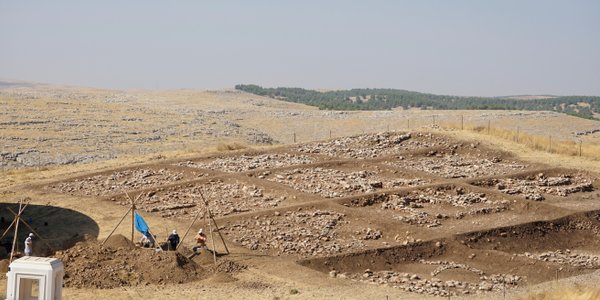
11,000-year-old houses discovered at Turkey's Göbekli Tepe
Translated from Polish, summarized and contextualized by DistantNews.
At a glance
News
Sources not specified
Context piece
- Archaeologists discovered houses dating back 11,000 years near the UNESCO World Heritage site of Göbekli Tepe in Turkey.
- The newly found structures, located just below the surface, are believed to have served as residential homes, indicating Göbekli Tepe was more than just a ritual site.
- Excavations in the area, cleared of olive trees, aim to reveal more about the settlement's layout and the daily lives of its inhabitants.
Archaeologists have unearthed 11,000-year-old houses at Göbekli Tepe, a significant archaeological site in Turkey.
These newly discovered buildings lie just beneath the surface, north of the main protected area. Professor Necmi Karul, the project coordinator, explained that the excavation of this new area began this season as part of the "Heritage for the Future" project. Olive trees that previously grew in the area were relocated, allowing for the archaeological study of approximately 1,500 square meters.
Excavations proceeded from one end of the area northward, quickly revealing rectangular structures associated with the second phase of settlement at Göbekli Tepe. Because the remains were close to the surface, archaeologists gained a swift initial understanding of the buildings' layout and their arrangement within the settlement. Karul noted that erosion had worn away the upper parts of the walls, but the olive trees did not cause significant damage to the archaeological remains.
This year, we plan to remove the surface layer across the entire area and expose the structural remains directly beneath it.
"This year, we plan to remove the surface layer across the entire area and expose the structural remains directly beneath it," Karul stated. Similar rectangular structures found previously at GT1 share some characteristics with these new buildings. Initial observations suggest a reduced use of standing stone pillars within these structures, with fewer appearing inside the buildings. Their internal layout also seems more consistent with a residential function.
Karul emphasized that the buildings' purpose cannot be solely determined by their walls. Soil samples from inside the structures, particularly from floor levels, are expected to provide more information about how these spaces were used. "Our initial impression is that they served as residential homes," he said. Previous excavations at Göbekli Tepe had already uncovered houses alongside public buildings, suggesting the site was not solely for communal or ritual activities but also a settlement where people lived.
Our initial impression is that they served as residential homes.
DistantNews Editorial
Originally published by Rzeczpospolita in Polish. Translated, summarized, and contextualized by our editorial team with added local perspective. Read our editorial standards.
More Stories



From Our Blog

What Gets Lost (and Found) When News Is Translated

The Critical Role of Diaspora Media in Global News

What Travellers Should Know About Countries with Restricted Press

A Digital Nomad's Guide to Following Local News

How the Same Story Looks Different in Different Countries
