

11,000-year-old stone rider discovered in Turkey
Translated from Polish and summarized by DistantNews. Read the original for the full story.
At a glance
News
Official statement
Context piece
- Archaeologists discovered an 11,000-year-old stone sculpture of a human riding a leopard at the Karahan Tepe prehistoric site in Turkey.
- The 70-centimeter-tall sculpture was found during excavations and is considered a unique composite style.
- The discovery at Karahan Tepe, part of the "Stone Hills" region near Göbekli Tepe, offers new insights into early Neolithic societies and their complex social and ritual practices.
An 11,000-year-old stone sculpture depicting a human figure seated on a leopard has been unearthed at Karahan Tepe, a prehistoric site in Turkey's southeastern region. The discovery, announced by Culture and Tourism Minister Mehmet Nuri Ersoy, is a "composite sculpture" of a style previously unseen at the site.
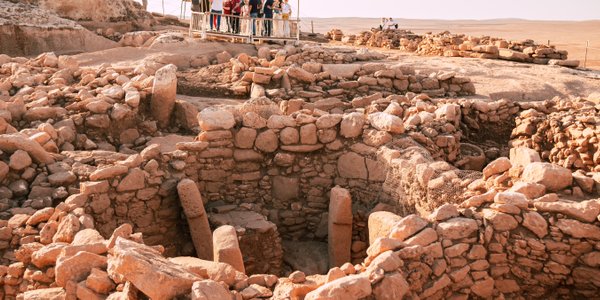
The 70-centimeter-tall artwork was found during this year's excavations at Karahan Tepe, located near Şanlıurfa. It was discovered on a bench running along the wall of a building approximately 3 meters in diameter, with a floor paved with flat stones. This find is part of the "Future Heritage" project, which aims to expand archaeological research and conservation efforts across Turkey.
Karahan Tepe is part of the "Stone Hills" (Tas Tepeler) region, a cluster of prehistoric sites near the more famous Göbekli Tepe. These sites date back to the Neolithic period, over 10,000 years ago, a time when communities transitioned from nomadic hunter-gatherer lifestyles to more settled forms of existence. The monumental stone structures, sculptures, and other remains provide evidence of complex social and ritual practices long before the advent of cities and writing.
Excavations at Karahan Tepe, which began in 2019, have revealed monumental structures, human and animal depictions, and other remains dating to the same period as Göbekli Tepe. Minister Ersoy stated that the discovery "opens the door to new questions about the earliest periods of human history" and will have a broad impact on the scientific community.
The discovery opens the door to new questions about the earliest periods of human history and will have a broad impact on the scientific community.
About this summary
Originally published by Rzeczpospolita in Polish. Translated, summarized, and contextualized automatically by DistantNews, with a note on how the source frames the story. Not individually reviewed before publishing. How this works.
More Stories



From Our Blog

What Gets Lost (and Found) When News Is Translated

The Critical Role of Diaspora Media in Global News

What Travellers Should Know About Countries with Restricted Press

A Digital Nomad's Guide to Following Local News

How the Same Story Looks Different in Different Countries
