

14-year-old boy with rare brain disease avoids 'birthday syndrome' after complex surgery
Translated from Vietnamese, summarized and contextualized by DistantNews.
At a glance
News
Sources not specified
Outcome reported
- A 14-year-old boy with a rare brain white matter disease underwent a successful complex surgery.
- The condition caused severe hip joint contractures and mobility issues, potentially requiring yearly surgeries.
- Doctors performed a single, nine-hour operation to correct multiple joint contractures and hip dislocations, preventing future repeated surgeries.
Doctors at the Ho Chi Minh City Orthopedic Trauma Hospital have successfully treated a rare case of a 14-year-old boy suffering from a brain white matter disease that severely impacted his mobility. The condition had led to significant contractures in his lower limbs, particularly affecting his hip joints and making walking impossible.
This is a severe condition of brain white matter disease, causing contractures in almost all lower limb joints.
Diagnosed eight years ago, the boy experienced progressively worsening hip pain, especially at night, leading to severe limitations in his daily life. Upon admission, doctors noted extensive contractures in both leg joints. X-rays revealed bilateral hip dislocations, with the angle between the femoral neck and shaft reaching 150 degrees.
The doctors devised a plan for a one-time surgery to resolve it completely.
This severe form of the disease caused near-total contracture of the lower limb joints. The hip joints were flexed and adducted, the knees were flexed, and the ankles were in plantar flexion, rendering the patient unable to walk and causing difficulties with personal hygiene. The contractures around the hip joints led to dislocations, while the acetabulum became dysplastic, shallow, and narrow.
Performing multiple joint interventions in a single surgery helps balance the motor system and prevents the patient from undergoing multiple surgeries in the following years.
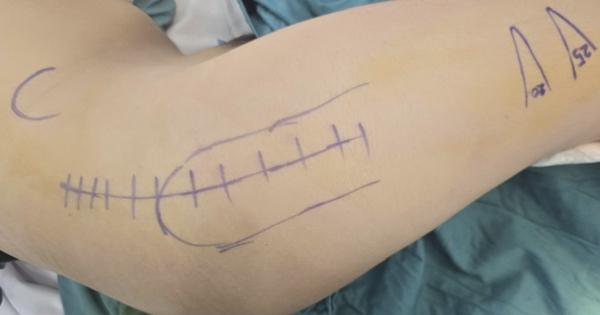
To address this complex situation, surgeons opted for a single, comprehensive operation lasting approximately nine hours. The team released contracted tendons and muscles, including the hip adductors, hamstring group, and calf muscles. They then performed a closed reduction and reconstruction of the right hip using a modified Colonna procedure. This involved correcting the femoral neck-acetabular alignment, widening and deepening the socket, and suturing the joint capsule before repositioning the femoral head. Post-operative X-rays confirmed the successful reduction of the right hip joint. After two weeks, the condition remained stable, and after one month, bone healing was progressing with the right hip dislocation resolved. This single intervention successfully resolved the hip dislocation and prevented the need for repeated surgeries, a scenario described as the 'birthday syndrome' where patients require annual operations.
If the treatment is divided, the child may have to be hospitalized many times to have each joint treated one by one, also known as the 'birthday syndrome' - having to have surgery on one joint every year.
DistantNews Editorial
Originally published by Thanh Niên in Vietnamese. Translated, summarized, and contextualized by our editorial team with added local perspective. Read our editorial standards.
More Stories


From Our Blog

What Gets Lost (and Found) When News Is Translated

The Critical Role of Diaspora Media in Global News

What Travellers Should Know About Countries with Restricted Press

A Digital Nomad's Guide to Following Local News

How the Same Story Looks Different in Different Countries
