


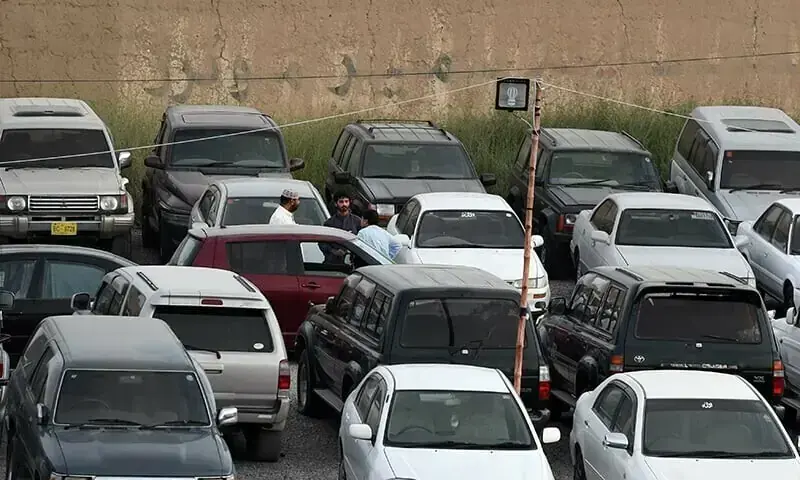
15,000 used cars get clearance window
Summarized and contextualized by DistantNews.
At a glance
News
Official statement
New plan
- Pakistan's Ministry of Commerce has introduced clarifications and a conditional waiver for used vehicles imported under Gift and Transfer of Residence schemes.
- The move aims to resolve clearance logjams at ports but has drawn criticism from the local automotive industry concerned about fiscal and safety risks.
- An estimated 15,000 vehicles are expected under this waiver, with local assemblers fearing significant financial losses and potential safety hazards.
Pakistan's Ministry of Commerce has issued directives to streamline the clearance of used vehicles imported under the Gift and Transfer of Residence schemes. These measures include structural clarifications and a selective, conditional waiver, intended to alleviate significant clearance backlogs at the country's ports.
However, these decisions have ignited strong criticism from the local automotive industry. Manufacturers warn of severe fiscal repercussions and potential safety risks associated with the policy adjustments. The ministry's official memorandum specifically addresses the validity of Pre-Shipment Inspection (PSI) certificates, announcing that those issued by EAA Company (Pvt) Ltd and Auto Terminal Pak (Pvt) Ltd, through their foreign principals in Japan, are now fully acceptable, provided they are registered with the Pakistan Standards and Quality Control Authority (PSQCA).
The federal government announced that certificates issued by EAA Company (Pvt) Ltd and Auto Terminal Pak (Pvt) Ltd through their foreign principals in Japan are fully acceptable.
To mitigate fraud, the Federal Board of Revenue (FBR) and customs authorities are mandated to verify these certificates directly with the local offices of the inspection firms, which will bear full legal liability for their declarations. These local entities must also certify that the imported vehicles strictly adhere to global environmental, safety, and quality standards.
To prevent fraudulent filings, the Federal Board of Revenue (FBR) and customs authorities must verify the certificates directly with the local offices of these inspection firms, which will carry full legal liability for the declarations.
Concurrently, a statutory notification grants a one-time waiver for vehicles shipped under a Master Bill of Lading between January 16 and March 9, 2026, bypassing the initial pre-shipment inspection requirement. Crucially, this is not a blanket amnesty. Customs officials are prohibited from clearing vehicles graded below "Average" (Grade 3) or those with accident repairs (Grade R, RA) on their Japanese auction sheets, aiming to prevent the entry of hazardous or structurally compromised cars.
Despite these safeguards, the local automotive sector views the adjustment as an ad hoc policy shift undermining the domestic manufacturing base. Industry sources estimate that approximately 15,000 vehicles could arrive under this exemption, a volume comparable to a major local manufacturer's annual sales. Representatives argue that the waiver bypasses established safety and environmental standards, potentially exposing Pakistani consumers to risks. Experts predict the influx could drain $180 million from the national exchequer and cause losses of Rs22 billion for local auto parts manufacturers, alongside an Rs8 billion deficit in government tax revenue.
Customs officials are strictly prohibited from clearing any cars graded on Japanese auction sheets as Below Average (Grade 3), Poor Condition (Grade 2), Repaired Accident (Grade R), or Minor Accident Repair (Grade RA).
DistantNews Editorial
Originally published by Dawn. Summarized and contextualized by our editorial team with added local perspective. Read our editorial standards.
More Stories


From Our Blog

What Gets Lost (and Found) When News Is Translated

The Critical Role of Diaspora Media in Global News

What Travellers Should Know About Countries with Restricted Press

A Digital Nomad's Guide to Following Local News

How the Same Story Looks Different in Different Countries
