

1938 World Cup: Football's brilliance in France, before the war's darkness descended
Translated from Greek, summarized and contextualized by DistantNews.
At a glance
In-depth
Sources not specified
Context piece
- The 1938 FIFA World Cup in France was the last major football celebration before World War II disrupted global events for 12 years.
- The tournament faced boycotts from South American nations Argentina and Uruguay, and Austria's team was dissolved after Nazi Germany's annexation.
- Despite political turmoil, the event showcased football's appeal, though its star player Matthias Sindelar refused to play for Nazi Germany.
The 1938 FIFA World Cup in France stands as a poignant farewell to an era of global football before the world plunged into war. It was the final major tournament before a 12-year hiatus, overshadowed by the escalating political tensions across Europe.
The 1938 World Cup was the last major football celebration before the world changed forever.
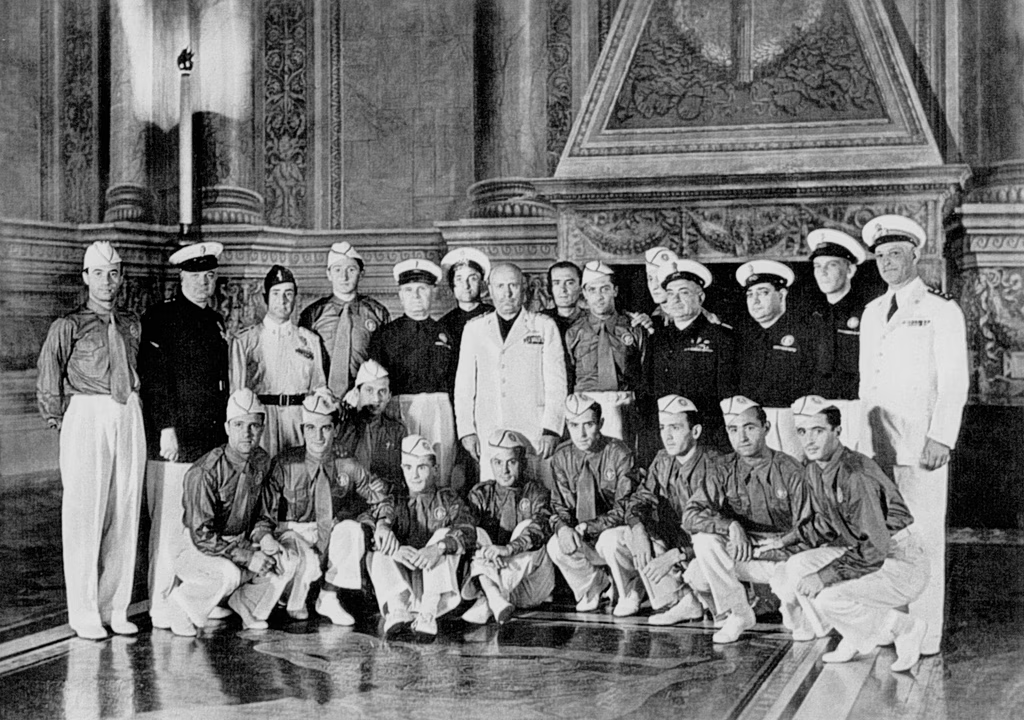
Adolf Hitler's expansionist Germany and Benito Mussolini's Italy, using sports for propaganda, created a volatile backdrop. Amidst this, FIFA attempted to shield football from politics. However, the tournament was significantly impacted by international disputes. South American powerhouses Argentina and Uruguay boycotted the event, protesting France's selection as host over them.
Further complicating matters, Spain was unable to participate due to its ongoing civil war. The most dramatic disruption came in March 1938, when Nazi Germany annexed Austria. The celebrated Austrian "Wunderteam" was forcibly merged with the German squad, leading to Austria's withdrawal. The combined team was eliminated in its first match against Switzerland, a shocking upset.
The Austrian team was not just any national team. It was the famous Wunderteam, one of the top teams in the world in the early 1930s, known for its attacking and spectacular football.
One of the most compelling stories of this period belongs to Matthias Sindelar, an Austrian-born player considered by many to be Europe's finest before the era of Pelé and Di Stéfano. Known as "The Mozart of Football," Sindelar's personal defiance against playing for Nazi Germany added a deeply human element to the geopolitical drama surrounding the tournament.
For many, he was the best footballer in Europe before Pelé and Di Stéfano appeared. The 'Mozart of Football'.
DistantNews Editorial
Originally published by Ta Nea in Greek. Translated, summarized, and contextualized by our editorial team with added local perspective. Read our editorial standards.
More Stories

From Our Blog

What Gets Lost (and Found) When News Is Translated

The Critical Role of Diaspora Media in Global News

What Travellers Should Know About Countries with Restricted Press

A Digital Nomad's Guide to Following Local News

How the Same Story Looks Different in Different Countries
