


'2,300-Year-Old Alcohol Still Intact?' Bronze Pot Found in Tomb Near Great Wall
Translated from Korean, summarized and contextualized by DistantNews.
At a glance
In-depth
Sources not specified
Context piece
- Archaeologists in China discovered a bronze vessel containing approximately 3.74 liters of a grain-based alcoholic beverage, estimated to be 2,300 years old.
- The liquid, found near the Great Wall in the Ningxia Hui Autonomous Region, was identified as a fermented grain drink made from millet, wheat, and barley.
- This discovery provides significant insights into the ancient Chinese brewing techniques and the dietary culture of the Qin Dynasty in the region.
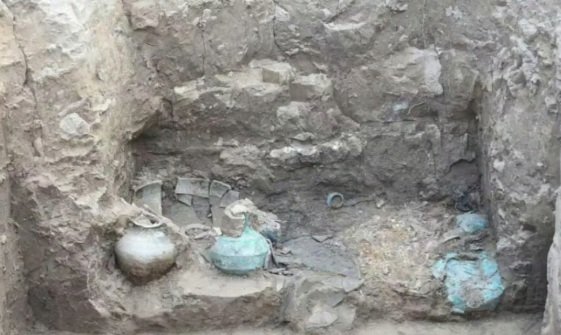
An extraordinary discovery near China's Great Wall has revealed a bronze vessel holding about 3.74 liters of a grain-based alcoholic beverage, believed to be 2,300 years old. The find was made in the Sanjiaba Cemetery in the Ningxia Hui Autonomous Region, an area associated with the Qin Dynasty during the Warring States period.
The distribution of organic acids is similar to that of artificially aged Huangjiu.
The sealed bronze pot, characterized by its garlic-head-shaped opening, was found in Tomb No. 39. Archaeologists from the Ningxia Cultural Heritage and Archaeology Research Institute, who began excavations in March of the previous year, identified 183 tombs in the area, with 179 linked to Qin Dynasty culture. Researchers suggest this cemetery may have served soldiers and residents stationed at fortifications along the Great Wall at the time.
The vessel was ingeniously sealed using a double-layer method: an inner lining of fabric covered by an outer layer of organic clay. This meticulous sealing preserved a substantial amount of liquid within the container for over two millennia. Analysis of the liquid identified 24 compounds, including organic acids, amino acids, and carbohydrates. The distribution of organic acids closely resembled that of artificially aged Huangjiu, a type of Chinese rice wine, confirming it as a fermented grain beverage rather than a fruit wine.
Over 92% of the total starch came from millet.
Further analysis of starch residues indicated that over 92% of the starch originated from millet, with the remainder coming from wheat and barley. Millet, a grain requiring little water and cultivated in northern China for over 10,000 years, was evidently a key ingredient in ancient Qin Dynasty brewing. This finding is considered a crucial piece of archaeological evidence showcasing the brewing technology of the Ningxia region during the Warring States period. The research has been published in the Journal of Archaeological Science.
This finding is considered an important archaeological material that shows the brewing technology of the Ningxia region during the Warring States period.
DistantNews Editorial
Originally published by Dong-A Ilbo in Korean. Translated, summarized, and contextualized by our editorial team with added local perspective. Read our editorial standards.
More Stories


From Our Blog

What Gets Lost (and Found) When News Is Translated

The Critical Role of Diaspora Media in Global News

What Travellers Should Know About Countries with Restricted Press

A Digital Nomad's Guide to Following Local News

How the Same Story Looks Different in Different Countries
