


2,300-Year-Old Tombs Found in Çorum: 'We Found the Best So Far'
Translated from Turkish, summarized and contextualized by DistantNews.
At a glance
In-depth
Sources not specified
Context piece
- Archaeologists in Turkey's Hattusa Ancient City have discovered a new cemetery dating back to the Early Hellenistic and Galatian periods.
- One of the three unearthed tombs is exceptionally well-preserved, containing an intact skeleton and a knife, exciting researchers.
- This find offers valuable insights into the burial rituals of the era and the region's history, with ongoing analysis to understand the significance of the artifacts.
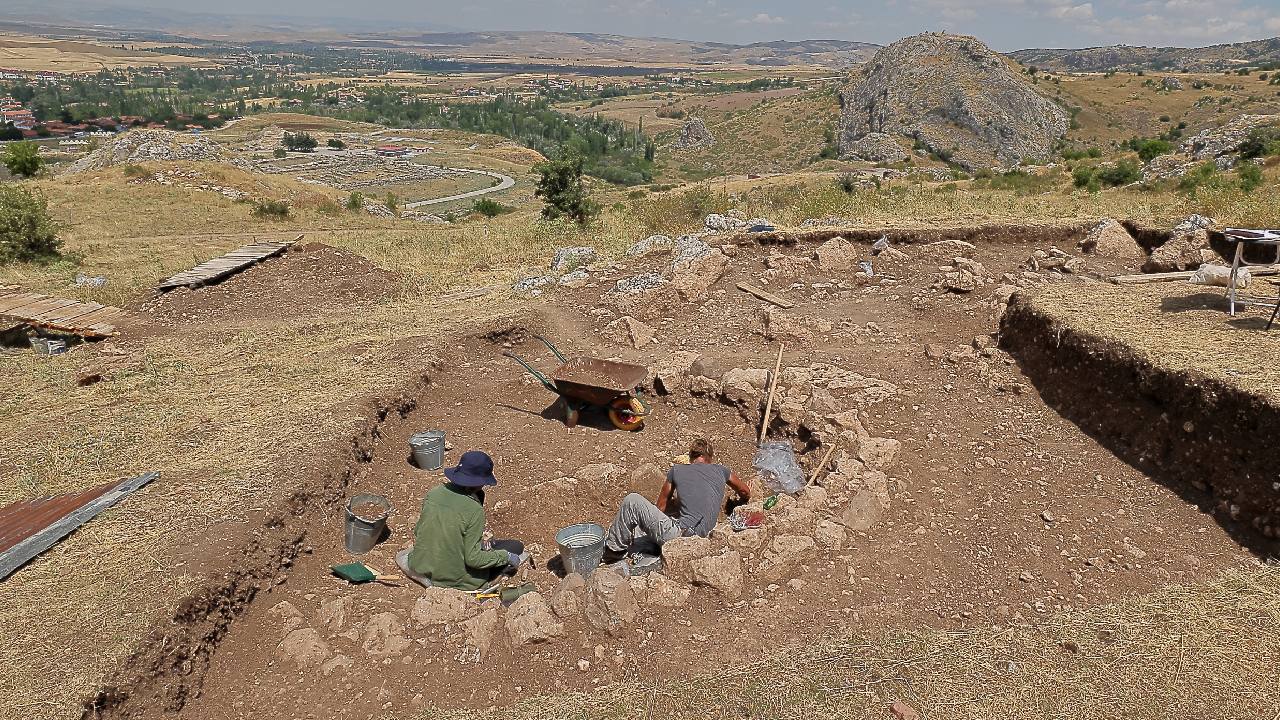
An archaeological dig in Turkey's ancient Hattusa city has unearthed a significant new cemetery, offering a rare glimpse into burial practices from the Early Hellenistic and Galatian periods, roughly the late 4th and 3rd centuries BCE. The site, located southwest of the modern city of Çorum, is part of ongoing excavations at Hattusa, a UNESCO World Heritage site that served as the capital of the Hittite civilization for approximately 450 years.
We have found the best of these tombs so far.
Led by Prof. Dr. Andreas Schachner, the current excavation season is focusing on five different points within the ancient city. On the Northwest Slope, the team discovered a cemetery containing three tombs. One of these tombs has particularly excited the researchers due to its excellent state of preservation. It features well-maintained architectural elements and contains an intact skeleton.
Adding to the intrigue, a knife was found near the skeleton's right shoulder. Researchers are investigating whether this was a grave good, an item intentionally buried with the deceased, or a personal possession. The tomb itself is circular, surrounded by a stone wall approximately 7 meters in diameter, and is large enough to hold an adult individual. This discovery is considered valuable for understanding the detailed burial rituals of the period.
This tomb is a stone sarcophagus. This is very common in this region. But the circle is very well preserved in this new tomb we found.
"We have found the best of these tombs so far," stated Prof. Dr. Schachner. He noted that while other tombs in the area have yielded artifacts like coins and cosmetic sets, the knife in this particular burial is unique. The tomb is a stone sarcophagus, common in the region, but its exceptional preservation sets it apart. The team is working to fully excavate and analyze the findings to determine the individual's identity and the precise meaning of the knife, potentially indicating if the individual was male, as previous burials were predominantly female.
A knife is lying on the right shoulder of this individual in the new tomb we found. We don't know the exact meaning yet. It could be a grave good or an item buried with the dead.
DistantNews Editorial
Originally published by Cumhuriyet in Turkish. Translated, summarized, and contextualized by our editorial team with added local perspective. Read our editorial standards.
More Stories

From Our Blog

What Gets Lost (and Found) When News Is Translated

The Critical Role of Diaspora Media in Global News

What Travellers Should Know About Countries with Restricted Press

A Digital Nomad's Guide to Following Local News

How the Same Story Looks Different in Different Countries
