


2.5㎞ flight hits target... US Marines reveal first kamikaze drone live-fire on Korean Peninsula
Translated from Korean, summarized and contextualized by DistantNews.
At a glance
News
Named sources
Context piece
- The U.S. Marine Corps conducted its first live-fire exercise of FPV attack drones on the Korean Peninsula.
- The drones, named "Neros Archer," successfully hit targets approximately 2.5 kilometers away using a "hit-to-kill" method.
- The exercise aimed to enhance operational capabilities for potential deployment in Korea.
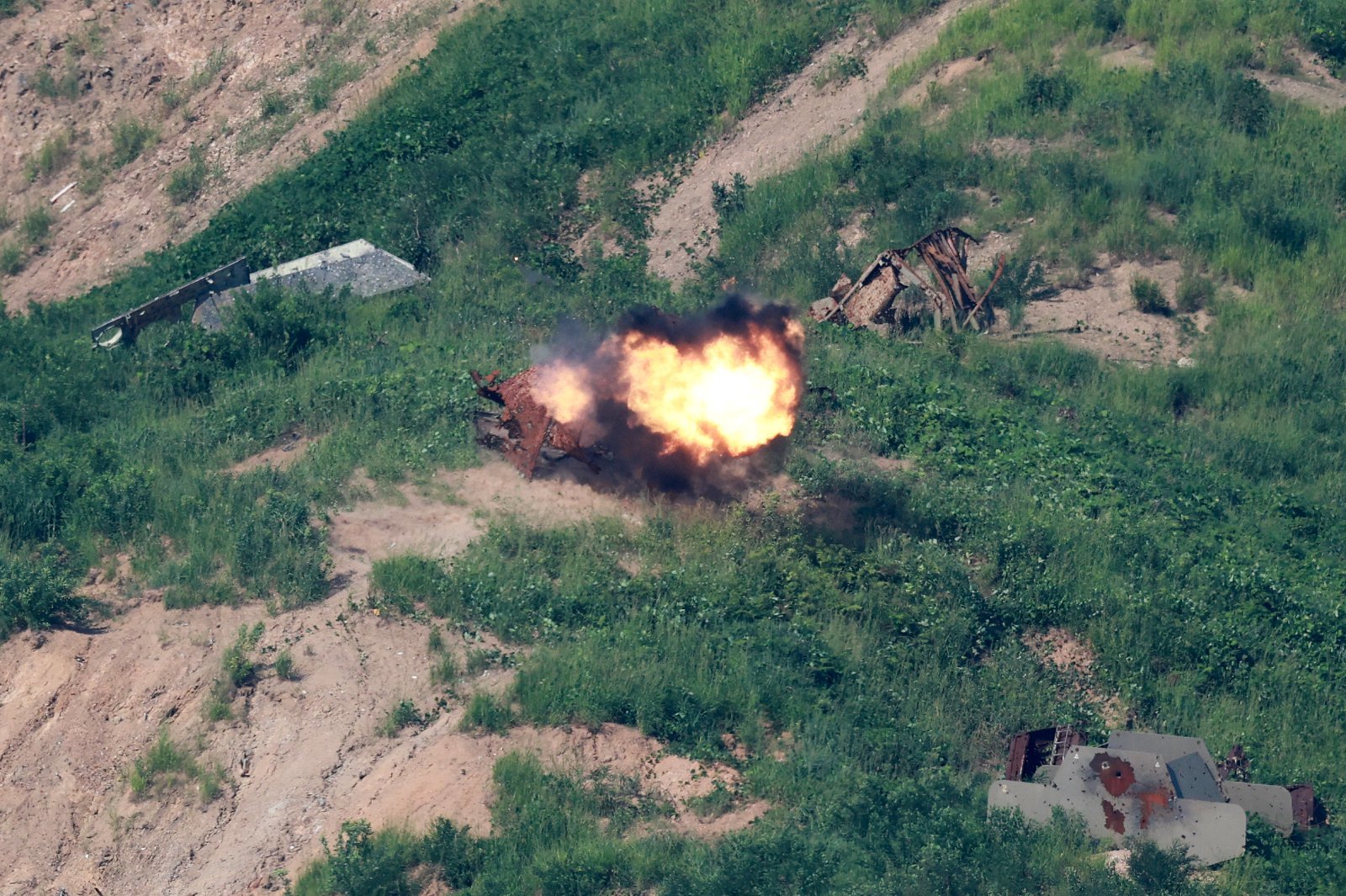
In a significant display of military capability, the U.S. Marine Corps has conducted its first live-fire exercise of First-Person View (FPV) attack drones on the Korean Peninsula. The training, held in Pocheon, Gyeonggi Province, showcased the precision and effectiveness of these unmanned aerial vehicles.
During the exercise on August 5th, U.S. Marines from the 3rd Marine Division, 7th Regiment, operated the "Neros Archer" quadcopter drones. These "kamikaze" drones, equipped with explosives, successfully struck targets up to 2.5 kilometers away. The "hit-to-kill" method allowed for real-time, precision guidance via cameras mounted on the drones until the moment of impact.
Each drone, costing around 7 million won, has a maximum range of 25 kilometers and can carry a 3-kilogram payload, capable of engaging anti-tank, anti-material, and personnel targets. The U.S. military views these drones as a crucial weapon system that extends the engagement range for infantry squads and platoons far beyond that of conventional mortars.
The core of everything is (U.S.-ROK) combined readiness. The fact that the U.S. Marines can demonstrate these capabilities directly on the ground in the terrain of the Korean Peninsula, where they may be deployed in the future, is a great opportunity.
Brigadier General Peter Knecht, Deputy Commander of U.S. Marine Corps Forces Korea, highlighted the importance of the exercise. "The core of everything is (U.S.-ROK) combined readiness," he stated, emphasizing that demonstrating these capabilities in the terrain of the Korean Peninsula, where they could be deployed, is a valuable opportunity.
The training involved personnel temporarily deployed from the 3rd Marine Division, aiming to bolster operational readiness should U.S. Marines be deployed to the peninsula during a contingency. Despite extreme heat, the exercise proceeded as planned, providing valuable experience in operating under challenging environmental conditions specific to Korea.
The weather on the battlefield does not go according to our will. Experiencing firsthand not only Korea's unique terrain but also the high temperatures and humidity of Korean summers and the severe cold of winters is a precious opportunity.
DistantNews Editorial
Originally published by Dong-A Ilbo in Korean. Translated, summarized, and contextualized by our editorial team with added local perspective. Read our editorial standards.
More Stories

From Our Blog

What Gets Lost (and Found) When News Is Translated

The Critical Role of Diaspora Media in Global News

What Travellers Should Know About Countries with Restricted Press

A Digital Nomad's Guide to Following Local News

How the Same Story Looks Different in Different Countries
