


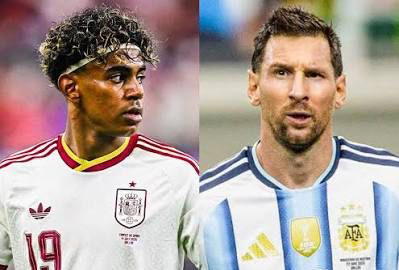
2026 World Cup Final: Messi vs Yamal, the Sorcerer and the Apprentice, heralds the end of football's romantic era
Translated from English, summarized and contextualized by DistantNews.
At a glance
Analysis
Named sources
Context piece
- The 2026 FIFA World Cup final is framed as a symbolic end to football's romantic era, dominated by institutional power over individual genius.
- Mandatory hydration breaks and extended halftime spectacles are cited as examples of the sport's "Americanization" and optimization for commercial interests.
- The article argues that global talent now feeds into established academies, diminishing the underdog's narrative and the unpredictable beauty of the game.
The 2026 FIFA World Cup final is not just a match; it represents a profound shift, a "funeral for the game as we knew it." This transformation, masked as progress and common sense, marks the end of an era where football's magic stemmed from the unpredictable genius of individuals from humble backgrounds. The World Cup, once a refuge for romantics, built on the "absurd, beautiful idea" that raw talent could alter history, has succumbed to a new reality.
The 2026 FIFA World Cup final on July 19th is not merely a match; it is a funeral for the game as we knew it.
This year's tournament has showcased a "forced evolution" of the sport, where its very heartbeat has become negotiable. Mandatory hydration breaks, defended as medical necessities, now serve as tactical resets and commercial windows, turning matches into products optimized for advertising rather than organic sporting contests. The planned 30-minute halftime spectacle further prioritizes broadcast revenue over player welfare, bypassing traditional regulations.
For nearly a century, the World Cup was the last refuge of the romantic, a global mythology built on the absurd, beautiful idea that a child from a dusty street in Rosario, Lagos, or Manchester could, through pure, organic genius, bend the arc of history.
The established order of footballing power has not shifted but "calcified." For decades, the World Cup trophy has remained within Europe and South America, and the 2026 tournament proves this is no longer solely about talent but "machinery." The world's richest talent pools are increasingly absorbed into the highly professionalized, data-driven infrastructure of traditional powerhouses, signifying the victory of "institutional hegemony over the romantic dream of the underdog."
When we watch a game interrupted by corporate mandates, we are no longer watching a sport, we are watching a product optimized for advertisement, governed by the clock rather than the pulse of the crowd.
At the center of this paradigm shift are Lionel Messi, the "Sorcerer," and Lamine Yamal, the "Apprentice." Their narrative, symbolized by a 2007 photo of a young Messi with an infant Yamal, tragically encapsulates this moment. The raw, unpredictable genius that once defined football is now quickly molded by institutions designed to eliminate randomness before it reaches the grand stage, signaling the quiet end of an old age for the sport.
The world watched for a breakthrough from other regions, yet we are witnessing the total absorption of global talent into the highly professionalized, data gorged infrastructure of the traditional powers.
DistantNews Editorial
Originally published by Vanguard in English. Translated, summarized, and contextualized by our editorial team with added local perspective. Read our editorial standards.
More Stories



From Our Blog

How the Same Story Looks Different in Different Countries

What Gets Lost (and Found) When News Is Translated

The Critical Role of Diaspora Media in Global News

What Travellers Should Know About Countries with Restricted Press

A Digital Nomad's Guide to Following Local News
