

2026 World Cup: The green rectangle tested by geopolitics
Translated from French, summarized and contextualized by DistantNews.
At a glance
News
Sources not specified
New plan
- The 2026 World Cup kicks off June 11 in Los Angeles, featuring an expanded 48-team format across the United States, Mexico, and Canada.
- African nations, with ten slots, aim to challenge established powers like Argentina, Brazil, and France, building on Morocco's 2022 semifinal run.
- The tournament faces geopolitical undercurrents alongside the usual fervor, with debates surrounding the competition's scale.
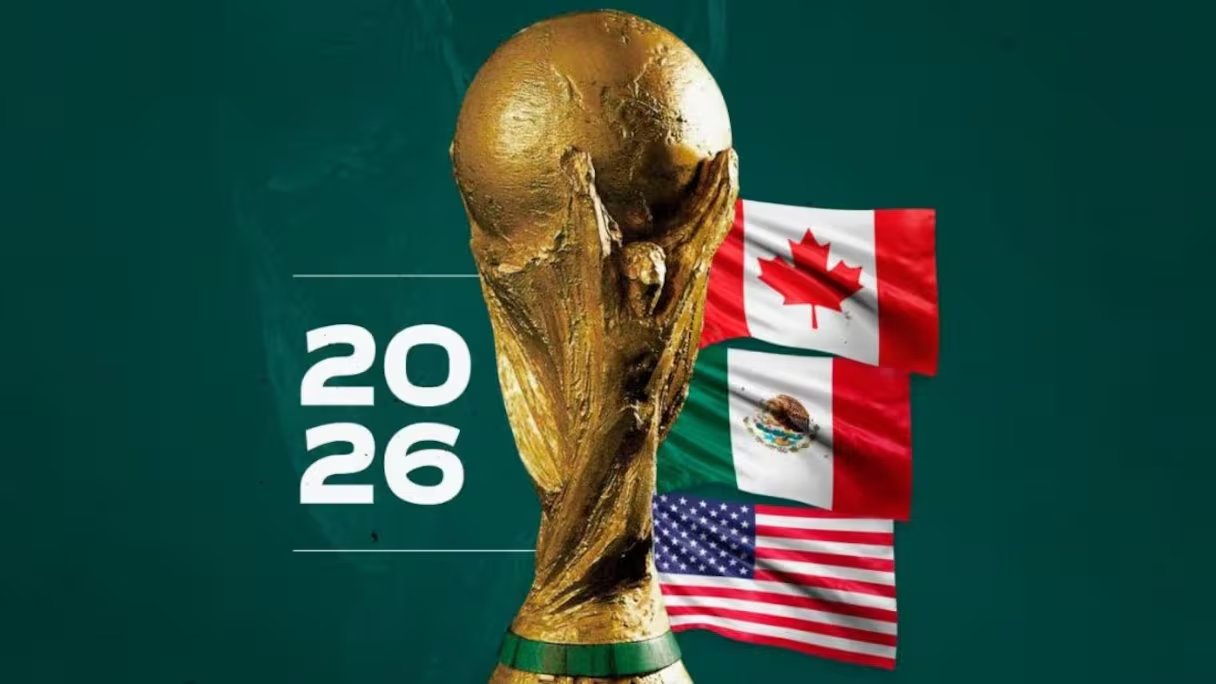
The 23rd edition of the FIFA World Cup commences on June 11, 2026, in Los Angeles, USA, blending popular enthusiasm with the characteristic extravagance of the world's most watched sport. The opening match will pit Mexico against South Africa under the lights of a colossal stadium transformed into a football cathedral. For a month, this global sporting event will capture the world's attention. This year marks a historic expansion, with the tournament spread across a continent for the first time. Forty-eight teams will compete across sixteen venues in the United States, Mexico, and Canada. This expansion significantly increases representation, particularly for Africa, which now has ten slots, moving from a supporting role to a potentially decisive one in challenging the established order. Traditional powerhouses like titleholder Argentina, Brazil, and France are present with their usual ambitions and talented squads. Germany, Spain, and England also aim to recapture past glories. However, several outsiders are poised to capitalize on any opportunities. African teams, in particular, are ambitious. Building on Morocco's groundbreaking semifinal appearance in 2022, nations like Senegal, Ivory Coast, Nigeria, Cameroon, Algeria, and Egypt harbor aspirations beyond mere participation. The increased number of African teams presents a significant challenge. World Cups are won not just with talent, but with collective mastery, experience, and pressure resilience. With ten places available, Africa is positioned to be more than a participant; it aims to be a key player capable of disrupting the established hierarchy. The continent is no longer content to merely witness history; it intends to help write it. Even before the first whistle, controversies, as is customary, are already on the field. Some critics denounce the hypertrophic nature of a competition that has grown significantly in scale, raising questions about its impact and reach.
DistantNews Editorial
Originally published by Le Pays in French. Translated, summarized, and contextualized by our editorial team with added local perspective. Read our editorial standards.
More Stories
From Our Blog

What Gets Lost (and Found) When News Is Translated

The Critical Role of Diaspora Media in Global News

What Travellers Should Know About Countries with Restricted Press

A Digital Nomad's Guide to Following Local News

How the Same Story Looks Different in Different Countries
