

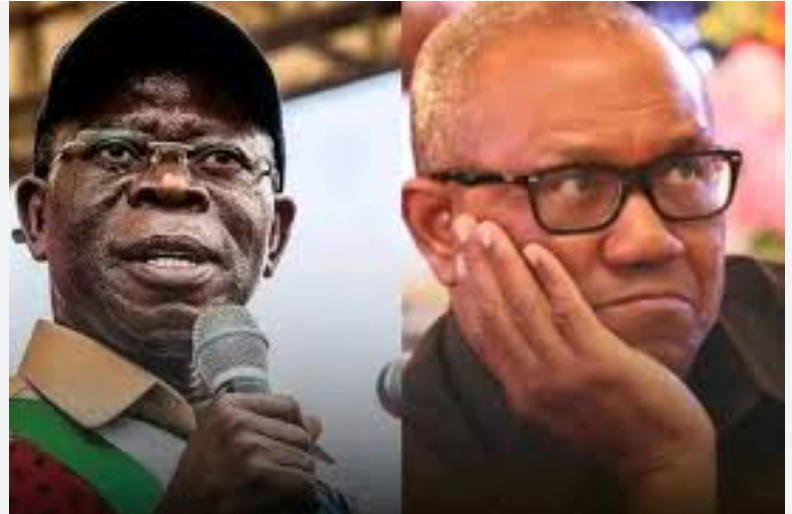

2027: Oshiomhole dismisses Peter Obi’s threat, says public anger drove 2023 votes
Summarized and contextualized by DistantNews.
At a glance
News
Named sources
Context piece
- Senator Adams Oshiomhole dismissed Peter Obi as a significant threat for the 2027 elections, attributing Obi's 2023 success to public anger over economic policies.
- Oshiomhole argued that the naira redesign and fuel scarcity under the previous administration created widespread voter dissatisfaction that benefited Obi.
- He stated that the anger over cash shortages and economic hardship, not Obi's political strength, drove the 2023 election results.
Senator Adams Oshiomhole has dismissed suggestions that Peter Obi poses a significant threat to the ruling All Progressives Congress in the 2027 general election. Oshiomhole, who represents Edo North, argued that Obi's strong performance in the 2023 presidential election was fueled by public anger over the economic policies of the previous administration.
No, not at all, not at all. Obi was produced by an unusual situation when a ruling party decided to destroy itself, making anybody running on its platform almost unelectable. It was that confusion that produced those votes.
Appearing on TVC News, the former Edo State Governor stated that Obi emerged from an "unusual situation" rather than personal political strength. He explained that the ruling party's self-inflicted issues made any candidate on its platform almost unelectable, creating confusion that benefited Obi.
Oshiomhole attributed the widespread voter dissatisfaction to the cash crunch caused by the naira redesign policy and preceding fuel scarcity. He recalled Nigerians queuing overnight at ATMs for small amounts of cash and facing high charges from Point of Sale operators.
People had money in the bank but couldn’t access it. They queued all night at ATM machines just to withdraw ₦10,000, and after a week, even the ATMs were dry.
"People had money in the bank but couldn’t access it. They queued all night at ATM machines just to withdraw ₦10,000, and after a week, even the ATMs were dry," Oshiomhole said, recounting conversations with constituents who blamed the government for their hardship.
Someone asked why people would queue all night to withdraw ₦5,000, then queue again for fuel, and still expect them to queue on election day to vote for the same government. That anger was what produced Obi.
The senator maintained that these policies were not part of the APC's agenda, asserting that "It was that anger that influenced the outcome of the election."
A woman in my village told me, ‘You said I should keep my money in the bank, but when I went to collect it, they said there was no money. At the POS, they deducted ₦2,000 from ₦5,000. How do I survive?'
DistantNews Editorial
Originally published by The Punch. Summarized and contextualized by our editorial team with added local perspective. Read our editorial standards.
More Stories


From Our Blog

How the Same Story Looks Different in Different Countries

What Gets Lost (and Found) When News Is Translated

The Critical Role of Diaspora Media in Global News

What Travellers Should Know About Countries with Restricted Press

A Digital Nomad's Guide to Following Local News
