


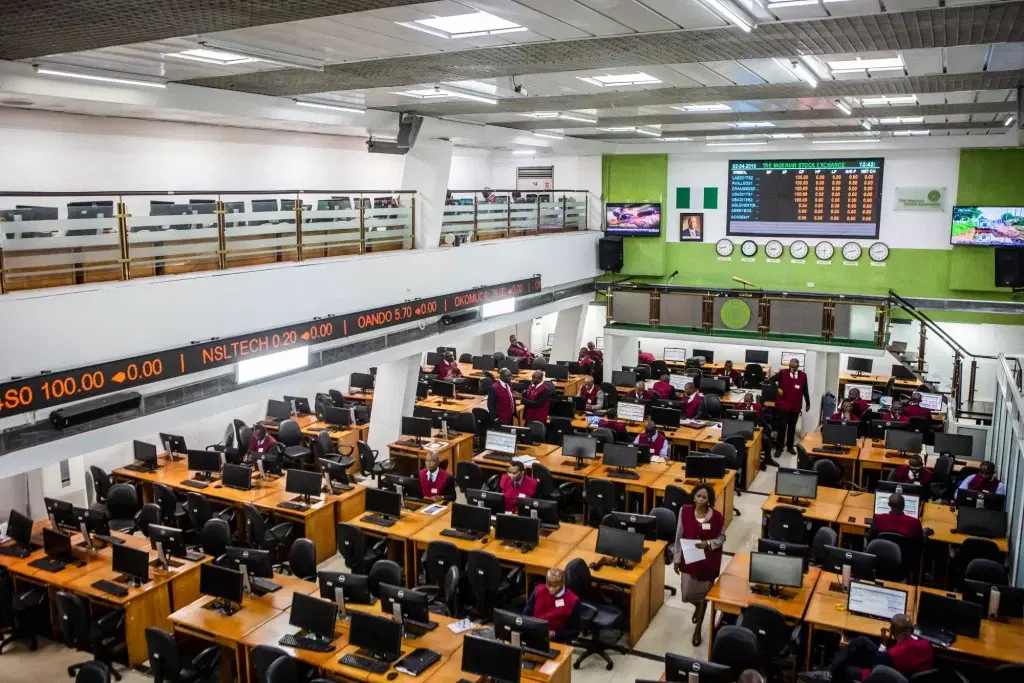
24 Firms Control Over 70% of Nigeria's Stock Market Value
Translated from English and summarized by DistantNews. Read the original for the full story.
At a glance
News
Documents & data
Context piece
- Twenty-four companies now control over 70% of Nigeria's stock market capitalization year-to-date.
- These firms, primarily in banking, consumer goods, industrial goods, and energy, hold a combined N117.01 trillion.
- The Nigerian Exchange Limited's market capitalization has grown 57.5% to N156.517 trillion this year.
A select group of 24 companies dominates Nigeria's stock market, collectively accounting for 74.8% of the total market capitalization as of August 17, 2026. These leading firms, predominantly from the banking, consumer goods, industrial goods, and energy sectors, possess a combined market value of N117.01 trillion.
This high concentration of value among a few entities underscores the significant influence these companies wield on the Nigerian Exchange Limited (NGX). The overall market capitalization has surged by 57.5%, adding N57.141 trillion to reach N156.517 trillion since the end of 2025. This substantial growth is largely attributed to a strong rally in several large-cap stocks.
Analysts note that this concentration means movements in these dominant stocks can disproportionately affect the broader market index. Dangote Cement Plc has emerged as the most capitalized company, surpassing MTN Nigeria Plc. The list of top companies includes nine banks, six consumer goods firms, three industrial goods companies, three energy companies, one consumer services company, and one telecommunications firm.
Within the banking sector, First Holdco leads with a market capitalization of N6.37 trillion, followed by Zenith Bank (N5.04 trillion) and GTCO (N4.70 trillion). The strong performance of banks is linked to significant repricing following the sector's recapitalization efforts and improved investor confidence.
In the consumer goods segment, BUA Foods leads with N13.69 trillion, with Presco and Nestle Nigeria also showing strong market capitalizations. While some consumer goods stocks have benefited from expectations of improved operating conditions, challenges such as high production costs, inflation, and weak consumer purchasing power persist.
About this summary
Originally published by Vanguard in English. Translated, summarized, and contextualized automatically by DistantNews, with a note on how the source frames the story. Not individually reviewed before publishing. How this works.
More Stories



From Our Blog

How the Same Story Looks Different in Different Countries

What Gets Lost (and Found) When News Is Translated

The Critical Role of Diaspora Media in Global News

What Travellers Should Know About Countries with Restricted Press

A Digital Nomad's Guide to Following Local News
