


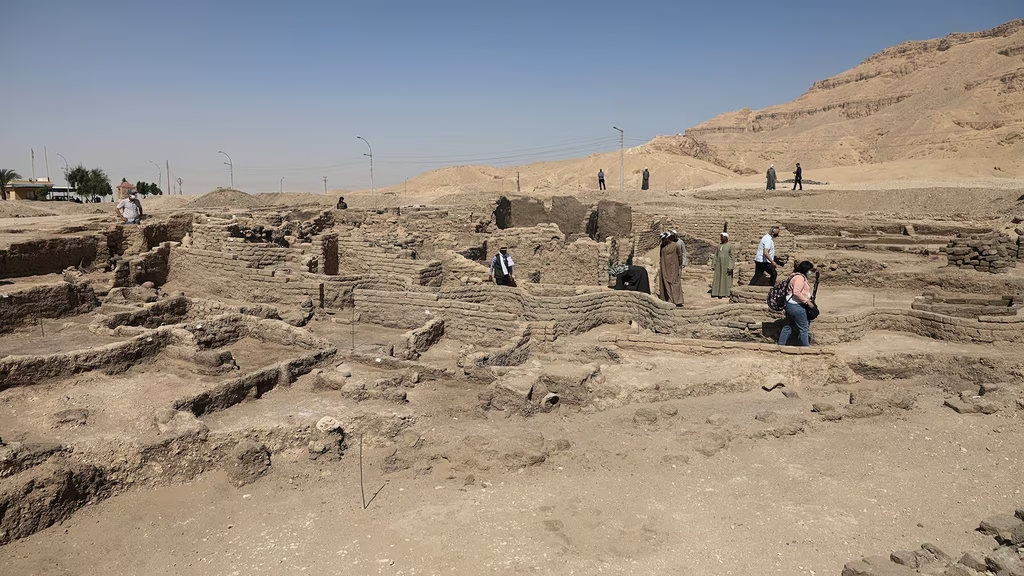
3,000-year-old tomb discovered near Luxor, Egypt
Translated from Greek, summarized and contextualized by DistantNews.
At a glance
News
Official statement
Context piece
- Archaeologists have discovered a 3,000-year-old tomb near Luxor, Egypt, dating back to the Ramesside period.
- The tomb, identified as belonging to a man named Paser, was found by a Dutch archaeological mission.
- This discovery is part of Egypt's ongoing efforts to boost tourism through archaeological finds.
A significant archaeological find near Luxor, Egypt, has brought to light a 3,000-year-old tomb believed to belong to an individual named Paser. The discovery, announced by Egypt's tourism and antiquities ministry, adds valuable insights into the Ramesside period, spanning the 19th and 20th dynasties.
The tomb was unearthed by a Dutch archaeological mission from Leiden University in the Sheikh Abd el-Qurna necropolis on Luxor's West Bank. Its artistic style and inscriptions suggest a dating to the Ramesside era, a pivotal time in ancient Egyptian history. This find is expected to enhance the understanding of funerary architecture and religious practices of that period.
Detailed inscriptions within the tomb depict Paser worshipping deities and seated with his wife before an offering table. These scenes are considered crucial for studying the religious beliefs of the time. The tomb's layout, typical of private Theban tombs from the New Kingdom, includes an open courtyard leading to a rock-cut chapel and burial chambers below ground.
This discovery comes at a time when Egypt is actively promoting its rich archaeological heritage to revitalize its tourism sector, a vital source of foreign currency. Luxor, home to some of the world's most important ancient monuments, continues to attract international scientific interest and visitors, with such finds further bolstering its allure.
DistantNews Editorial
Originally published by Ta Nea in Greek. Translated, summarized, and contextualized by our editorial team with added local perspective. Read our editorial standards.
More Stories


From Our Blog

What Gets Lost (and Found) When News Is Translated

The Critical Role of Diaspora Media in Global News

What Travellers Should Know About Countries with Restricted Press

A Digital Nomad's Guide to Following Local News

How the Same Story Looks Different in Different Countries
