


43 ancient figures from America's oldest civilization discovered in Peru
Translated from Spanish, summarized and contextualized by DistantNews.
At a glance
News
Named sources
Outcome reported
- Archaeologists discovered 43 ancient figures dating back to 1800-1500 BC in Peru, belonging to the Caral civilization, the oldest in America.
- The figures, made of bone and wood, were found in the ruins of Peñico and are believed to be part of an offering.
- These findings provide new evidence of cultural continuity in the Supe Valley after the decline of Caral's main urban centers.
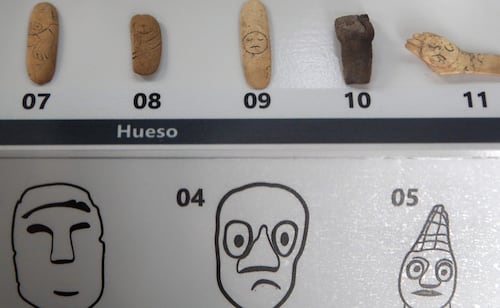
An extraordinary discovery has been made in Peru, where archaeologists unearthed 43 ancient figures belonging to the Caral civilization, recognized as the oldest in the Americas. The meticulously crafted figures, made from bone and wood, depict gods, animals, and human faces, and are estimated to date between 1800 and 1500 BC.
The artifacts were found in the ruins of Peñico, a significant urban center of the Caral civilization (3000-1800 BC) that has been the focus of recent investigations. Researchers believe these figures were part of a ritual offering, providing crucial new evidence about the cultural continuity in the Supe Valley even after the major Caral cities were abandoned.
They have a very powerful iconographic charge in terms of symbolism.
Mauro Ordóñez, the lead archaeologist at the Peñico site, described the miniatures as possessing "a very powerful iconographic charge in symbolic terms." While awaiting carbon-14 dating results for precise age verification, Ordóñez noted that the building where the figures were discovered is approximately 3,800 years old. The collection includes anthropomorphic representations, possibly of deities and authorities, zoomorphic figures like snakes and birds, and geometric designs.
Of the 43, there are anthropomorphic, geometric, and zoomorphic representations. For example, in the anthropomorphic ones, there are representations probably of their gods and their authorities.
Among the notable finds is a headless female figure dubbed the "Venus of Peñico." Other figures feature red-dyed carvings of deities with triangular eyes and unique headdresses, as well as representations of authorities. Some figures have deep eye sockets, suggesting they once held inlaid minerals or precious stones. The zoomorphic depictions include serpents, tadpoles, and birds, alongside representations of rivers and the distinctive "eye of god" motif.
The miniatures were discovered arranged carefully around stones in a semicircular formation. Evidence of fire marks on several figures indicates their use in rituals associated with the construction of a new platform within the settlement's main public building. "They were found in an offering process, during the architectural renovation of the main public building, so there is a context of respect at the moment of leaving this offering," Ordóñez explained. Archaeological work, led by Ruth Shady, continues at Peñico, with hopes of uncovering more figures and artifacts to further understand the social dynamics of this ancient civilization.
They were found in an offering process, in the process of architectural renovation of the main public building, so there is a context of respect at the moment of leaving this offering.
DistantNews Editorial
Originally published by El Universal in Spanish. Translated, summarized, and contextualized by our editorial team with added local perspective. Read our editorial standards.
More Stories



From Our Blog

What Press Freedom Means for the News You Read

What Gets Lost (and Found) When News Is Translated

The Critical Role of Diaspora Media in Global News

What Travellers Should Know About Countries with Restricted Press

A Digital Nomad's Guide to Following Local News
