


72% of South Koreans Favor New Distribution Systems Amid Job Fears
Translated from Korean, summarized and contextualized by DistantNews.
At a glance
News
Documents & data
New plan
- 72% of South Koreans believe new distribution systems like 'robot taxes' or basic income are needed due to job displacement from AI and robots.
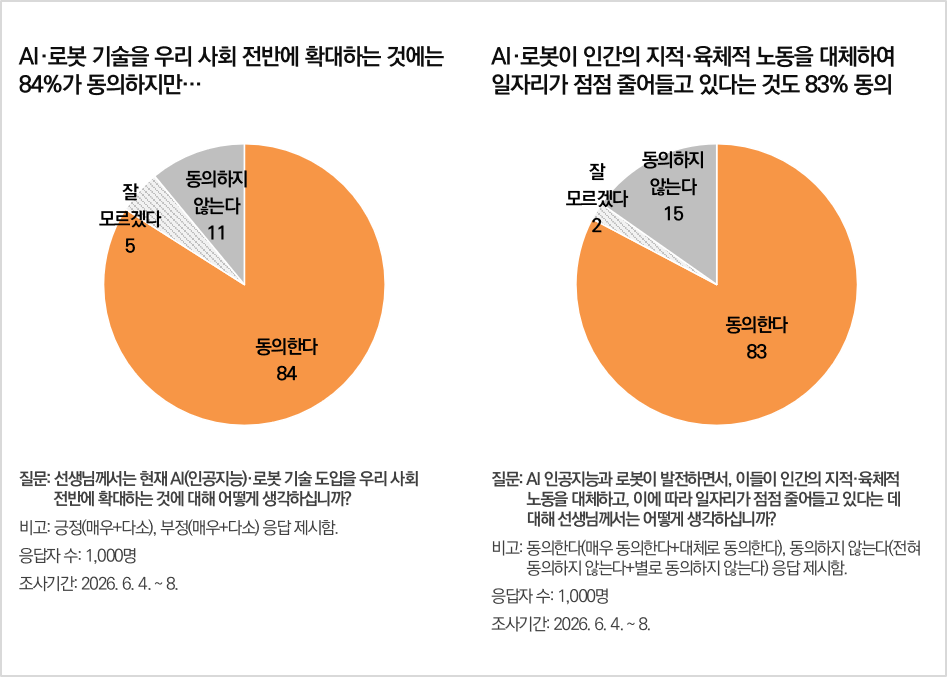
- While 84% approve of AI and robot technology adoption, 83% worry about job losses, and 66% fear their own jobs could be replaced within 10 years.
- This widespread anxiety about employment and inequality is driving calls for fundamental changes to the nation's wealth distribution structure.
A significant majority of South Koreans, 72%, are calling for the exploration of new distribution systems, such as 'robot taxes' or basic income, to address growing concerns about job displacement and inequality driven by the rapid advancement of AI and robotics. The findings reveal a deep-seated anxiety about the future of employment in an increasingly automated world.
While the adoption of AI and robot technology garners broad approval, with 84% of respondents viewing it positively, this optimism is tempered by significant apprehension. A striking 83% of South Koreans believe that AI and robots are already causing job losses. Furthermore, a substantial 66% fear that their own professions could be automated and replaced within the next decade, highlighting a personal sense of vulnerability.
This widespread fear of job insecurity and the perceived concentration of benefits from technological innovation in the hands of large corporations are fueling a strong demand for alternative redistribution mechanisms. The current labor-income-centric distribution model is seen as insufficient for the challenges posed by the AI era, with only 22% of respondents believing it will remain viable. The survey indicates a public readiness to consider radical shifts in economic policy to ensure a more equitable distribution of wealth generated by technological progress.
DistantNews Editorial
Originally published by Dong-A Ilbo in Korean. Translated, summarized, and contextualized by our editorial team with added local perspective. Read our editorial standards.
More Stories


From Our Blog

What Gets Lost (and Found) When News Is Translated

The Critical Role of Diaspora Media in Global News

What Travellers Should Know About Countries with Restricted Press

A Digital Nomad's Guide to Following Local News

How the Same Story Looks Different in Different Countries
