


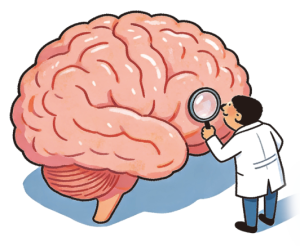
723 brain donors aid dementia research in South Korea
Translated from Korean, summarized and contextualized by DistantNews.
At a glance
Analysis
Named sources
Context piece
- South Korea has received 723 brain donations for dementia research since establishing brain banks in 2016.
- Despite significant global investment in neuroscience, understanding the human brain remains a major scientific challenge.
- Brain donation is crucial for advancing research into neurological diseases like Alzheimer's and Parkinson's, especially as the population ages.
Since the establishment of brain banks in 2016, South Korea has collected 723 brain donations to aid in research, particularly for conditions like dementia. This initiative aims to unravel the complexities of the human brain, a frontier that continues to challenge scientists despite decades of global research and investment.
Former U.S. President Barack Obama highlighted the brain's enigmatic nature in 2013, launching the 'BRAIN Initiative' with a $4.5 billion investment. The European Union also initiated the 'Human Brain Project' that same year. However, even with advanced mapping techniques, such as a 3D map of a cubic millimeter of brain tissue created by Harvard and Google, the brain's complexity is often described as awe-inspiring and profoundly mysterious.
Understanding how the brain generates consciousness, unlike organs with purely physical functions, remains a significant hurdle. This lack of fundamental knowledge hinders the development of effective treatments for neurological disorders that affect roughly 40% of the world's population. Diseases like stroke, Alzheimer's, Parkinson's, and even migraines cause immense suffering, yet precise causes are often unknown, and treatments are limited.
As humans, we can identify galaxies light-years away and study particles smaller than an atom. But the secret of the 3-pound mass nestled between our ears remains unsolved.
South Korea's two main brain banks, managed by the Disease Control and Prevention Agency and the Ministry of Science and ICT, process donations within 24 hours of death. One hemisphere is frozen for detailed study, while the other is preserved in formalin for diagnostic purposes. Researchers face significant waiting times, often up to six months, due to the scarcity of donated brains, slowing the pace of critical research.
As societies, particularly South Korea, enter an era of rapid aging, the prevalence of brain-related diseases is expected to rise. Brain donation offers a path forward, allowing for continued research while ensuring respectful funeral rites for the deceased. Increased public awareness and reduced stigma surrounding brain donation are vital to accelerating progress in understanding and treating these debilitating conditions.
We are humbled
DistantNews Editorial
Originally published by Dong-A Ilbo in Korean. Translated, summarized, and contextualized by our editorial team with added local perspective. Read our editorial standards.
More Stories


From Our Blog

What Gets Lost (and Found) When News Is Translated

The Critical Role of Diaspora Media in Global News

What Travellers Should Know About Countries with Restricted Press

A Digital Nomad's Guide to Following Local News

How the Same Story Looks Different in Different Countries
