


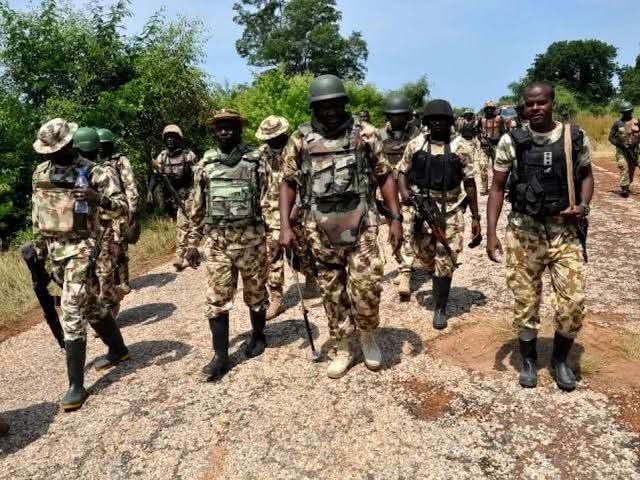
76 ISWAP commanders surrender as military intensifies offensive
Summarized and contextualized by DistantNews.
At a glance
News
Official statement
Outcome reported
- 76 Islamic State West Africa Province (ISWAP) terrorists, including key commanders, have surrendered to the Joint Task Force in Nigeria's Northeast.
- The surrenders follow intensified air and ground military offensives against terrorist strongholds.
- The military operation aims to dismantle terrorist networks and restore peace in the region.
The Nigerian military's intensified offensive in the Northeast has led to the surrender of 76 terrorists belonging to the Islamic State West Africa Province (ISWAP), including several key commanders. The Joint Task Force, Operation Hadin Kai, announced the development, stating that the militants abandoned their camps due to sustained military pressure.
The terrorists abandoned their camps and surrendered to troops due to sustained military pressure backed by intelligence-led operations.
According to a statement by Operation Hadin Kai spokesman Captain Mohammed Goni, the surrendered terrorists are currently in a secure location undergoing profiling and debriefing. The operation highlights the effectiveness of intelligence-led tactics in dismantling terrorist command and logistics structures and restricting their movements. The surrender of fighters, some accompanied by their families, is seen as a reflection of the declining operational strength and morale within ISWAP.
Several senior ISWAP figures are among those who surrendered and are currently in a secure location undergoing profiling, debriefing and other procedures in line with established operational protocols.
The military's counter-terrorism strategy combines combat operations with intelligence gathering and inter-agency collaboration. This approach aims to defeat terrorist groups and re-establish lasting peace in the Northeast region. The continuous pressure and successful operations are contributing to the weakening of terrorist capabilities in the area.
The latest surrender underscores the effectiveness of ongoing efforts to dismantle terrorist networks, disrupt their command and logistics structures, and restrict their freedom of movement.
DistantNews Editorial
Originally published by Vanguard. Summarized and contextualized by our editorial team with added local perspective. Read our editorial standards.
More Stories


From Our Blog

How the Same Story Looks Different in Different Countries

What Gets Lost (and Found) When News Is Translated

The Critical Role of Diaspora Media in Global News

What Travellers Should Know About Countries with Restricted Press

A Digital Nomad's Guide to Following Local News
