


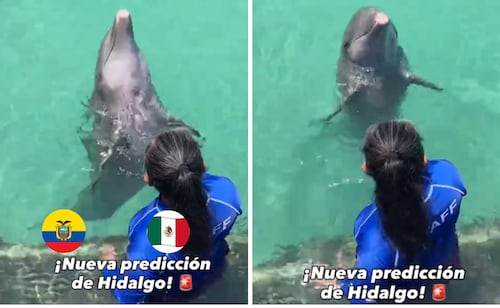
A new marine 'oracle' in the World Cup; dolphin 'Hidalgo' predicts Mexico's destiny against Ecuador
Translated from Spanish, summarized and contextualized by DistantNews.
At a glance
News
Sources not specified
Context piece
- A dolphin named 'Hidalgo' living in Mexico's Caribbean has become a viral sensation as a World Cup predictor.
- Hidalgo has a track record of correctly predicting match outcomes, including Mexico's previous wins.
- For Mexico's crucial match against Ecuador, Hidalgo chose the Mexican flag, sparking excitement among fans and the national team's social media accounts.
The fervor of the World Cup extends beyond the pitch, captivating digital platforms with unique characters. Currently, a marine mammal residing in the Mexican Caribbean is capturing public attention as the ultimate lucky charm for fans.
This animal, with an astonishingly accurate prediction history, has become a trending topic, offering its forecast for a pivotal group stage match in the international football tournament. The upcoming game pits Mexico against Ecuador, a crucial encounter where a Mexican victory would secure their advancement to the round of 16.
All eyes are on Dolphin Hidalgo, an inhabitant of Dolphin Discovery park in Quintana Roo. Hidalgo has emerged as the successor to legendary football oracle figures like the octopus Paul. The anticipation for the match is critical, given the recent performances of both teams. Mexico aims to solidify its home advantage, while Ecuador arrives confident after defeating strong opponents like Germany.
A video shared by Hidalgo's caretakers shows the cetacean directly choosing the Mexican flag, igniting euphoria among users on platforms like TikTok. The company responsible for the dolphin's care states that the animal boasts a high success rate, having previously predicted Mexico's debut win against South Africa and the United States' victory over Paraguay.
Hidalgo's influence is so significant that the official Mexican national team profile on social media reacted to the prediction with "We love you very much, Hidalgo," acknowledging the cultural impact of this phenomenon.
DistantNews Editorial
Originally published by El Universal in Spanish. Translated, summarized, and contextualized by our editorial team with added local perspective. Read our editorial standards.
More Stories


From Our Blog

What Press Freedom Means for the News You Read

What Gets Lost (and Found) When News Is Translated

The Critical Role of Diaspora Media in Global News

What Travellers Should Know About Countries with Restricted Press

A Digital Nomad's Guide to Following Local News
