


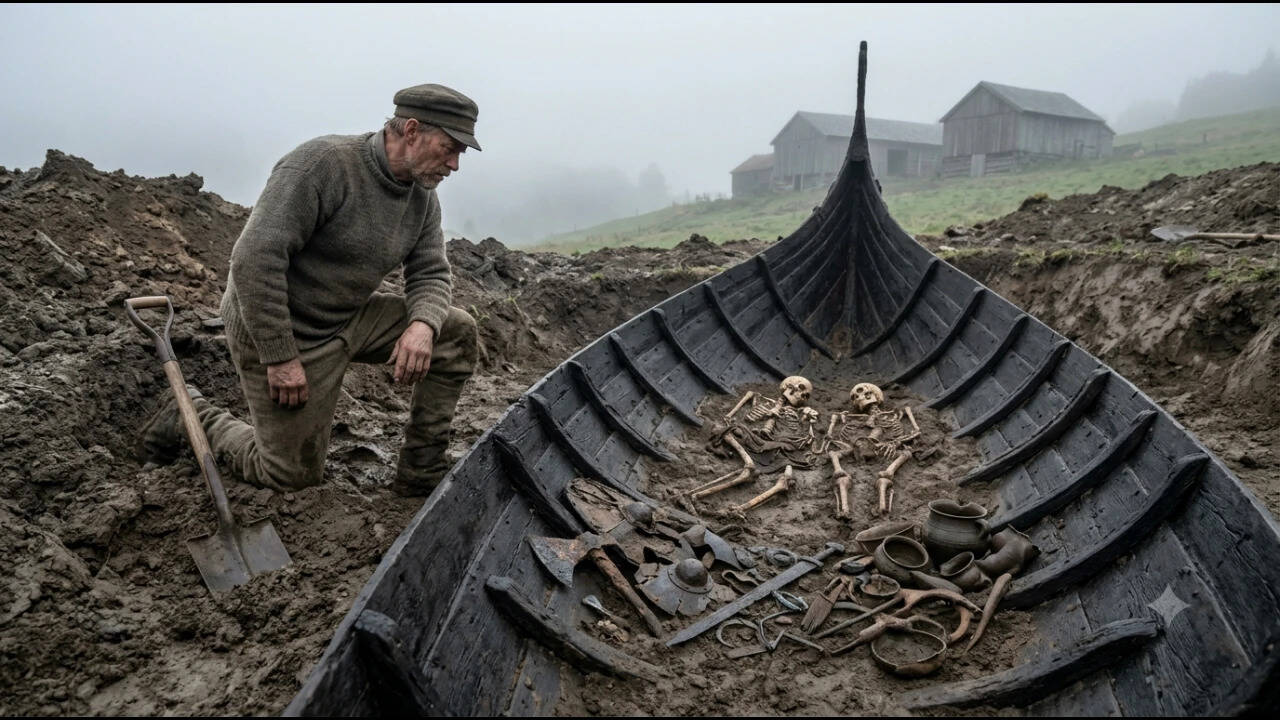
A Norwegian farmer uncovered a Viking ship buried with two women
Summarized by DistantNews. Read the original for the full story.
At a glance
In-depth
Sources not specified
Outcome reported
- Farmer Oskar Rom discovered apparent ship remains inside a burial mound at Lille Oseberg near Tønsberg in 1903.
- Archaeologists later excavated a Viking ship grave containing the remains of two women and hundreds of objects.
- The preserved wagon, sleds, textiles, tools and animal remains offered an unusually detailed view of Viking material culture and burial practices.
A routine inspection of an old burial mound on a Norwegian farm led to one of the most revealing Viking Age discoveries described in the account. In 1903, farmer Oskar Rom found what appeared to be pieces of an ancient ship at Lille Oseberg, near Tønsberg.
On Aug. 8, Rom travelled to the capital and told archaeologist Gabriel Gustafson what he had found. Gustafson, who oversaw the University’s Collection of National Antiquities, visited the site within days. Decorated fragments emerging from the mound showed that the remains belonged to a Viking Age ship grave rather than an ordinary burial.
Excavation waited until the following year because autumn weather was approaching. Public interest had already grown by then. Fences, signs and a guard were installed around the site, and Gustafson recorded the difficulty of working while visitors gathered to watch.
The ship had been badly crushed by the weight of the mound, but the burial preserved hundreds of objects. Archaeologists recovered a wagon, several sleds, carved animal heads, kitchen equipment, food remains, beds, tents and textiles. They also found remains of two cows, six dogs and 15 horses.
Two women were buried inside the ship, although their identities remain uncertain. The survival of wood, fabric and other organic materials allowed archaeologists to study aspects of Viking life that rarely remain in the archaeological record, including travel, work, clothing and preparations for death.
About this summary
Originally published by Times of India. Summarized and contextualized automatically by DistantNews, with a note on how the source frames the story. Not individually reviewed before publishing. How this works.
More Stories


From Our Blog

What Press Freedom Means for the News You Read

What Gets Lost (and Found) When News Is Translated

The Critical Role of Diaspora Media in Global News

What Travellers Should Know About Countries with Restricted Press

A Digital Nomad's Guide to Following Local News
