

A Roman General's True Education
Translated from Korean, summarized and contextualized by DistantNews.
At a glance
In-depth
Sources not specified
Context piece
- A 17th-century painting by Nicolas Poussin depicts a Roman general handing a corrupt teacher over to his students.
- The painting illustrates a moral lesson: true authority is lost when a teacher betrays trust for personal gain.
- The artwork continues to provoke thought on the nature of respect and genuine leadership.
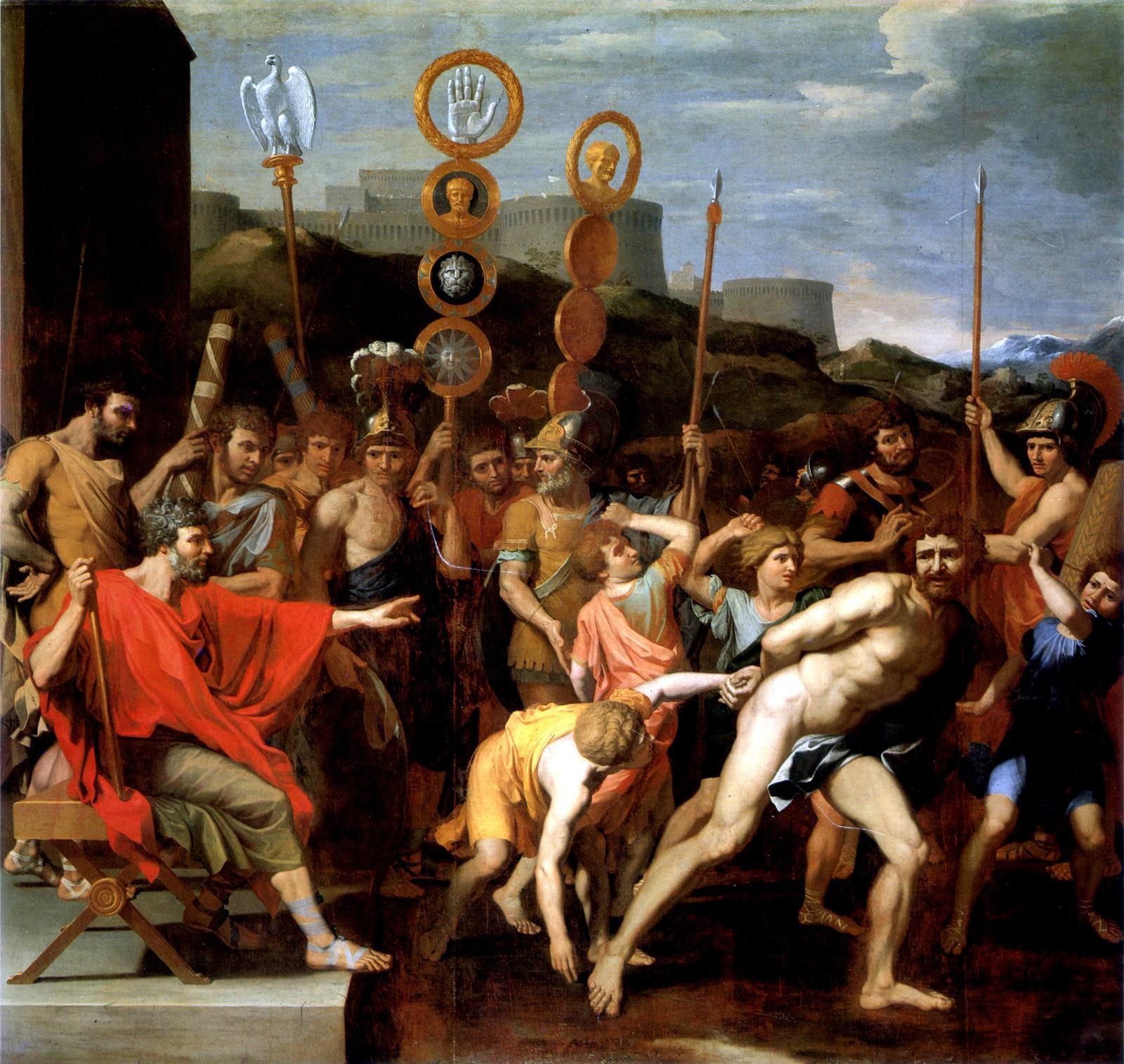
Nicolas Poussin's 1637 masterpiece, "Camillus Entrusting the Schoolmaster to His Pupils," captures a dramatic moment from ancient Roman history with profound moral implications.
The teacher's corrupt act was met with the opposite of his expectations. Camillus, enraged by the teacher's unscrupulous behavior, immediately stripped the teacher of his clothes, tied his hands behind his back, and handed him over to the students.
The painting depicts the Roman general Marcus Furius Camillus confronting a schoolmaster who, driven by ambition, attempted to betray his students to the Romans during a siege. Instead of reward, Camillus met the teacher's treachery with outrage. He stripped the teacher bare, bound his hands, and handed him over to the very students he sought to exploit.
According to Plutarch's "Lives," the students, enraged by their teacher's betrayal, dragged him back into the city, prompting the citizens of Falerii to surrender to Camillus out of admiration for his justice. Poussin, however, transcends a simple war narrative, focusing instead on the ethical dimensions of the event.
Poussin did not depict this historical anecdote as a mere war story. He reinterpreted it as a story about justice and ethics.
The artwork powerfully conveys that the most severe punishment for a teacher who abuses their position is not physical, but the complete loss of authority and respect in the eyes of their students. Nearly four centuries later, Poussin's "Camillus" continues to pose enduring questions about the foundations of mentorship and the source of true leadership.
What earns a teacher respect? Where does true authority come from?
DistantNews Editorial
Originally published by Dong-A Ilbo in Korean. Translated, summarized, and contextualized by our editorial team with added local perspective. Read our editorial standards.
More Stories



From Our Blog

What Gets Lost (and Found) When News Is Translated

The Critical Role of Diaspora Media in Global News

What Travellers Should Know About Countries with Restricted Press

A Digital Nomad's Guide to Following Local News

How the Same Story Looks Different in Different Countries
