


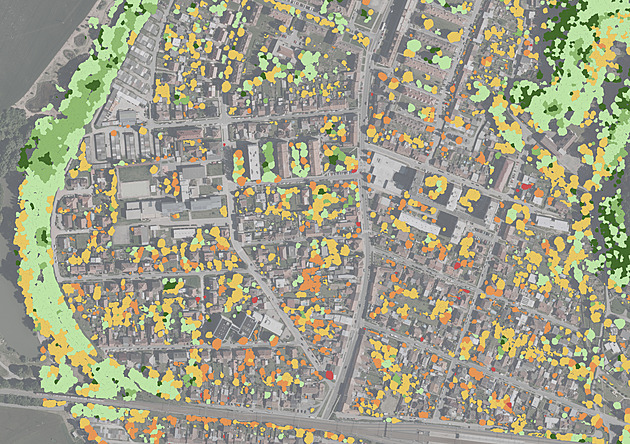
 Image: Archiv UpGreen
A tree may look healthy but be dying; satellites can spot it before humans
Translated from Czech and summarized by DistantNews. Read the original for the full story.
At a glance
In-depth
Sources not specified
Context piece
- A Brno company, ASITIS, uses satellite imagery to monitor urban tree health via its UpGreen project.
- The system compares tree conditions over years, identifying those in decline.
- Experts stress that beyond planting, nurturing trees to provide ecosystem services is vital.
The health of urban trees, often appearing vibrant on the surface, can mask underlying decline. A new project by the Brno-based company ASITIS, called UpGreen, is employing satellite imagery to detect these hidden issues before they become visually apparent to humans.
UpGreen's technology allows for the comparison of tree conditions over multiple years. This historical data analysis helps identify subtle changes and early signs of stress or disease in urban forests. By flagging trees that are beginning to struggle, the system enables timely intervention and management.
Experts emphasize that simply increasing the number of trees in cities is insufficient. The critical factor, they argue, is ensuring trees reach maturity, a stage where they can effectively deliver essential ecosystem services. These services include improving air quality, mitigating the urban heat island effect, and supporting biodiversity.
ASITIS's UpGreen project offers a proactive approach to urban forestry. By leveraging advanced remote sensing technology, it provides city managers and environmental agencies with valuable data to maintain healthier, more resilient urban green spaces. This focus on long-term tree vitality is crucial for the sustainability and well-being of city environments.
About this summary
Originally published by iDNES in Czech. Translated, summarized, and contextualized automatically by DistantNews, with a note on how the source frames the story. Not individually reviewed before publishing. How this works.
More Stories

From Our Blog

What Gets Lost (and Found) When News Is Translated

The Critical Role of Diaspora Media in Global News

What Travellers Should Know About Countries with Restricted Press

A Digital Nomad's Guide to Following Local News

How the Same Story Looks Different in Different Countries
