


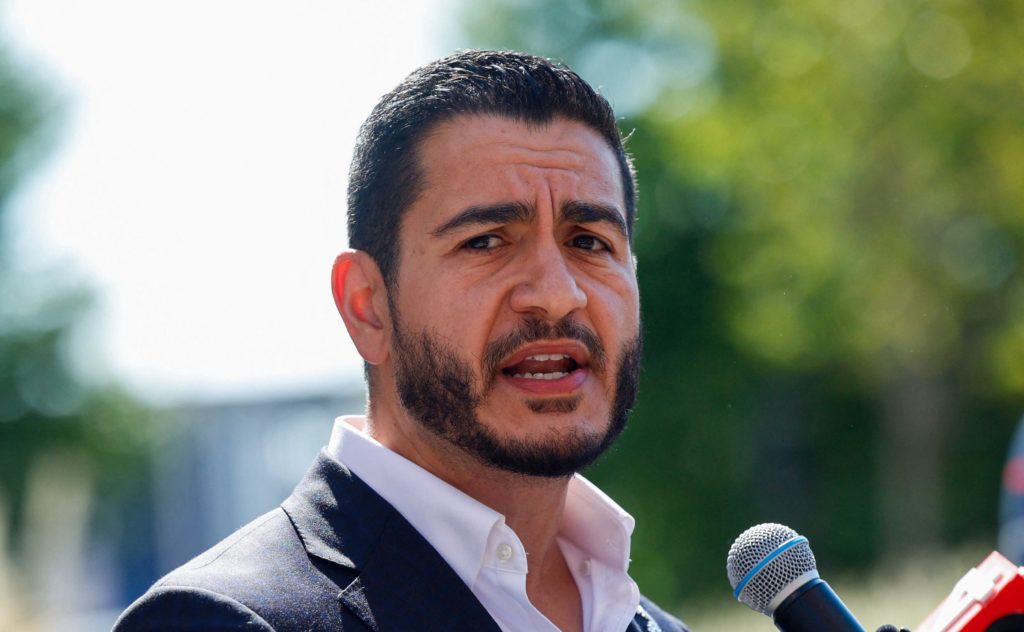
Abdul El-Sayed wins Michigan Senate primary, signaling shift in Democratic voters' preferences
Translated from English, summarized and contextualized by DistantNews.
At a glance
News
Sources not specified
New plan
- Progressive candidate Abdul El-Sayed narrowly won the Democratic Senate primary in Michigan, defeating Rep. Haley Stevens.
- El-Sayed's victory signals a trend of Democratic voters favoring insurgent candidates over establishment picks, even in crucial races.
- He will now face former Republican Rep. Mike Rogers in November, with Democrats aiming to secure the seat vacated by retiring Sen. Gary Peters.
Abdul El-Sayed's narrow victory in Michigan's Democratic Senate primary marks a significant win for the progressive wing of the party. The win over establishment-backed Rep. Haley Stevens suggests a growing trend of Democratic voters seeking to move beyond traditional politicians, even in races critical for party control.
El-Sayed, a progressive candidate, tapped into widespread discontent with the Democratic establishment and the status quo in Washington. Throughout the Trump era, Democratic primary voters often sided with moderate candidates, but this year has seen a shift towards insurgents like El-Sayed. His win sets up a challenging November contest against former Republican Rep. Mike Rogers for the seat left open by retiring Democratic Sen. Gary Peters.
There is so much more that unites us now.
Following the contentious primary, El-Sayed and other Democrats emphasized party unity. El-Sayed called for reconciliation, and Stevens offered her support, stressing the importance of defeating Rogers. "There is so much more that unites us now," El-Sayed stated, acknowledging that primary differences pale in comparison to the November election's stakes. Mallory McMorrow, who had previously withdrawn from the Senate primary, stood with El-Sayed, reinforcing the need for unity.
The race was marked by sharp exchanges. Supporters of El-Sayed criticized Stevens, while Stevens questioned El-Sayed's electability and campaign style. El-Sayed has also faced scrutiny for his past criticisms of Israel's military campaign in Gaza, which he described as a "genocide," a stance rejected by the U.S. and Israeli governments. Democrats are under pressure to defend the seat to maintain their slim majority in the U.S. Senate.
What is most important now is that we recognize that for all of the differences that we may have had in this primary, that those differences pale in comparison to the contrast that we face in November.
DistantNews Editorial
Originally published by PBS NewsHour in English. Translated, summarized, and contextualized by our editorial team with added local perspective. Read our editorial standards.
More Stories


From Our Blog

How the Same Story Looks Different in Different Countries

What Gets Lost (and Found) When News Is Translated

The Critical Role of Diaspora Media in Global News

What Travellers Should Know About Countries with Restricted Press

A Digital Nomad's Guide to Following Local News
