


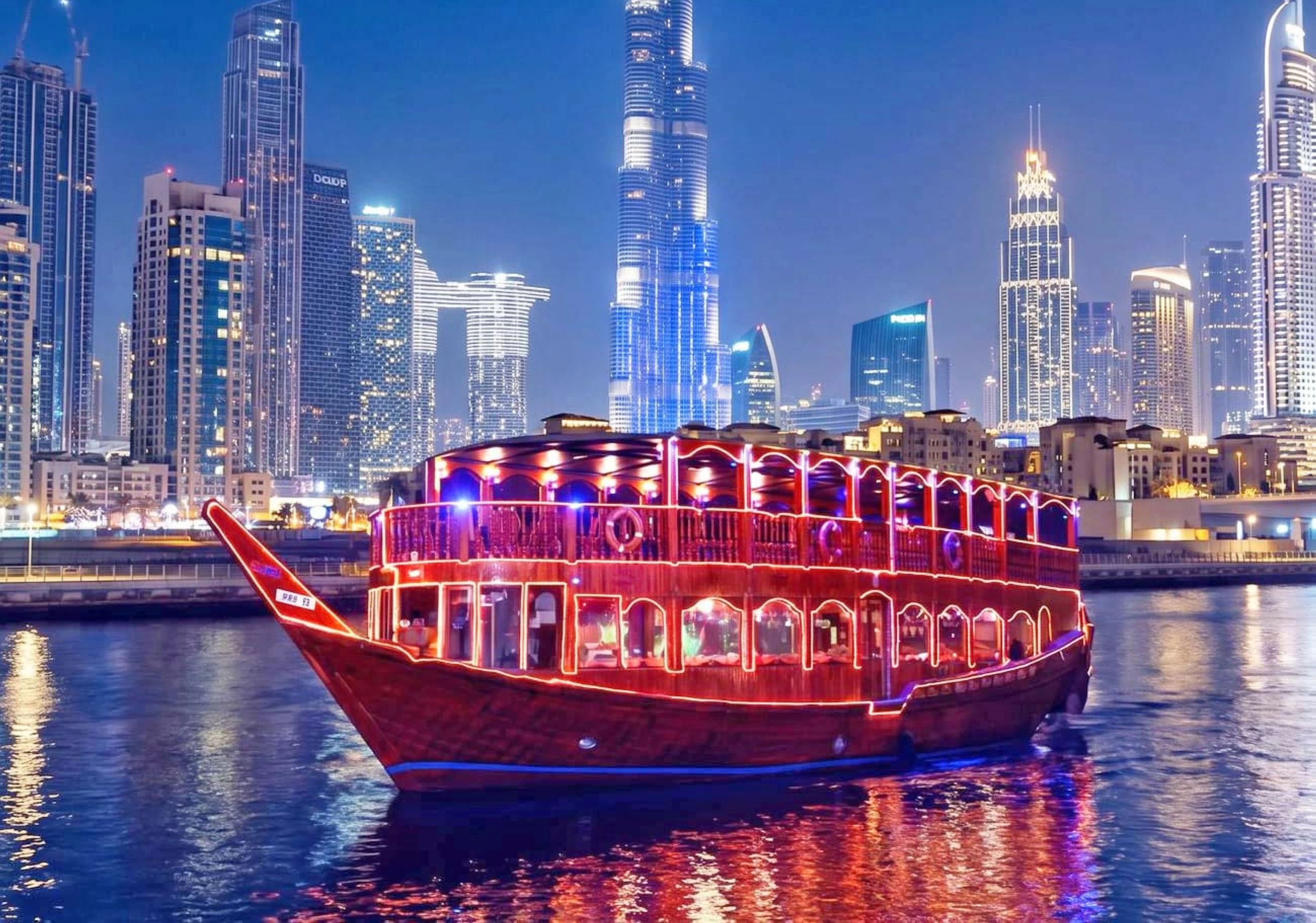

Abu Dhabi plans Dh300 billion investment in power and water resilience, UAE official says
Translated from English and summarized by DistantNews. Read the original for the full story.
At a glance
News
Named sources
New plan
- Abu Dhabi plans to invest more than Dh300 billion in power and water systems over the coming decades, according to a UAE energy official.
- Officials at the Hili Forum said recent regional conflict had changed the definition of energy security from production capacity alone to broader system resilience.
- Panelists also highlighted the UAE’s ability to provide electricity for artificial intelligence infrastructure and described the Gulf as an increasingly central technology and investment hub.
Abu Dhabi plans to invest more than Dh300 billion ($81.7 billion) in power and water systems over the coming decades, with billions of dirhams expected annually from foreign investment, a senior UAE energy official said.
Abdulaziz Al Obaidli, director general of regulatory affairs at the UAE Department of Energy, announced the figure during a Hili Forum panel in Abu Dhabi on the Gulf’s place in a changing global economic order. The discussion focused on how recent regional conflict had exposed vulnerabilities while also underscoring the Gulf’s growing economic weight.
“Energy security is ultimately a question of system resiliency, not only production capacity,” Al Obaidli said. He argued that infrastructure must be designed to anticipate disruption, maintain continuity and recover quickly, covering generation and transmission networks as well as storage and digital systems.
Energy security is ultimately a question of system resiliency, not only production capacity.
Al Obaidli also pointed to the UAE’s ability to make electricity available before data infrastructure is built, contrasting that with Western markets where developers can wait years for grid connections. He cited major investments by OpenAI, Oracle and G42 under the Stargate project in the UAE. Quoting Sheikh Mohammed bin Rashid Al Maktoum, he added: “The UAE does not stop and will not stop.”
Other panelists described the conflict as evidence of the Gulf’s wider role in technology, investment and global connectivity. Róbert Vass of Slovakia’s GLOBSEC said disruptions in the Strait of Hormuz had exposed new vulnerabilities even as Slovakia reduced its reliance on Russian gas. He cited airline revenue declines in the Middle East for Lufthansa, KLM and British Airways, alongside a rise for Iberia, as evidence of shifting global connectivity rather than disappearing demand.
The UAE does not stop and will not stop.
About this summary
Originally published by Khaleej Times in English. Translated, summarized, and contextualized automatically by DistantNews, with a note on how the source frames the story. Not individually reviewed before publishing. How this works.
More Stories
From Our Blog

News in Translation: What Gets Lost, and How We Keep the Framing

Diaspora Media: How Communities Follow News From Home

Traveling Where the Press Is Not Free: How to Read the News There

The Digital Nomad's Guide to Local News

The Same Story, Different Countries: How Coverage Changes at the Border
