


Act before Muslims lose patience, Nigerian Islamic council tells government
Translated from English, summarized and contextualized by DistantNews.
At a glance
News
Sources not specified
Context piece
- The Nigerian Supreme Council for Islamic Affairs (NSCIA) warned the government about escalating religious tensions.
- The council stated that persistent attacks and marginalization of Muslims could lead to Muslims losing patience.
- NSCIA also criticized remarks allegedly linking Muslims to criminality and highlighted perceived double standards in media coverage.
The Nigerian Supreme Council for Islamic Affairs (NSCIA) has issued a stern warning to the Federal Government and security agencies, urging them to act decisively before Muslims exhaust their patience. The council expressed concern that ongoing attacks, profiling, and marginalization against the faith and its adherents are deepening religious tensions across the country.
While the NSCIA continues to appeal Muslims for continuous restraint, it is imperative that government and security agencies should do the needful before the Muslims run out of patience in the light of persistent attacks and marginalization.
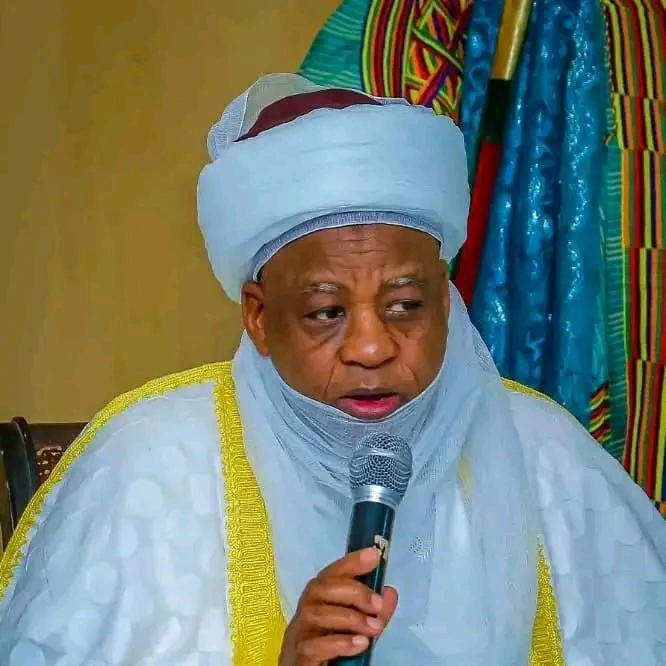
In a statement released on behalf of the council, led by its President-General and Sultan of Sokoto, His Eminence Alhaji Muhammad Sa’ad Abubakar, the NSCIA emphasized that Muslims have shown considerable restraint despite repeated provocations. The council cautioned that this patience should not be misinterpreted as weakness. "While the NSCIA continues to appeal Muslims for continuous restraint, it is imperative that government and security agencies should do the needful before the Muslims run out of patience in the light of persistent attacks and marginalization," the statement read.
The barrage of open assault on the integrity of Islam and the Muslims in public spaces should be checked in the interest of peace and order. Enough is enough.
The NSCIA called on authorities to curb what it described as relentless attacks on Islam and Muslims in public spaces, asserting that such actions are detrimental to peace and national cohesion. The council also refuted claims linking Muslims and Fulani communities to recent kidnapping incidents, citing an example where the arrested suspect in the Oriire kidnap case was identified as a Christian pastor, not a Muslim. Furthermore, the NSCIA criticized remarks attributed to a former President of the Christian Association of Nigeria, which allegedly claimed a high percentage of criminals were Muslims, deeming such statements reckless and baseless.
The commitment necessitates silence and restraint despite unwarranted provocation, assault, and baseless profiling of Islam and the Muslims in the country. It should be clear that restraint is not cowardice. But there is always a limit to endurance.
The council also accused Arise Television of applying double standards in its reporting, suggesting the station would have framed the narrative differently if the suspect in the Oriire case had been Muslim. Beyond security issues, the NSCIA alleged that Muslims are being sidelined in public appointments, particularly in the southern regions of Nigeria. The council stressed that Muslims remain committed to Nigeria's unity despite feeling increasingly marginalized and unfairly portrayed.
This ought to have attracted at least a reprimand from responsible government regulatory agencies, in the interest of peace and national security.
DistantNews Editorial
Originally published by Vanguard in English. Translated, summarized, and contextualized by our editorial team with added local perspective. Read our editorial standards.
More Stories


From Our Blog

How the Same Story Looks Different in Different Countries

What Gets Lost (and Found) When News Is Translated

The Critical Role of Diaspora Media in Global News

What Travellers Should Know About Countries with Restricted Press

A Digital Nomad's Guide to Following Local News
