

Adriana Bellamy Explores Kieślowski's World in New Book
Translated from Spanish, summarized and contextualized by DistantNews.
At a glance
In-depth
Named sources
Context piece
- Mexican researcher and writer Adriana Bellamy has published a new book exploring the work of Polish filmmaker Krzysztof Kieślowski.
- Titled "Epifanías de la luz," the book delves into Kieślowski's metaphysical concerns, particularly his use of chance and light in his films.
- The publication accompanies a retrospective of Kieślowski's Polish-period films at the Cineteca Nacional.
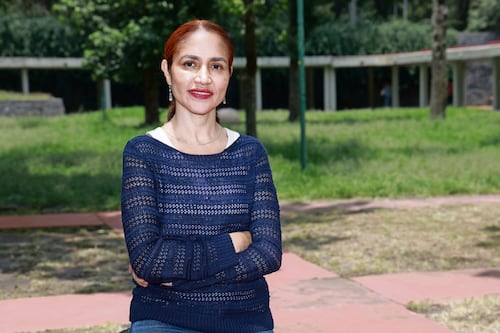
Adriana Bellamy, a researcher and writer from Mexico City, has released a new book, "Epifanías de la luz," dedicated to the cinematic world of Polish filmmaker Krzysztof Kieślowski. Published by the Cineteca Nacional, the book's title alludes to the profound metaphysical, aesthetic, and spiritual themes that permeate Kieślowski's oeuvre, especially his fascination with chance, which Bellamy describes as "another name for God" for the director, and his masterful handling of light, texture, and temperature.
chance, that for the Polish filmmaker was another name for God
The invitation to write about Kieślowski came from Nelson Carro, director of Diffusion and Programming at the Cineteca Nacional, coinciding with a retrospective dedicated to Kieślowski's Polish period as part of the Polish Film Week. Bellamy recounts her initial encounters with Kieślowski's work, starting with the internationally acclaimed "Three Colors" trilogy and later films like "The Double Life of Véronique." She notes how elements that initially captivated her in the trilogy, the role of chance, interconnected narratives, and the interplay of color and black and white, were already present in his earlier documentaries.
My first encounter with Kieslowski was with the trilogy Three Colors, films that catapulted him to international recognition. Then I saw some films like The Double Life of Veronica. When reviewing this, I found that many of the elements that had caught my attention in the trilogy were already present, that is, the work with chance, the interconnected films, the alternation between color and, in the documentaries, black and white.
Bellamy argues that these recurring elements form a poetic constant in Kieślowski's filmography, creating a cartography of relationships and offering a profound reflection on the human condition. Among Kieślowski's nearly 50 films and documentaries, Bellamy selected works spanning his entire career. While the later period features fewer titles, her selection from the documentary phase highlights films that already exhibit his distinctive aesthetic markers and thematic preoccupations. These include his exploration of photographic and cinematic representation, evident in works like "Talking Heads," which foreshadow his later fictional concerns.
with these elements, Kieslowski traces a poetic constant, a cartography of relationships between diverse figures, a way of reflecting on the human condition that permeates his narrative structures and stylistic motifs.
Kieślowski's filmography navigates a path from the political to the metaphysical. His early work offered a critical look at the bureaucratic institutions of communist Poland in the 1960s, while his later films increasingly explored spiritual inquietudes. "Epifanías de la luz" is presented at the Escuela Nacional de Artes Cinematográficas, with Bellamy joined by critics Jorge Ayala Blanco, Nelson Carro, Sonia Riquer, and Mónica Corona.
in the documentary stage, I selected the tapes where his marks and aesthetic searches are already distinguished, around the reflection of the photographic document and, later, cinematographic. It is visible in the generational portraits of Talking Heads and other types of films of this cut that already point towards certain concerns in his fictional period.
DistantNews Editorial
Originally published by El Universal in Spanish. Translated, summarized, and contextualized by our editorial team with added local perspective. Read our editorial standards.
More Stories
From Our Blog

What Press Freedom Means for the News You Read

What Gets Lost (and Found) When News Is Translated

The Critical Role of Diaspora Media in Global News

What Travellers Should Know About Countries with Restricted Press

A Digital Nomad's Guide to Following Local News
