


Affordable Art Fair Director's Vienna Home Blends History and Modernity
Translated from German, summarized and contextualized by DistantNews.
At a glance
In-depth
Sources not specified
Context piece
- Tanya van Breda Vriesman, originally in Vienna for a short stay in 2012, now leads the Affordable Art Fair Vienna.
- She has settled in the Neustiftgasse district, appreciating its blend of historical depth and contemporary life.
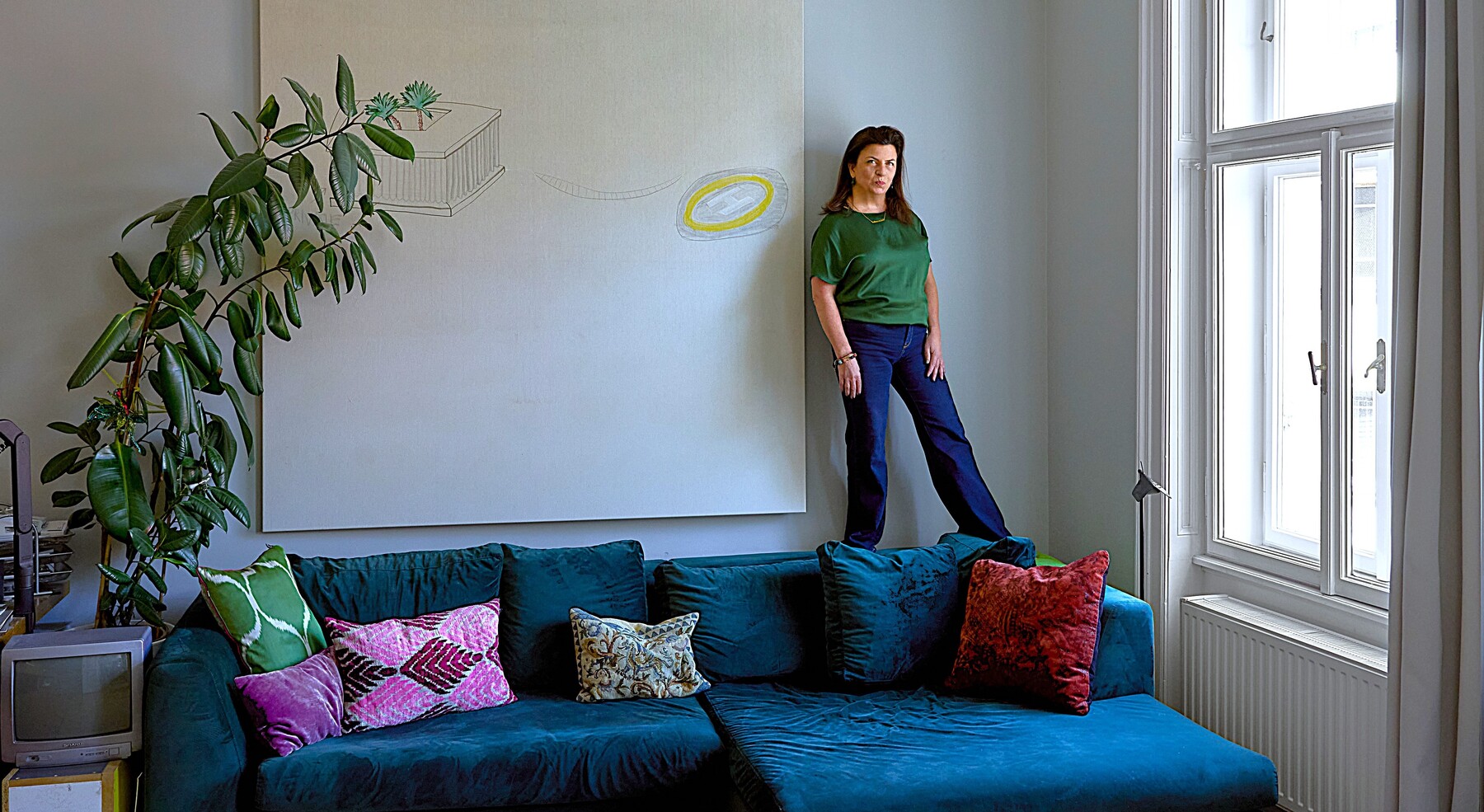
- Her apartment, a renovated 100-square-meter space, is characterized by high ceilings, natural light, and a collection of furniture and art accumulated over time.
Tanya van Breda Vriesman's journey to Vienna began as a temporary visit in 2012, but the city's unique layers of history and culture captivated her, leading her to establish a permanent home and career. Today, she directs the Affordable Art Fair Vienna, a testament to her enduring connection with the Austrian capital. She resides in the Neustiftgasse district, a location that embodies Vienna's characteristic fusion of historical significance and vibrant modern life.
"Vienna consists of layers," van Breda Vriesman observes, reflecting on her home in a building dating back to the early 20th century. The entrance hall itself hints at the past, featuring a portrait of the former owner renowned for the legendary 'Bärenteller' restaurant. The area's historical resonance is further marked by memorial 'stumbling stones' outside the building, commemorating individuals deported and murdered during the Nazi era. Nearby, the site of the Neudegger Synagogue, destroyed in 1938, and remnants of a 17th-century inn discovered during subway construction, underscore the rich historical tapestry of the neighborhood.
Vienna consists of layers.
Van Breda Vriesman sought a new home with specific criteria: high ceilings, abundant natural light, pre-war charm, and proximity to her daughter's school. The apartment she found, approximately 100 square meters with high ceilings, original parquet floors, and French doors, immediately felt right. Extensive renovations by the owner relocated the kitchen and added a bedroom, integrating seamlessly into the original layout. The space benefits from ample daylight due to the low-rise buildings opposite.
The apartment's interior design evolved organically rather than following a strict concept. Van Breda Vriesman prioritized quality, believing it never goes out of style. Approximately 90% of her furnishings were sourced from the online platform willhaben, including a significant find: a large desk accompanied by original 1960s and 70s office chairs, a serendipitous discovery that aligns with the apartment's narrative-driven aesthetic. Art plays a central role, with pieces like Andreas Leikauf's 'Home' prominently displayed.
Quality is important to me, because it never goes out of fashion.
DistantNews Editorial
Originally published by Die Presse in German. Translated, summarized, and contextualized by our editorial team with added local perspective. Read our editorial standards.
More Stories



From Our Blog

What Gets Lost (and Found) When News Is Translated

The Critical Role of Diaspora Media in Global News

What Travellers Should Know About Countries with Restricted Press

A Digital Nomad's Guide to Following Local News

How the Same Story Looks Different in Different Countries
