


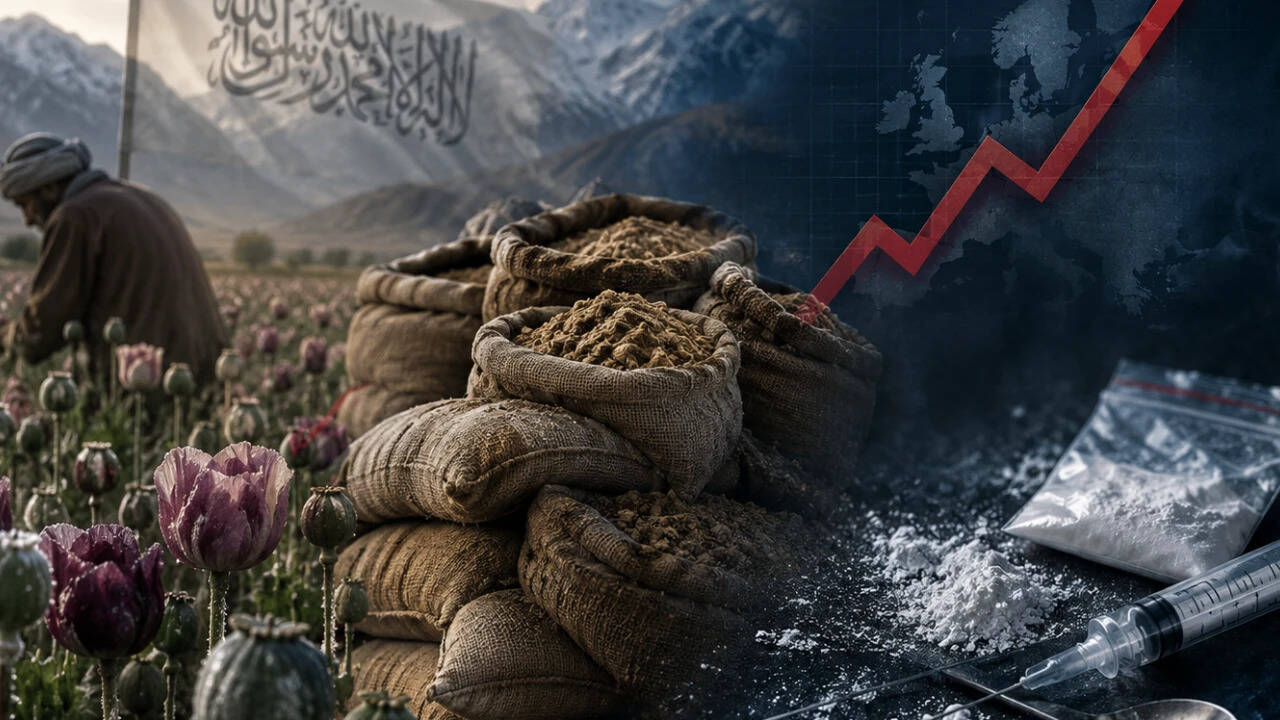
Afghanistan's opium ban: A 95% drop in cultivation, but heroin availability remains high
Translated from English, summarized and contextualized by DistantNews.
At a glance
News
Documents & data
Outcome reported
- Afghanistan's Taliban government implemented an opium poppy cultivation ban in April 2022, leading to a reported 95 percent drop in cultivation by 2023.
- Despite the sharp decrease in farming, heroin availability has not seen a corresponding collapse, suggesting a complex market dynamic.
- Opium prices surged dramatically after the ban, incentivizing farmers who could store their crops to withhold them, unlike a similar ban in 2000-2001.
Afghanistan's Taliban government enacted a sweeping ban on opium poppy cultivation in April 2022, a move that dramatically reshaped the nation's illicit drug economy. The decree, issued by Mullah Haibatullah Akhundzada, resulted in a staggering 95 percent reduction in cultivation by 2023, according to the UN Office on Drugs and Crime. This drastic decline, from 233,000 hectares in 2022 to just over 10,800 hectares, occurred despite Afghanistan previously supplying 80 to 90 percent of the world's opium and an estimated 95 percent of Europe's heroin.
However, the widely reported collapse in cultivation has not been matched by a similar decrease in heroin availability. This disconnect points to sophisticated market strategies and the economic realities faced by farmers and traders. Unlike a previous ban in 2000-2001, which occurred after the harvest when most farmers had no surplus to hold, the recent decree was announced just before the 2022 harvest. This timing, coupled with opium's storability, created a powerful incentive for those with the means to withhold their crops.
Opium prices skyrocketed following the ban, increasing from around $60–75 per kilogram before the Taliban's return to approximately $1,000–1,035 per kilogram by December 2023. This fifteen-fold increase provided a significant windfall for farmers and traders who managed to store their harvest. A technical report commissioned by the EU Drugs Agency, authored by researcher David Mansfield, offers a detailed account of how the ban was engineered and its complex consequences on the drug market.
DistantNews Editorial
Originally published by Times of India in English. Translated, summarized, and contextualized by our editorial team with added local perspective. Read our editorial standards.
More Stories



From Our Blog

What Press Freedom Means for the News You Read

What Gets Lost (and Found) When News Is Translated

The Critical Role of Diaspora Media in Global News

What Travellers Should Know About Countries with Restricted Press

A Digital Nomad's Guide to Following Local News
