


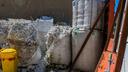

After New Findings, Gospić Initiative Says: ‘This Is No Longer a Debate Over Who Is Exaggerating’
Translated from Croatian and summarized by DistantNews. Read the original for the full story.
At a glance
News
Named sources
Ongoing story
- The civic initiative Gospić Is Our Home said an analysis of groundwater near the Silos site supports its warnings about contamination.
- The analysis, commissioned by Croatia’s anti-corruption office USKOK, found plastic particles in two samples from a downstream borehole.
- The initiative again urged authorities to remove about 37,000 tonnes of waste with hazardous properties from the site.
The Gospić civic initiative “Gospić Is Our Home” says a new groundwater analysis has confirmed warnings it has repeated for 18 months about the urgency of the Silos site.
The analysis was conducted by the Josip Juraj Strossmayer Institute for Water at the request of Croatia’s anti-corruption office, USKOK. Completed on Aug. 9, 2026, it examined two samples taken from a borehole downstream of the landfill. One contained two larger plastic particles, while the other contained 130 significantly smaller particles.
Experts said the pattern indicated intermittent, pulsating leaching through preferential flow paths, including underground karst channels. The initiative described this in everyday terms as an ongoing process that occurs in waves, rather than a trace of an old incident that has subsided. It said the process would continue as long as the waste remained at the site.
The question remains how 37,000 tonnes of waste ended up buried at that location, who transported the waste, who accepted it and who was paid for it.
The initiative said plastic does not break down in soil or water, and that experts had described the resulting change as permanent, with no remediation process capable of returning conditions to their previous state. A supplementary assessment also detected PFAS compounds, known as “forever chemicals.” The group said contamination already underground could not be reversed, but further pollution could be stopped by removing the waste.
It also pointed to an earlier assessment by the University of Zagreb’s Faculty of Geotechnical Engineering, which identified about 37,000 tonnes of waste with hazardous properties, copper concentrations up to 100 times above permitted soil levels and contamination at least 50 metres beyond the landfill. The initiative said the unresolved questions included how the waste arrived, who accepted it and who was paid.
This is no longer a debate over who is exaggerating.
About this summary
Originally published by Večernji List in Croatian. Translated, summarized, and contextualized automatically by DistantNews, with a note on how the source frames the story. Not individually reviewed before publishing. How this works.
More Stories

From Our Blog

News in Translation: What Gets Lost, and How We Keep the Framing

Diaspora Media: How Communities Follow News From Home

Traveling Where the Press Is Not Free: How to Read the News There

The Digital Nomad's Guide to Local News

The Same Story, Different Countries: How Coverage Changes at the Border
