


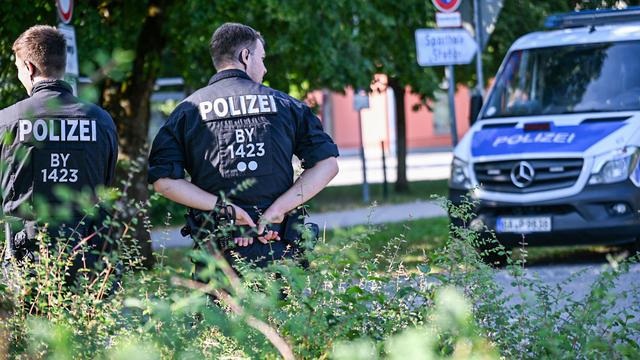
After Suspected Shooting: Safety Concepts for Schools Yes, Active Shooter Drills No?
Translated from German, summarized and contextualized by DistantNews.
At a glance
News
Named sources
Context piece
- Following a suspected school shooting in Schongau, Bavaria, the focus has shifted to school safety concepts and the effectiveness of active shooter drills.
- While all Bavarian state schools have safety concepts and crisis teams, experts advise against practicing active shooter scenarios with students due to potential psychological harm.
- The Bavarian Ministry of Education emphasizes that schools, in coordination with police, decide on the form and frequency of drills to balance preparedness with security.
In the wake of a suspected school shooting in Schongau, Bavaria, a critical debate has emerged regarding the implementation of safety concepts in schools, particularly concerning the practice of active shooter drills. While the Bavarian Ministry of Education confirms that all state schools possess safety concepts and crisis intervention teams, developed in conjunction with police and local authorities, some experts caution against involving students in simulated active shooter exercises.
All state schools in Bavaria have a school safety concept and a school crisis team.
These safety concepts are regularly reviewed and adapted to local conditions, ensuring they are tailored to each school's specific spatial and organizational needs. The ministry also highlighted the availability of the Crisis Intervention and Management Team (KIBBS) for psychological support, crisis management, and aftercare. However, the question of whether and how to practice emergency procedures, especially those involving simulated threats like active shooter alarms, remains a point of contention.
We advise very clearly against training pupils in behavior during an active shooter situation.
Peer-Niclas Unger, a university lecturer and emergency expert, strongly advises against training students in active shooter behavior. He argues that children perceive threats differently and that such drills can induce significant anxiety, potentially leading to school avoidance. "The experience of schools that have done this shows that children subsequently develop fears and no longer want to go to school. And that is precisely what we do not want. We want to create a sense of security," Unger stated.
The experience of schools that have done this shows that children subsequently develop fears and no longer want to go to school. And that is precisely what we do not want. We want to create a sense of security.
The ministry maintains that decisions on drills are made collaboratively by schools, their crisis teams, and the police. The goal is to prepare for emergencies while safeguarding security-sensitive procedures. While regular fire drills are common, the approach to practicing for more extreme scenarios like active shooter events is more nuanced, balancing the need for preparedness with the paramount concern for student well-being and psychological safety.
Whether and in what form drills are carried out is decided by the school together with its crisis team and in close coordination with the police.
DistantNews Editorial
Originally published by Die Zeit in German. Translated, summarized, and contextualized by our editorial team with added local perspective. Read our editorial standards.
More Stories


From Our Blog

What Gets Lost (and Found) When News Is Translated

How the Same Story Looks Different in Different Countries

The Critical Role of Diaspora Media in Global News

What Travellers Should Know About Countries with Restricted Press

A Digital Nomad's Guide to Following Local News
