


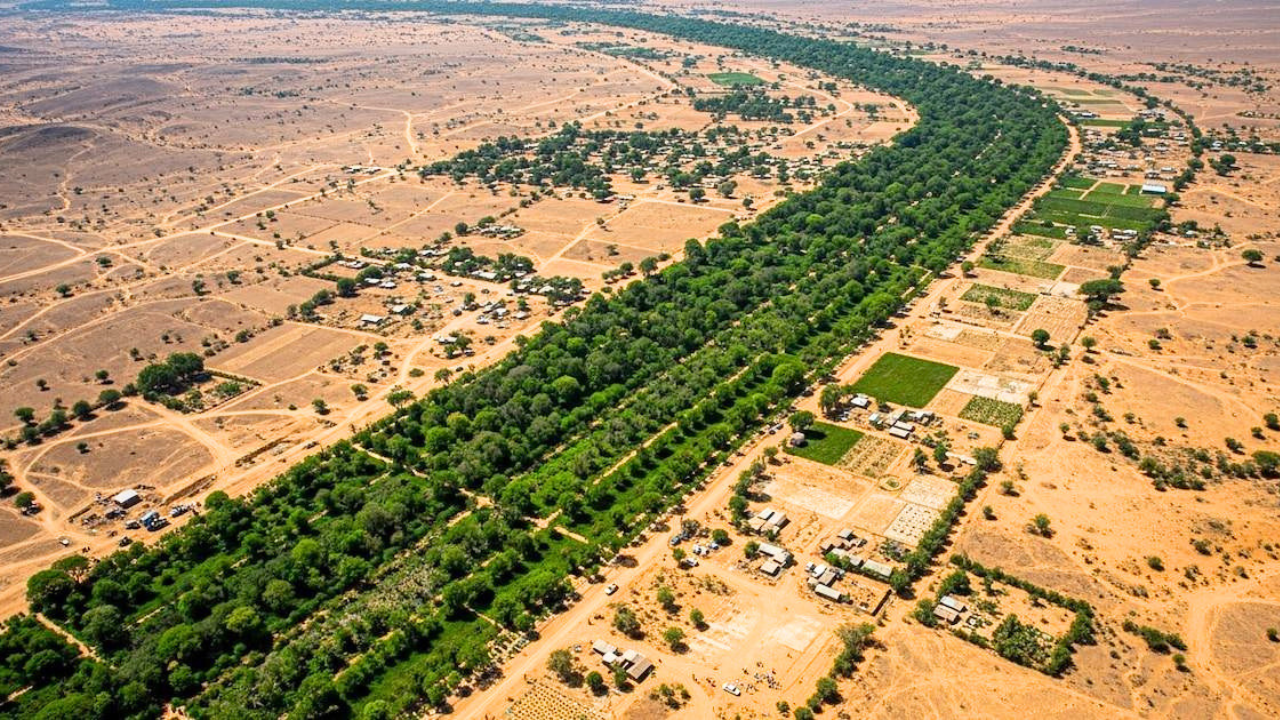
After the Great Wall of China, Africa is building an 8,000-km 'Wall of Trees' to fight climate change, restore land and feed millions
Summarized and contextualized by DistantNews.
At a glance
In-depth
Sources not specified
Context piece
- Africa is undertaking the Great Green Wall initiative, an 8,000-km project spanning the Sahel region to combat desertification and climate change.
- Launched in 2007 by the African Union, the initiative aims to restore degraded land, improve food security, create jobs, and help communities adapt to climate change.
- The project combines tree planting with restoring forests, grasslands, wetlands, and farmland, using locally tailored approaches rather than a single line of trees.
Spanning an immense 8,000 kilometers from Senegal's Atlantic coast to Djibouti on the Red Sea, Africa is embarking on the Great Green Wall initiative, one of the most ambitious environmental projects ever conceived. This vast undertaking aims to combat desertification, restore degraded land, bolster food security, generate millions of jobs, and enhance community resilience to climate change across the Sahel region.
The Great Green Wall, initiated by the African Union in 2007, was initially envisioned as a continuous belt of trees. However, the project has evolved. Scientists and conservationists recognized that a more effective strategy involves restoring diverse ecosystems, including forests, grasslands, wetlands, and farmland, tailored to local conditions. This flexible approach ensures that restoration efforts are context-specific and sustainable.
The Sahel region, bordering the Sahara Desert, has long suffered from desertification, prolonged droughts, land degradation, and the impacts of climate change. Millions rely on farming and livestock, but declining crop yields and unpredictable rainfall have led to food insecurity and poverty. The Great Green Wall seeks to reverse these trends by improving soil health, water retention, and vegetation cover, ultimately making farmland more productive and strengthening biodiversity.
Beyond simply planting trees, the initiative encompasses a range of restoration activities. In some areas, native trees are planted, while in others, communities focus on protecting natural regeneration, improving soil quality, harvesting rainwater, or adopting sustainable farming practices. By 2030, the project aims to restore 100 million hectares of degraded land, an area comparable to Egypt, and capture 250 million tons of carbon. This ambitious endeavor represents a significant commitment to ecological restoration and climate adaptation in one of the world's most vulnerable regions.
DistantNews Editorial
Originally published by Times of India. Summarized and contextualized by our editorial team with added local perspective. Read our editorial standards.
More Stories


From Our Blog

What Press Freedom Means for the News You Read

What Gets Lost (and Found) When News Is Translated

The Critical Role of Diaspora Media in Global News

What Travellers Should Know About Countries with Restricted Press

A Digital Nomad's Guide to Following Local News
