


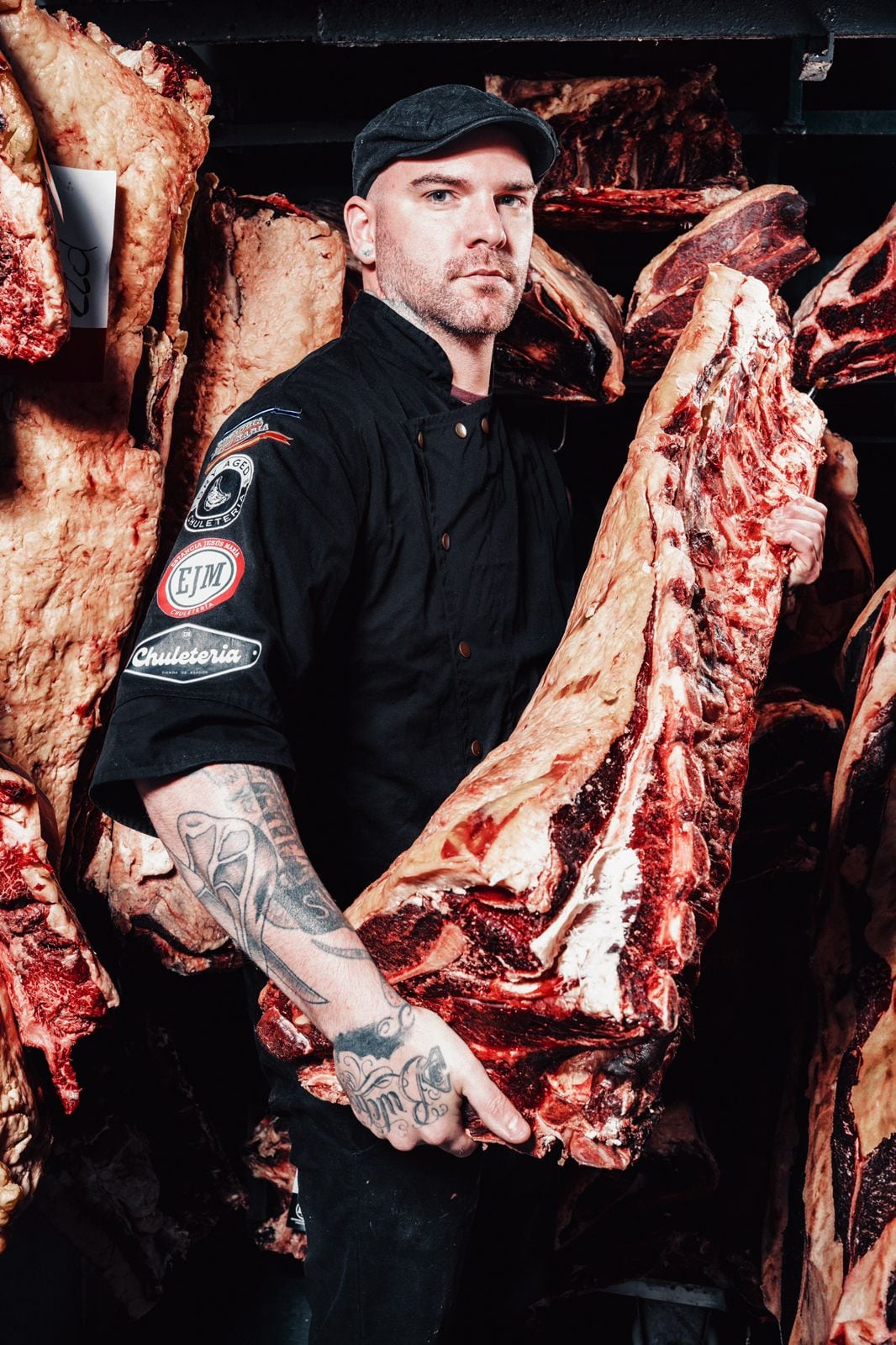
Aged beef: How a Spanish-inspired butcher shop found its niche serving top chefs
Translated from Spanish, summarized and contextualized by DistantNews.
At a glance
In-depth
Sources not specified
Context piece
- Leandro Loureiro, inspired by his grandfather's traditional meat preparation, now leads Estancia Jesús María, a butcher shop specializing in aged beef.
- Loureiro transitioned from a high-volume neighborhood butcher to a niche product provider, supplying acclaimed chefs and restaurants in Argentina.
- His journey involved early work in his father's butcher shop, a stint in refrigeration, and a personal crisis that led him to redefine his business model.
Leandro Loureiro, now 37, stands at the helm of Estancia Jesús María, a butcher shop in Palomar that has shifted from a high-volume neighborhood business to a niche purveyor of aged beef. Loureiro's passion for meat was ignited in childhood, surrounded by family involved in the trade. "My whole circle was meat," he recalls. "My mother came with things from the cold storage, and my father from the butcher shop; there was no escape. I always say the same thing: I was born to be a butcher."
My whole circle was meat. My mother came with things from the cold storage, and my father from the butcher shop; there was no escape. I always say the same thing: I was born to be a butcher.
His current venture focuses on "vaca vieja madurada" – aged old cow meat – a product that has garnered the attention of renowned chefs and restaurants. Estancia Jesús María supplies establishments like Sagardi, Elena, Trescha, Furia Puro Fuego in Mar del Plata, and Palacio Duhau - Park Hyatt Buenos Aires. The shop also provides burgers to local eateries such as Ribbs al Río.
However, this success was not immediate. Loureiro's path involved years of working in his father's butcher shop from a young age, a period of over two years in refrigeration work, amateur boxing, and an internal crisis that prompted a significant shift in his business model. "My father instilled work in me from a very young age," he notes.
My father instilled work in me from a very young age.
Loureiro recounts learning the complete process of butchery, from breaking down the carcass to mastering finer cuts. "When I finished learning to do the whole half-carcass, because I knew how to cut it but didn't know how to get into the finer cuts like disassembling a quarter, I felt I had achieved what I was looking for," he says. This dedication to mastering the craft underpins his current specialized approach.
When I finished learning to do the whole half-carcass, because I knew how to cut it but didn't know how to get into the finer cuts like disassembling a quarter, I felt I had achieved what I was looking for.
DistantNews Editorial
Originally published by La Nación in Spanish. Translated, summarized, and contextualized by our editorial team with added local perspective. Read our editorial standards.
More Stories
From Our Blog

What Gets Lost (and Found) When News Is Translated

The Critical Role of Diaspora Media in Global News

What Travellers Should Know About Countries with Restricted Press

A Digital Nomad's Guide to Following Local News

How the Same Story Looks Different in Different Countries
