


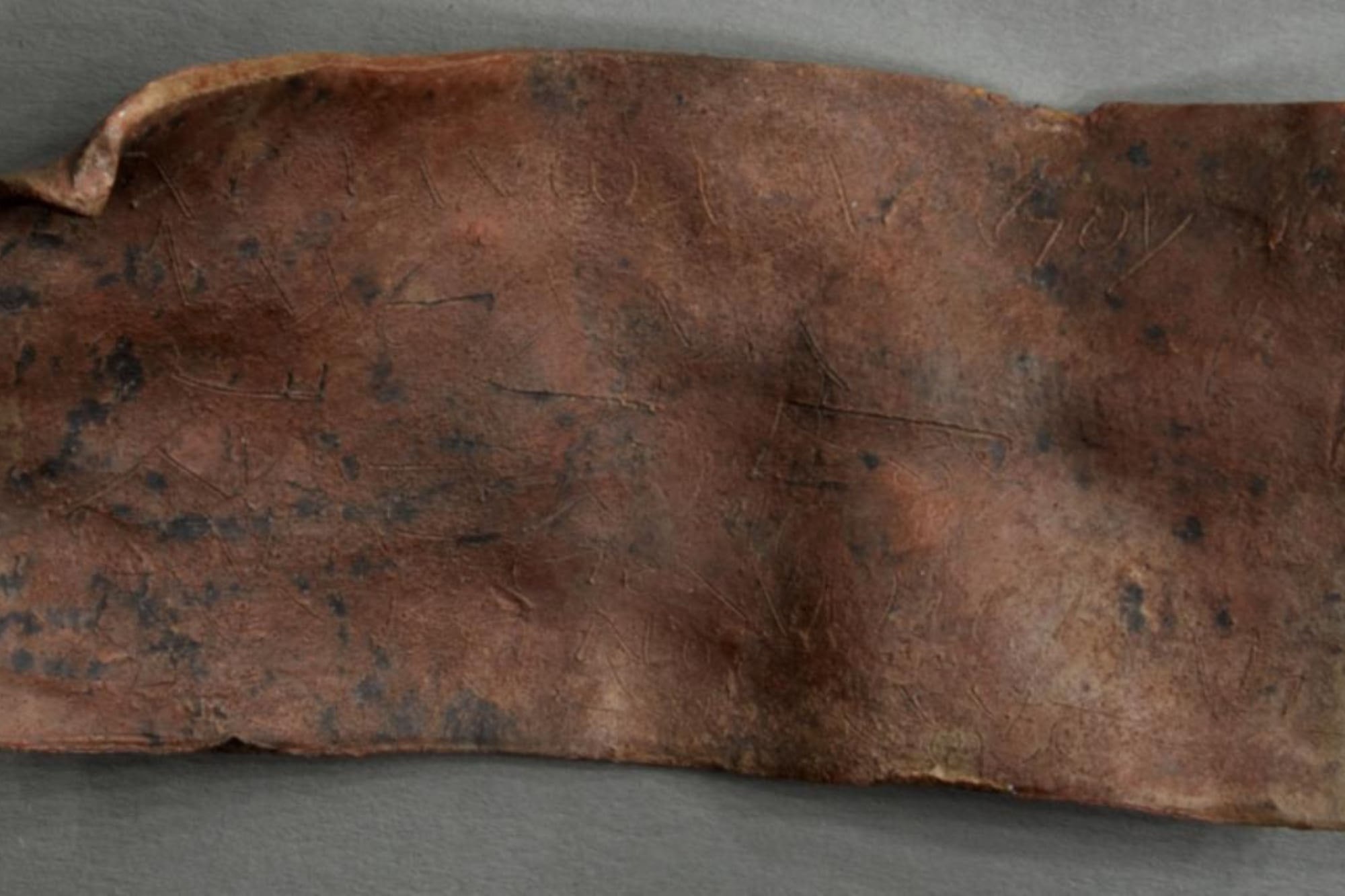
Secret of 'cursed tablet' that baffled historians for centuries revealed
Translated from Spanish, summarized and contextualized by DistantNews.
At a glance
News
Sources not specified
Context piece
- Archaeologists discovered a 1,500-year-old curse tablet in Haarlem, Netherlands, dating back to the Roman Empire.
- The tablet, written in ancient Greek, contains inscriptions intended to harm enemies through spells and rituals.
- Such tablets, often made of lead, were buried to influence rivals, with this one featuring Egyptian-style deities and magical symbols.
An ancient curse tablet, believed to be over 1,500 years old, has been unearthed in Haarlem, Netherlands, shedding light on the magical practices and beliefs that spread during the Roman Empire's expansion.
The tablet, discovered during an expedition by Heidelberg University, is inscribed in ancient Greek, a departure from the more common Latin found on similar artifacts in Northern Europe. It features Egyptian-style deities and a group of three magical symbols known as Characteres. The artifact, measuring 9.3 by 4.8 centimeters, was found beneath an old Roman military settlement called Coriovallum.
These curse tablets, often made of lead due to its perceived binding properties and durability, were used to inflict misfortune on enemies. Historians and archaeologists believe that after inscribing spells, the tablets were buried to influence or bind litigants, opponents, or romantic rivals. The use of such objects was influenced by various Mediterranean beliefs, including Greek and Egyptian traditions, which combined to create potent rituals for harming others.
Analysis of the tablet, conducted using reflectance transformation imaging (RTI) at the Institute of Papyrology, revealed distinct groups of characters. According to Dr. Ast, these inscriptions likely served to transmit the desired message to supernatural forces. The tablet mentions the names of two men and two women, referred to as fellow slaves. A papyrologist from Heidelberg explained that the tablet could be a curse against these four slaves or a curse directed at an unnamed individual on their behalf.
The composition of the individuals named on the tablet is considered unusual, as it includes two Latin male names alongside the others. This particular tablet is similar to one found in Haarlem that records Soterianos Limbaros cursing his legal adversary, Ariston. The discovery offers a tangible link to the ancient world's attempts to harness supernatural powers for personal vendettas.
The tablet served as a curse against these four slaves or as a curse in their name against a person without a name.
DistantNews Editorial
Originally published by La Nación in Spanish. Translated, summarized, and contextualized by our editorial team with added local perspective. Read our editorial standards.
More Stories



From Our Blog

What Gets Lost (and Found) When News Is Translated

The Critical Role of Diaspora Media in Global News

What Travellers Should Know About Countries with Restricted Press

A Digital Nomad's Guide to Following Local News

How the Same Story Looks Different in Different Countries
