


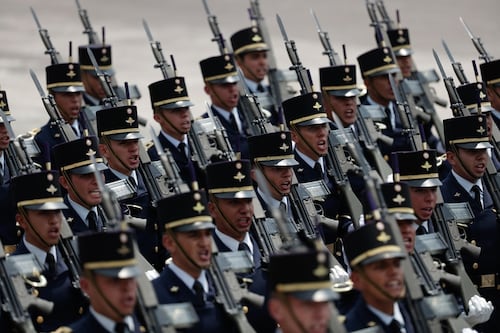
Aguascalientes Seeks Federal Approval for Militarized High Schools
Translated from Spanish, summarized and contextualized by DistantNews.
At a glance
News
Sources not specified
New plan
- Aguascalientes seeks federal approval for its three militarized high schools.
- The state government will discuss the issue with the Ministry of Interior and the Army.
- Officials cite the schools' positive results and role in training security agents.
The government of Aguascalientes is pursuing federal endorsement for its three militarized high schools, which face potential closure nationwide. Secretary of Government José Antonio Arámbula López announced that state officials will engage in discussions with the Ministry of Interior (Segob) and the Mexican Army to ensure these institutions continue operating in the state.
Arámbula López explained that the matter is under review, with the government working to secure legal support and federal approval. He emphasized that the schools have yielded positive outcomes and serve as a pipeline for future security agents. The state hopes federal authorities will visit to observe the quality of education and training provided to students, thereby demonstrating the programs' societal benefits.
"We want to see how we can work with them. We are looking for the agreements that were made at the time, which are in the archive," the official stated. Responding to concerns from parents about the potential discontinuation of these schools, the state government aims to provide formal certainty. Officials highlighted that the curriculum is not solely militarized but also encompasses academic and general formative education.
The decision by the Secretariat of Public Education to close militarized high schools across the country has prompted this initiative. Aguascalientes aims to differentiate its programs and secure their continuation, emphasizing their value in preparing students for security roles and contributing positively to society.
We want to see how we can work with them. We are looking for the agreements that were made at the time, which are in the archive.
DistantNews Editorial
Originally published by El Universal in Spanish. Translated, summarized, and contextualized by our editorial team with added local perspective. Read our editorial standards.
More Stories
From Our Blog

What Press Freedom Means for the News You Read

What Gets Lost (and Found) When News Is Translated

The Critical Role of Diaspora Media in Global News

What Travellers Should Know About Countries with Restricted Press

A Digital Nomad's Guide to Following Local News
