


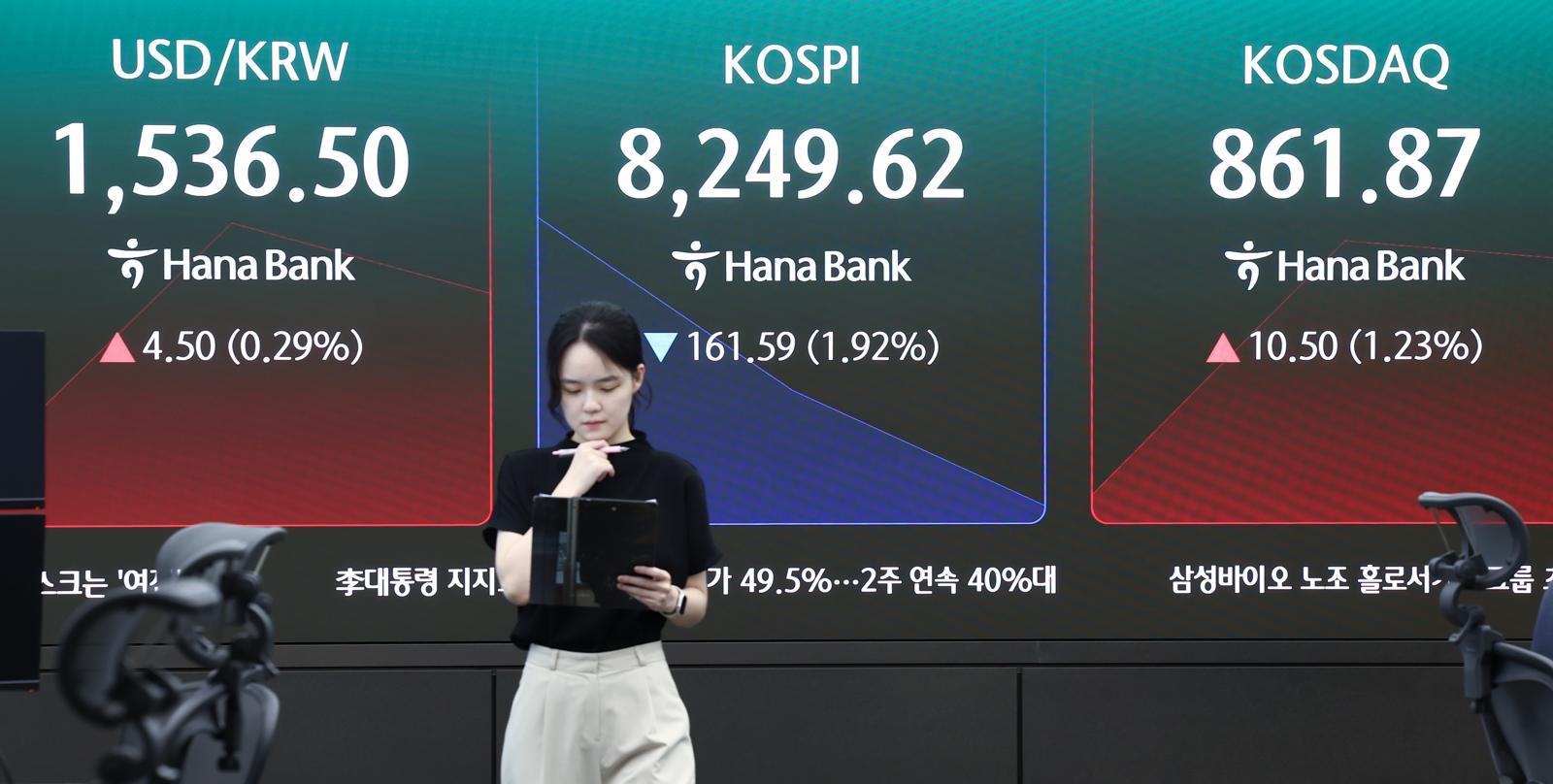
AI bubble fears trigger $3.5 billion sell-off, KOSPI volatility index hits record high
Translated from Korean, summarized and contextualized by DistantNews.
At a glance
News
Documents & data
Ongoing story
- The KOSPI index fell below 8,200 points, with foreign investors selling over $3.5 billion worth of stocks.
- The KOSPI Volatility Index (VKOSPI) reached a record high, indicating increased market fear.
- Concerns over an AI bubble, fueled by reports from the Bank for International Settlements (BIS), are impacting investor sentiment.
South Korea's stock market experienced a sharp downturn on June 29, 2026, as the KOSPI index dropped below the 8,200 mark. Foreign investors offloaded stocks worth over 3.5 trillion won (approximately $3.5 billion), marking the seventh consecutive day of net selling.
The market's fear gauge, the KOSPI 200 Volatility Index (VKOSPI), surged to a record high of 97.99 during intraday trading, reflecting heightened investor anxiety. This volatility is largely attributed to renewed concerns about a potential artificial intelligence (AI) bubble.
AI bubble collapse is a major threat to the world economy.
Adding to the market's jitters, the Bank for International Settlements (BIS), often referred to as the 'central bank for central banks,' warned in its annual economic report that the collapse of an AI bubble poses a significant threat to the global economy. The BIS specifically highlighted the opaque 'circular financing' strategies used by major tech firms to secure investment for AI development.
These strategies involve semiconductor manufacturers or data center operators acquiring stakes in AI developers, who then commit to purchasing their hardware and services for several years. The BIS cautioned that if investors become disappointed with AI-related returns, it could trigger a sudden withdrawal of funds, leading to a prolonged investment downturn and cascading effects on the financial environment.
If investors become disappointed with AI-related returns, it could trigger a sudden withdrawal of funds, leading to a prolonged investment downturn and cascading effects on the financial environment.
DistantNews Editorial
Originally published by Dong-A Ilbo in Korean. Translated, summarized, and contextualized by our editorial team with added local perspective. Read our editorial standards.
More Stories



From Our Blog

What Gets Lost (and Found) When News Is Translated

The Critical Role of Diaspora Media in Global News

What Travellers Should Know About Countries with Restricted Press

A Digital Nomad's Guide to Following Local News

How the Same Story Looks Different in Different Countries
