



AI designs 'viruses not found in nature,' raising biotech hopes and safety fears
Translated from Korean, summarized and contextualized by DistantNews.
At a glance
News
Sources not specified
New plan
- Scientists have created 16 new types of viruses using AI that do not exist in nature. The AI model learned from millions of genetic data points to design these novel viruses.
- While some see this as a new tool for biotechnology, others express concerns about the potential to create dangerous pathogens.
- Researchers emphasize safety measures, but experts warn that current biosafety systems have not caught up with AI's capabilities in designing synthetic viruses.
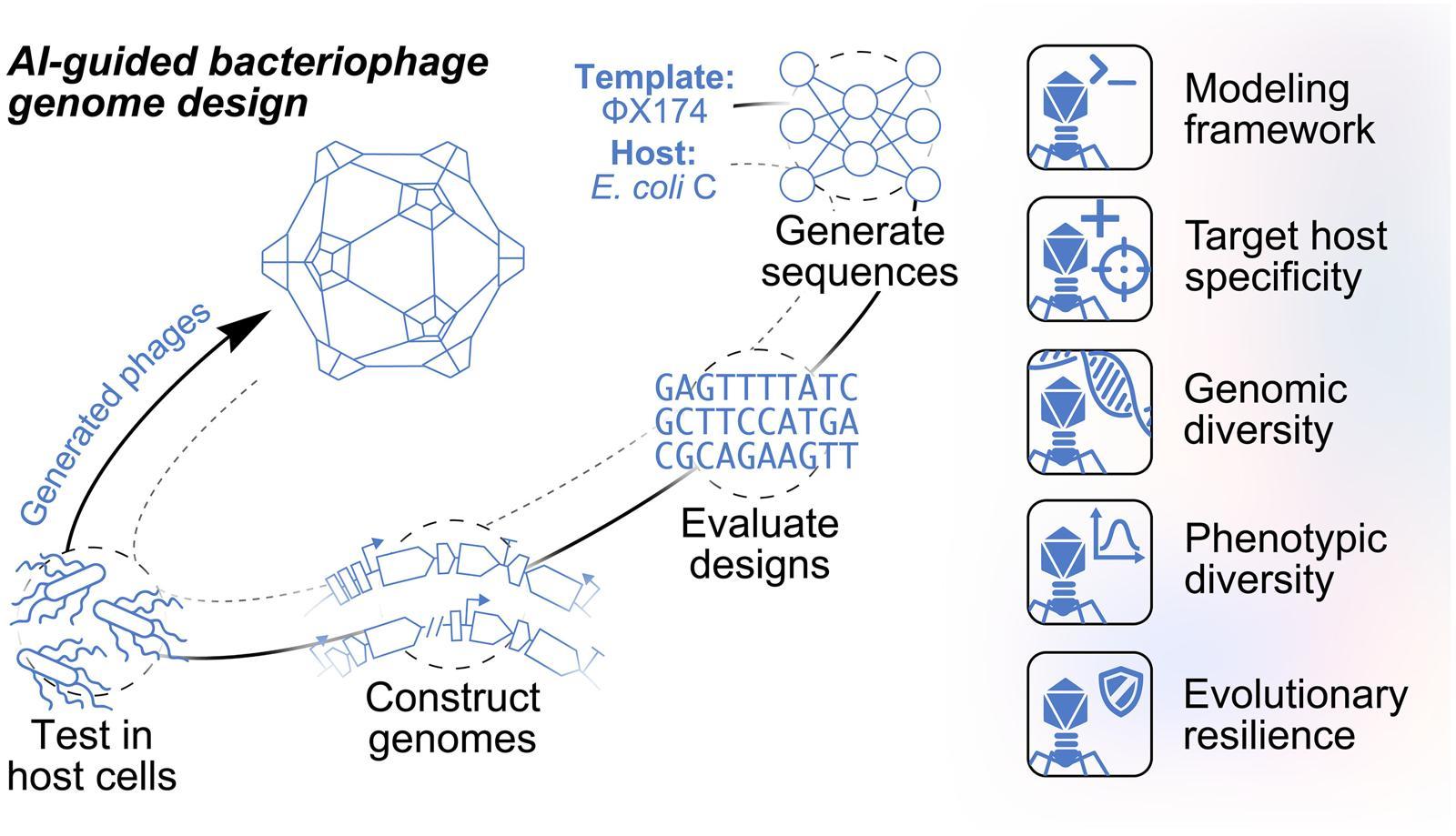
Researchers have engineered 16 novel viruses, designed by an artificial intelligence model, that do not exist in nature. The study, published in the journal Science, utilized AI models named Evo1 and Evo2, which can read and learn from genetic sequences like human language. These AI systems were trained on vast amounts of genetic data from various organisms, enabling them to design and synthesize new genetic material.
The technology developed by the research team is promising for the life sciences, but at the same time raises urgent biosafety and biosecurity issues.
The research team focused on designing artificial viruses that infect E. coli bacteria. Using genetic data from the bacteriophage virus ΦX174 and related genes, the AI generated thousands of potential sequences. After synthesizing and testing these sequences in host bacteria, 16 artificial viruses proved capable of infecting E. coli and surviving, with some even exhibiting faster replication rates than their natural counterparts.
We now have the ability to synthesize viral genomes with generative AI, but a system to manage it safely has not yet been established.
Proponents of the technology suggest it could revolutionize phage therapy, a method using bacteriophages to kill harmful bacteria, and expand the toolkit of biotechnology. However, the development has also sparked significant concerns regarding biosafety and biosecurity. Experts warn that the ability to synthesize viral genomes using generative AI poses risks, as the technology could potentially be used to create more infectious or lethal pathogens.
One could ask a genome language model to 'create an influenza genome that is more contagious or has a higher fatality rate.'
While the researchers implemented preventative measures by excluding data on viruses known to harm humans or animals during AI training, the inherent unpredictability of novel viruses remains a challenge. The potential danger of a virus that has never existed before is unknown, raising questions about the adequacy of current safety protocols. Some argue that the threat of AI-designed viruses is overstated, suggesting that modifying existing pathogens is a more immediate and likely danger. Others emphasize the need for a multi-layered management system that addresses AI model development, access, research review, synthesis verification, and laboratory biosecurity.
The threat posed by AI designing and generating viral or bacterial genomes is exaggerated.
DistantNews Editorial
Originally published by Hankyoreh in Korean. Translated, summarized, and contextualized by our editorial team with added local perspective. Read our editorial standards.
More Stories


From Our Blog

What Gets Lost (and Found) When News Is Translated

The Critical Role of Diaspora Media in Global News

What Travellers Should Know About Countries with Restricted Press

A Digital Nomad's Guide to Following Local News

How the Same Story Looks Different in Different Countries
