


AI enters businesses: 'It's no longer about learning, but about implementation'
Translated from Polish, summarized and contextualized by DistantNews.
At a glance
News
Sources not specified
Context piece
- Google Poland and SGH Warsaw School of Economics concluded their "Skills of Tomorrow: AI 3.0" program, focusing on practical AI implementation for businesses.
- The program saw record participation, with nearly 46,000 out of over 65,000 qualified individuals earning certificates, achieving a 71% completion rate globally exceptional for online courses.
- The focus is shifting from learning AI to its practical application, emphasizing that continuous learning and implementation are key for businesses, especially SMEs, to drive economic growth.
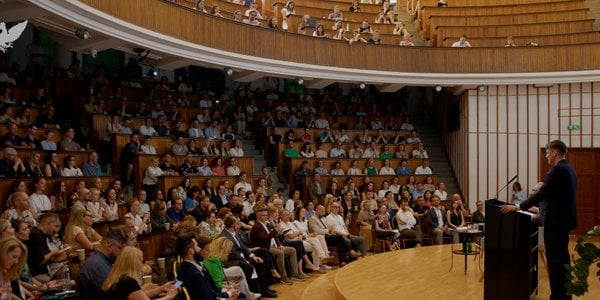
The "Skills of Tomorrow: AI 3.0" program, a collaboration between Google Poland and the SGH Warsaw School of Economics, has concluded its latest edition, emphasizing the critical shift from AI education to practical implementation. The program's closing conference at SGH highlighted the importance of translating newly acquired knowledge into tangible business solutions.
Each of you, I wish that what you have gained during the classes, you will translate into practice as quickly as possible, because that is also our goal.
Piotr Wachowiak, Rector of SGH, noted the program's significance, especially as it coincided with the university's 120th anniversary. He encouraged participants to quickly apply their learnings, aligning with the institution's mission to cultivate leaders equipped with cutting-edge knowledge. SGH's consistent success in graduate employment rankings underscores the relevance of such programs.
Rafał Kudriawcew, Industry Leader at Google Poland, praised the collaboration and participant engagement. He stressed that the initiative primarily targets small and medium-sized enterprises (SMEs), which form the backbone of the Polish economy, contributing nearly half of the GDP. By equipping these businesses with new skills, the program aims to stimulate national economic growth.
Your very presence testifies to how good this course was and what a good edition it was.
This third edition set new records, with over 65,000 individuals qualifying and nearly 46,000 earning certificates. The program's 71% completion rate is a remarkable global achievement, far exceeding the typical 10-15% for online courses. Kudriawcew emphasized that this success signifies the transfer of valuable new competencies. However, he cautioned that learning AI is an ongoing journey, urging participants to focus on practical implementation and continuous adaptation to new solutions.
It is they who are the heart of the Polish economy. They are responsible for almost half of the GDP. When we transfer new competencies into the hands of owners and employees of these companies, we want to believe that we are also driving the Polish economy.
Michał Domagała, the program's lead expert from Google Poland, detailed that the 32 courses comprised 124 lessons totaling approximately 27 hours of material. He reiterated that the certificate is secondary to the practical application of knowledge. The true measure of success lies in how participants leverage their AI expertise to innovate and drive business forward, moving beyond mere completion of lessons.
Over 65,000 people qualified for the program, and almost 46,000 obtained a certificate. This is absolutely exceptional.
DistantNews Editorial
Originally published by Rzeczpospolita in Polish. Translated, summarized, and contextualized by our editorial team with added local perspective. Read our editorial standards.
More Stories



From Our Blog

What Gets Lost (and Found) When News Is Translated

The Critical Role of Diaspora Media in Global News

What Travellers Should Know About Countries with Restricted Press

A Digital Nomad's Guide to Following Local News

How the Same Story Looks Different in Different Countries
