


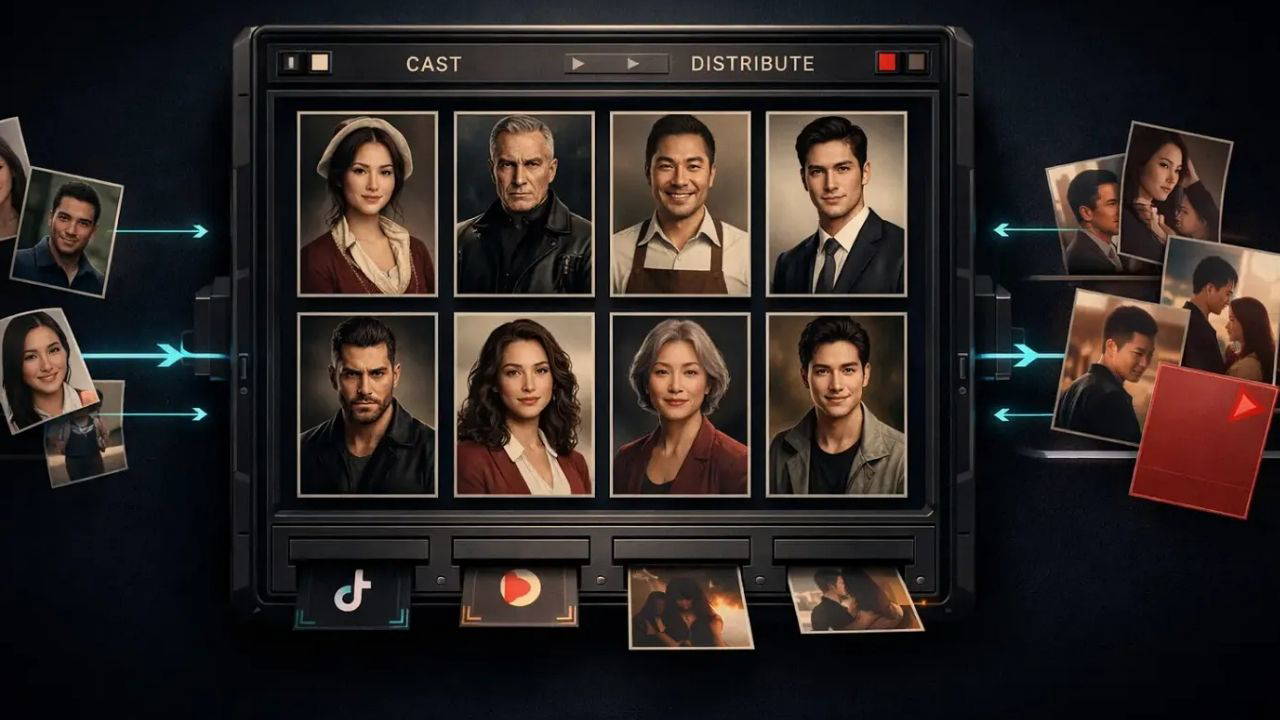
AI-generated series signal new era in cinema, but face audience criticism
Translated from Turkish, summarized and contextualized by DistantNews.
At a glance
News
Sources not specified
Context piece
- Media companies in Asia, particularly China, India, and Indonesia, are increasingly using artificial intelligence to produce TV series, aiming to lower costs and speed up content creation.
- AI is being employed in scriptwriting, character design, voiceovers, and video editing for both short-form mobile content and longer productions.
- However, viewers are noting limitations in AI-generated content, citing a lack of emotional depth in characters and issues with visual continuity between scenes.
The film and entertainment industry is entering a new era as artificial intelligence takes on roles in scriptwriting, character design, voiceovers, and video editing. Media companies across Asia, especially in China, India, and Indonesia, are leveraging AI to reduce production costs and accelerate the creation of television series.
In China, AI-assisted short dramas, typically 2-5 minutes long for mobile devices, have become a rapidly growing sector. By January 2026, over 14,600 AI-powered short dramas were released, with the total number of AI-generated short dramas reaching 127,800 by February 2026. Indonesia saw its first fully AI-produced TV drama, "Legenda Bertuah," based on folk legends, launch in January 2026. Meanwhile, Indian media giant JioStar is developing productions where AI handles all aspects, from script to editing.
Despite the efficiency gains, audiences are pointing out significant shortcomings. Viewers on cinema platforms and social media express that AI productions struggle to capture the emotional depth of characters and exhibit deficiencies in maintaining visual continuity across scenes. Issues include inconsistent character appearance, unnatural facial expressions, and problems with eye contact and gaze direction. In crowded scenes, background characters sometimes repeat movements, and objects held by characters can change shape or size. While the error rate decreases in later episodes, AI-related flaws persist, indicating that AI-generated content has yet to fully replicate the nuances of traditional human performance.
DistantNews Editorial
Originally published by Cumhuriyet in Turkish. Translated, summarized, and contextualized by our editorial team with added local perspective. Read our editorial standards.
More Stories


From Our Blog

What Gets Lost (and Found) When News Is Translated

The Critical Role of Diaspora Media in Global News

What Travellers Should Know About Countries with Restricted Press

A Digital Nomad's Guide to Following Local News

How the Same Story Looks Different in Different Countries
