


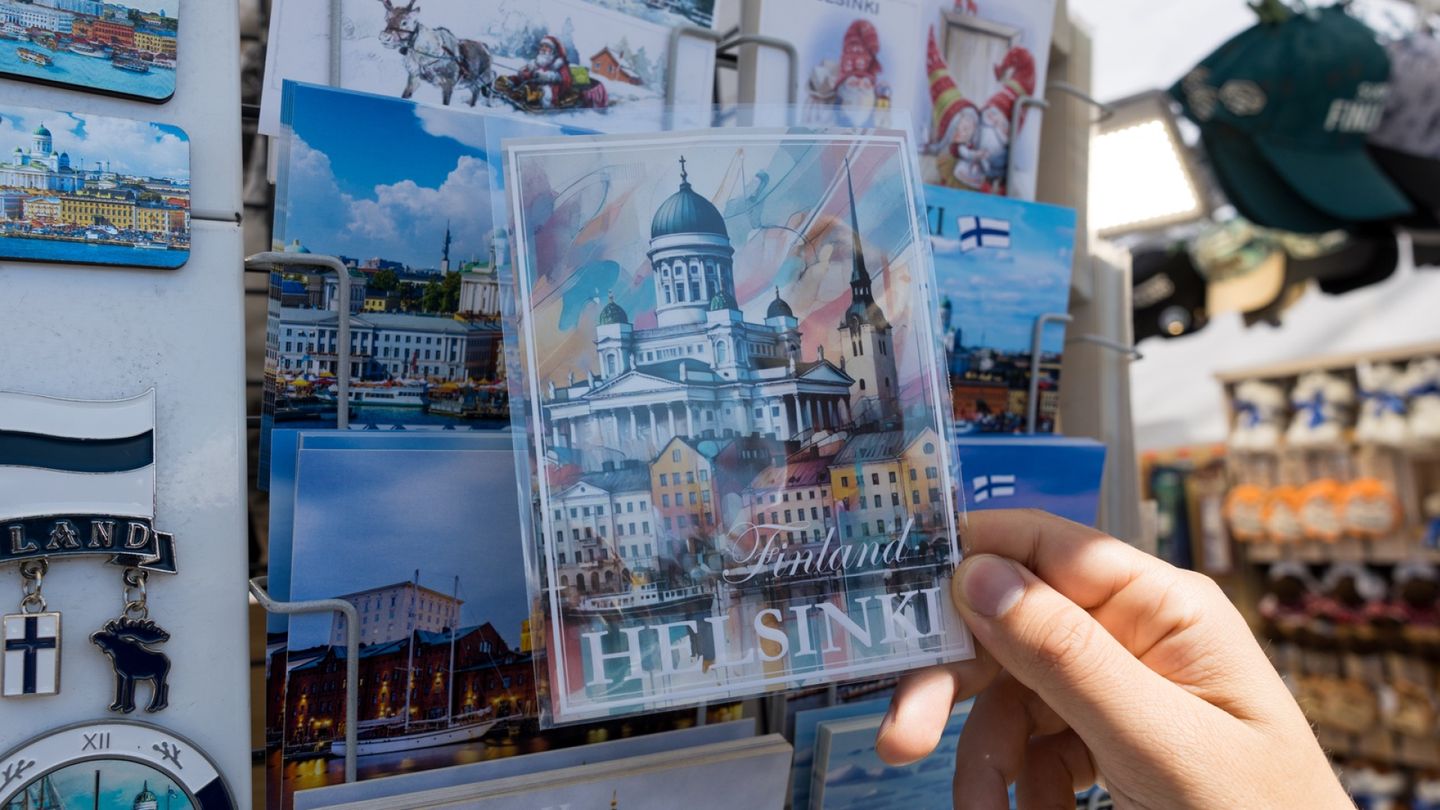
AI-generated souvenirs in Helsinki blend landmarks and confuse tourists
Translated from Finnish, summarized and contextualized by DistantNews.
At a glance
News
Named sources
Context piece
- Souvenirs sold at Helsinki's Market Square feature inaccurate depictions of the city's landmarks, with some incorporating elements from other locations.
- The inaccuracies stem from the use of AI in the design process, leading to a blend of Finnish imagery that can confuse tourists.
- Experts warn that such souvenirs, which may become a tourist's sole impression of Helsinki, can create misleading perceptions of the city and country.
Helsinki's Market Square offers a vibrant array of souvenirs, from fridge magnets to postcards, but many feature strikingly inaccurate depictions of the city's iconic landmarks. The Helsinki Cathedral, a prominent symbol, appears with varying colors, dome designs, and incorrect numbers of Corinthian columns. In some instances, a church tower resembling Tallinn's Old Town has inexplicably appeared in the Helsinki skyline.
the products are mass-produced but the company designed them.
Further inaccuracies plague other souvenirs. Magnets depicting the Amos Rex art museum show blurred details of the Lasipalatsi Square, with glass domes all pointing the same way, a missing text on a chimney, and a misplaced clock face. A new Renaissance-style building has also been added to the background. Natalia Prozorova, who sells these products for Scandifors Oy, acknowledges that while the products are mass-produced, the company designed them. She admits that AI was used in the design of some items, with the goal not always being realism but rather creating a "Helsinki-like" landscape.
AI was used in the design of some items. The goal was not always realism but rather creating a 'Helsinki-like' landscape.
These blended images, which can include reindeer and Northern Lights, symbols strongly associated with Lapland, alongside city landmarks, can be amusing to locals but create a distorted image for tourists. Monika Lüthje, a tourism researcher at the University of Lapland, notes that souvenirs can be a tourist's only lasting impression of a destination. When AI or incomplete information is used to represent local context, the result can be "quite wild." Visit Finland's Asta Kekkonen also points out that AI can lead to misinterpretations when souvenirs bearing the name "Helsinki" are inspired by other places.
If local context is represented with AI or incomplete information, the result can be 'quite wild.'
The fusion of imagery, such as combining the north and south coasts of the Gulf of Finland on a single postcard or featuring polar bears alongside reindeer on magnets, reflects a broader trend. Lüthje suggests that for many international tourists, Lapland represents the strongest image of Finland, leading to an easy conflation of Nordic themes. This phenomenon highlights the challenges of accurately representing a city and country through mass-produced merchandise, especially when artificial intelligence plays a role in the creative process.
AI can lead to misinterpretations when souvenirs with 'Helsinki' text are inspired by other places.
DistantNews Editorial
Originally published by Helsingin Sanomat in Finnish. Translated, summarized, and contextualized by our editorial team with added local perspective. Read our editorial standards.
More Stories


From Our Blog

What Gets Lost (and Found) When News Is Translated

The Critical Role of Diaspora Media in Global News

What Travellers Should Know About Countries with Restricted Press

A Digital Nomad's Guide to Following Local News

How the Same Story Looks Different in Different Countries
