


AI, information overload renew journalism's importance: expert
Translated from Spanish, summarized and contextualized by DistantNews.
At a glance
News
Named sources
Context piece
- Journalists face increasing difficulty distinguishing fact from fiction due to information overload, AI, and new technologies, according to Aníbal de Castro.
- De Castro stated that while digital revolution democratized publishing, it did not democratize journalism, which requires verification methods.
- He advised journalists to embrace AI as a tool for tasks like data analysis but cautioned against uncritical fascination, emphasizing professional judgment and credibility.
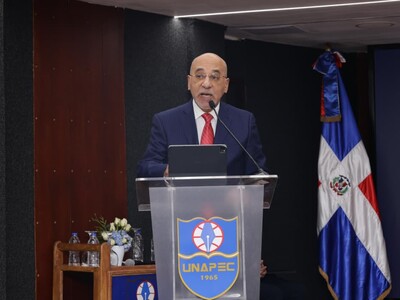
Aníbal de Castro, director-founder of Diario Libre and a National Journalism Prize winner, emphasized the renewed importance of journalism in the face of overwhelming information, artificial intelligence, and evolving technologies. Speaking at the opening of the Contemporary Journalism program at Universidad APEC (UNAPEC), he highlighted the growing challenge of discerning facts from opinions and false content.
De Castro explained that the digital revolution has democratized the ability to publish, but this does not equate to democratizing the practice of journalism. True journalism, he asserted, begins with submitting information to a verification process. This involves scrutinizing the origin of data, identifying sources, examining supporting evidence, and understanding potential biases or interests.
He identified essential qualities for contemporary journalists as the ability to observe, listen, question, doubt, verify, and comprehend. De Castro urged professionals to maintain their independence and intellectual honesty, describing journalism as a discipline of curiosity and a commitment to facts, even amidst technological advancements.
democratizar la capacidad de publicar no equivale a democratizar la capacidad de hacer periodismo
Addressing artificial intelligence, De Castro cautioned against both outright rejection and uncritical acceptance. He acknowledged AI's utility in tasks such as transcribing interviews, comparing documents, organizing chronologies, and analyzing large datasets. However, he stressed that these tools cannot replace professional judgment or responsibility. "The tool can help us locate where to search, but it does not free us from verifying what we have found," he stated.
De Castro also warned about the influence of algorithms and metrics in newsrooms, noting the danger of confusing what is popular with what is important. He advocated for attracting audiences without resorting to deception or manipulation. Ultimately, he concluded, credibility remains journalism's most valuable and fragile asset, especially in an era of declining trust. The journalist's unique value will increasingly lie in their capacity for independent thought.
La herramienta puede ayudarnos a localizar dónde buscar, pero no nos libera de comprobar lo encontrado
DistantNews Editorial
Originally published by Diario Libre in Spanish. Translated, summarized, and contextualized by our editorial team with added local perspective. Read our editorial standards.
More Stories



From Our Blog

What Gets Lost (and Found) When News Is Translated

The Critical Role of Diaspora Media in Global News

What Travellers Should Know About Countries with Restricted Press

A Digital Nomad's Guide to Following Local News

How the Same Story Looks Different in Different Countries
