


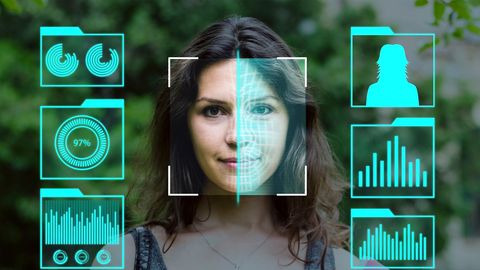
AI's evaluation of people: Understanding reliability, but with its own biases
Translated from Estonian, summarized and contextualized by DistantNews.
TLDR
- Artificial intelligence systems are increasingly used for decision-making, such as loan applications and hiring.
- A recent study suggests AI understands reliability but uses different methods than humans.
- These differing AI evaluations could impact daily life, and hidden biases within AI assessments are a growing concern.
As artificial intelligence integrates deeper into our daily lives, a critical question emerges: how do these systems perceive us? A recent study offers a fascinating, albeit complex, answer, suggesting that AI understands the concept of trustworthiness, but its methods diverge significantly from human intuition. This distinction is not merely academic; it carries profound implications for how we are evaluated in crucial areas like loan applications and employment. While AI's ability to process vast amounts of data offers potential for objective decision-making, the study highlights that its internal logic may harbor patterns and biases that are not immediately apparent. This divergence means that different AI systems might assess the same individual in entirely different ways, leading to potentially inconsistent and unfair outcomes. For Estonians, who are increasingly interacting with AI in various services, understanding these underlying mechanisms is paramount. The challenge lies in ensuring that AI's 'judgment' is not only efficient but also equitable, reflecting a nuanced understanding of human reliability rather than replicating or even amplifying existing societal biases. Postimees emphasizes the need for transparency and critical examination of these AI-driven decisions, urging a cautious approach as these technologies become more pervasive.
DistantNews Editorial
Originally published by Postimees in Estonian. Translated, summarized, and contextualized by our editorial team with added local perspective. Read our editorial standards.
More Stories
/nginx/o/2026/04/21/17583844t1h87f6.jpg)
/nginx/o/2026/04/21/17583842t1h5d2c.jpg)

From Our Blog

What Gets Lost (and Found) When News Is Translated

The Critical Role of Diaspora Media in Global News

What Travellers Should Know About Countries with Restricted Press

A Digital Nomad's Guide to Following Local News

How the Same Story Looks Different in Different Countries
