


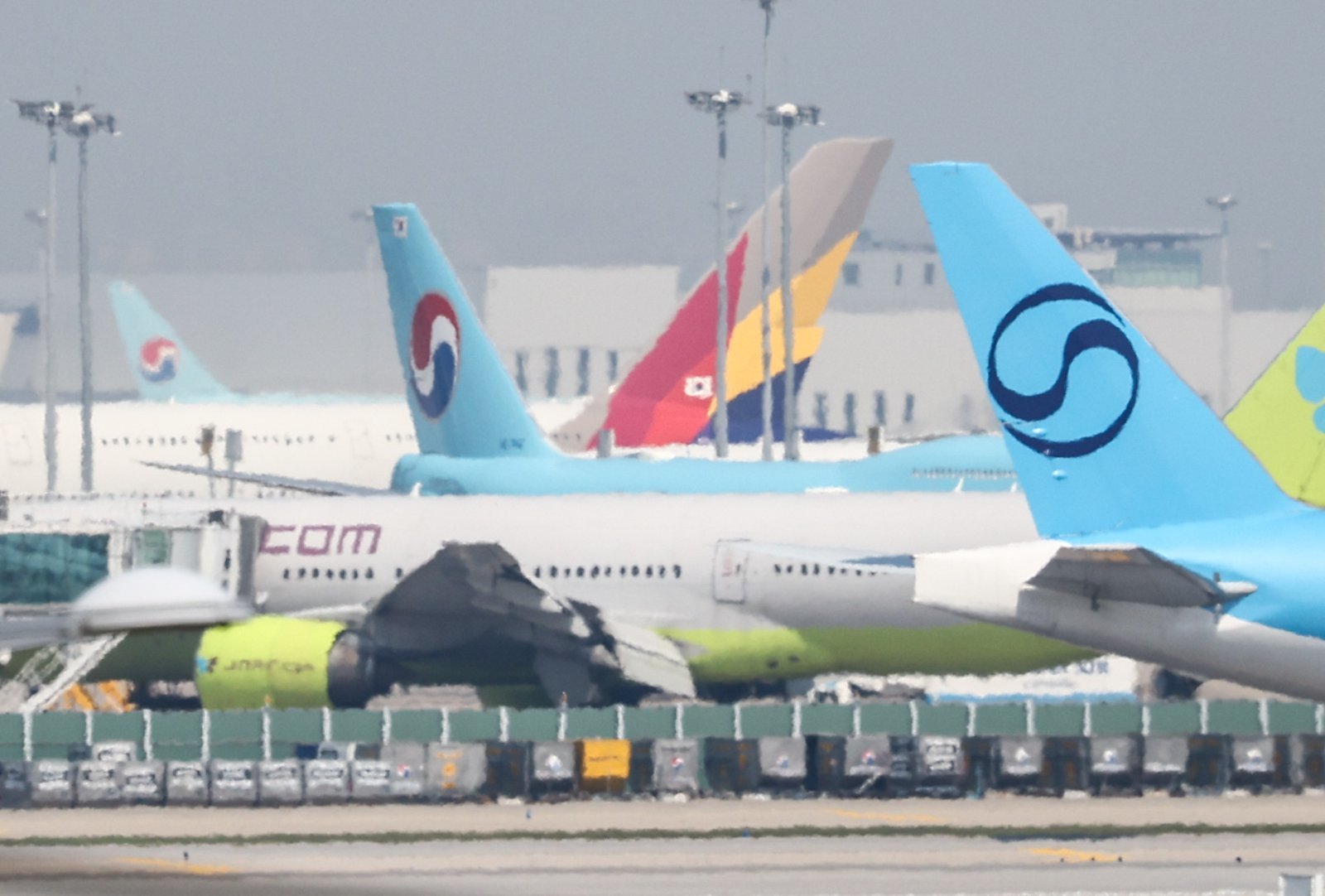
Airlines struggle despite stable oil prices due to 1,500 won exchange rate
Translated from Korean, summarized and contextualized by DistantNews.
At a glance
News
Sources not specified
Context piece
- South Korean airlines face mounting financial pressure as the won-dollar exchange rate surpasses 1,500, offsetting gains from falling oil prices.
- Major airlines are projected to incur significant operating losses in the second quarter, with only Korean Air expected to remain profitable.
- Airlines are implementing cost-saving measures, including reducing flights on less profitable routes, to navigate the challenging economic conditions.
South Korean airlines are grappling with a severe financial squeeze, even as international oil prices stabilize. The primary culprit is the soaring won-dollar exchange rate, which has breached the 1,500 mark, negating the benefits of lower fuel costs. This high exchange rate significantly increases expenses for imported necessities like jet fuel, aircraft leases, and maintenance, which are largely paid for in dollars.
Financial projections for the second quarter paint a grim picture for the industry. Five major listed airlines are expected to collectively report an operating loss of 567.5 billion won. Korean Air stands as a solitary exception, with an anticipated operating profit of 44.2 billion won. In stark contrast, Asiana Airlines faces a projected loss of 349 billion won, Jeju Air 93 billion won, T'way Air 121 billion won, and Jin Air 34.5 billion won.
In response to this dual pressure of high oil prices and a weak won, airlines are enacting emergency management measures. These include aggressively cutting flights on routes with low profitability. Korean Air initiated its emergency management protocols in April, while Asiana Airlines has temporarily suspended services on several international routes, including those to Tashkent, Phnom Penh, Sydney, and Hong Kong. Low-cost carriers (LCCs), with their weaker financial foundations, are prioritizing cost reduction above all else. T'way Air has already reduced flights on routes to Frankfurt, Barcelona, and Rome, which it inherited during the Korean Air-Asiana Airlines merger process. Air Premia, operating routes to the Americas, has also cut flights following the Middle East conflict. Even new airline Fly Air has seen its CEO forgo his salary entirely.
Industry insiders note that while overall passenger demand remains robust, successfully managing the impact of the high exchange rate will be critical for financial survival. The average exchange rate in the second quarter reached 1,501.64 won per dollar, the highest since the first quarter of 1998, immediately after the Asian financial crisis.
Passenger demand itself is maintaining a solid trend, but responding to the high exchange rate in the 1,500 won range will determine the success of defending profits.
DistantNews Editorial
Originally published by Dong-A Ilbo in Korean. Translated, summarized, and contextualized by our editorial team with added local perspective. Read our editorial standards.
More Stories



From Our Blog

What Gets Lost (and Found) When News Is Translated

The Critical Role of Diaspora Media in Global News

What Travellers Should Know About Countries with Restricted Press

A Digital Nomad's Guide to Following Local News

How the Same Story Looks Different in Different Countries
