


Airtightness and water resistance in nZEB constructions: what is changing in carpentry
Translated from Romanian, summarized and contextualized by DistantNews.
At a glance
News
Sources not specified
Context piece
- Romania is adopting Nearly Zero Energy Building (nZEB) standards, fundamentally changing building envelope construction.
- The seal between carpentry and masonry is now a critical project point, impacting pressure tests and actual energy performance.
- Traditional sealing methods using PU foam and liquid sealants have limitations, leading to the adoption of self-adhesive tapes.
Romania's construction sector is undergoing a significant shift with the adoption of Nearly Zero Energy Building (nZEB) standards. This transition fundamentally alters how building envelopes are constructed, placing critical importance on previously overlooked details like the seal between carpentry and masonry.
This joint is no longer a mere finishing detail; it has become a critical project point. The quality of its sealing directly influences the success of blower door tests and the building's real-world energy performance, moving beyond theoretical calculations on paper. Traditional methods, often involving a combination of polyurethane foam and liquid sealants like silicone or acrylic, are proving inadequate.
These classic sealing solutions face three recurring technical limitations under nZEB requirements. Firstly, while PU foam offers good thermal insulation, its porous structure does not completely block air passage, potentially leading to micro-convection currents over time that reduce insulation efficiency. Secondly, the differing thermal expansion behaviors of materials like PVC, aluminum, or wood in carpentry compared to masonry are not fully accommodated by liquid sealants, which have limited capacity to absorb these movements. Even a small crack can compromise the entire sealing barrier. Lastly, these liquid sealants degrade over time due to UV radiation and humidity cycles, leading to a loss of airtightness and water infiltration.
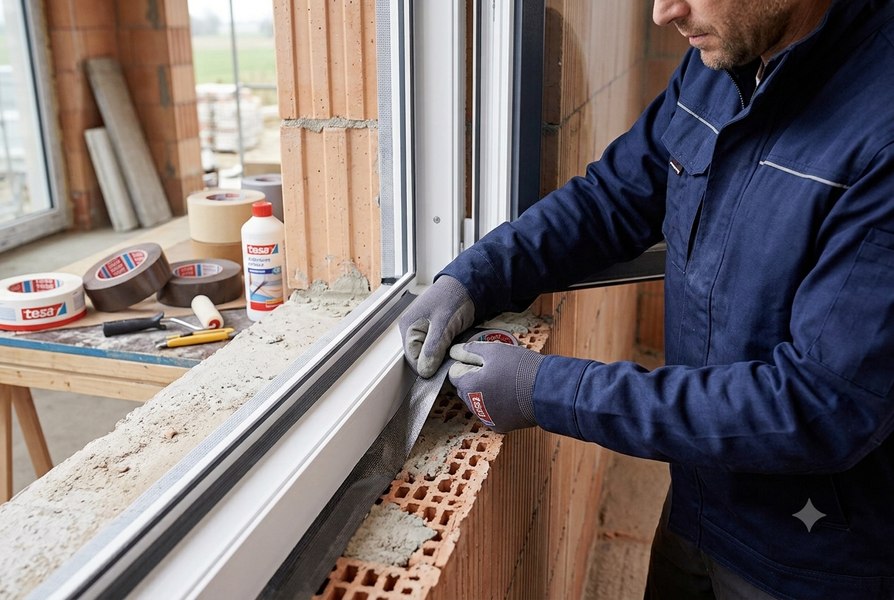
In response, the industry is increasingly turning to self-adhesive foils and tapes specifically designed for sealing. These technical alternatives, including the tesa® range, operate on a principle of controlled vapor migration. Their advantages are measurable: they offer directionally regulated Sd values, being more airtight internally and more permeable externally to allow the joint to 'breathe' without internal condensation. They provide a constant thickness regardless of the installer, unlike manually applied liquid sealants. Furthermore, modern adhesives ensure reliable adhesion to various substrates like concrete, brick, metal, and wood, without the drying times that can slow down construction site progress.
DistantNews Editorial
Originally published by Adevărul in Romanian. Translated, summarized, and contextualized by our editorial team with added local perspective. Read our editorial standards.
More Stories



From Our Blog

What Gets Lost (and Found) When News Is Translated

The Critical Role of Diaspora Media in Global News

What Travellers Should Know About Countries with Restricted Press

A Digital Nomad's Guide to Following Local News

How the Same Story Looks Different in Different Countries
