


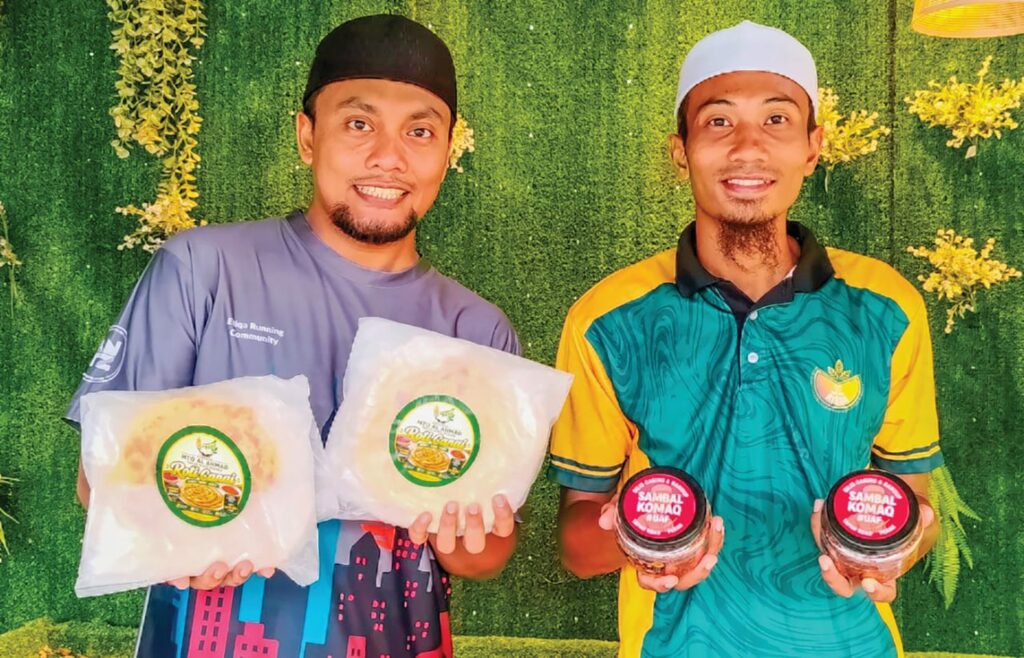
Al-Ahmad Tahfiz school showcases self-reliance, not dependent on donations
Translated from Malay, summarized and contextualized by DistantNews.
At a glance
News
Named sources
Context piece
- Maahad Tahfiz Al-Ahmad, a private Islamic school in Malaysia, operates independently by diversifying income streams beyond donations and tuition fees.
- The school established a cooperative in 2024, engaging students and staff in various agricultural projects, livestock farming, and producing downstream products.
- These initiatives generate significant income, support the school's operations, provide food for students, and equip them with vocational skills for future entrepreneurship.
Maahad Tahfiz Al-Ahmad, a private Islamic religious school in Tapah, Malaysia, is forging a path of self-sufficiency by diversifying its revenue streams. Rather than relying solely on donations and tuition fees, the institution has implemented a strategic approach to generate consistent income through various business ventures.
Founded by Ahmad Firdaus Mohd. Mazlan Kushari, the school established a cooperative in 2024, involving students, teachers, and their families as members. This cooperative has spearheaded diverse projects, including premium quality golden melon cultivation for the entire Peninsular Malaysia, lemongrass farming, and napier grass cultivation for livestock feed. These agricultural endeavors form a crucial part of the school's economic ecosystem.
Alhamdulillah, since 2024 we have undertaken various agricultural projects, livestock farming, and produced downstream products to generate income consistently.
In addition to farming, the school engages in livestock farming, raising cattle and sheep, which are in high demand, particularly during the Hari Raya Aidiladha festival and for 'aqiqah ceremonies. The produce from these ventures not only supports the tahfiz school's operational costs but also serves as a food source for the students. The school has also introduced downstream products such as crispy anchovy sambal, frozen roti canai, ice cream, and golden melon juice, further broadening its product range and revenue.
The cooperative's combined business activities generate a substantial gross income, reportedly reaching five figures monthly. Spanning approximately 4.04 hectares, these projects align with the state's food security policies. More importantly, they provide students with practical Technical and Vocational Education and Training (TVET) in agriculture and animal husbandry. The aim is to equip graduates not only with religious knowledge but also with the skills to become high-earning professionals and entrepreneurs, capable of contributing significantly to the state's economy. The school also provides full financial support for underprivileged students, enabling them to improve their families' economic standing.
It forms an ecosystem that supports each other, where sales revenue is for the tahfiz's operational continuity and also a food source for the students themselves.
DistantNews Editorial
Originally published by Utusan Malaysia in Malay. Translated, summarized, and contextualized by our editorial team with added local perspective. Read our editorial standards.
More Stories



From Our Blog

What Gets Lost (and Found) When News Is Translated

The Critical Role of Diaspora Media in Global News

What Travellers Should Know About Countries with Restricted Press

A Digital Nomad's Guide to Following Local News

How the Same Story Looks Different in Different Countries
