


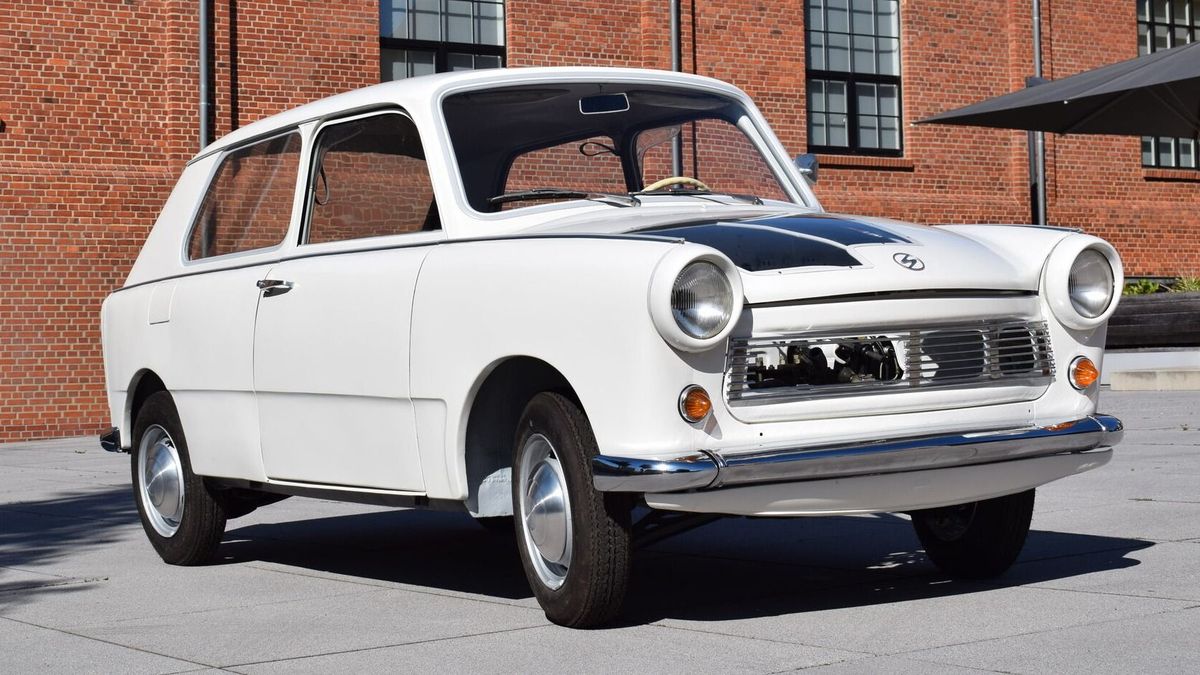

Aladdin and the Škoda headlamp: The story of one of the last Comecon cars
Translated from Hungarian and summarized by DistantNews. Read the original for the full story.
At a glance
In-depth
Sources not specified
Context piece
- Škoda developed the Favorit as a major break from its older rear-engine models, combining a Bertone-designed body with a heavily revised 1.3-liter OHV engine.
- Engineers tested the car in a Mazda 323 body and worked with Porsche and Volkswagen during development.
- Volkswagen’s positive assessment helped pave the way for its acquisition of the privatized Škoda in 1990-91.
Perhaps even the humor band that inspired its name could not have imagined an actual Czechoslovak headlamp landing on the desk of an Italian design wizard. Yet that is part of the unlikely story of the Škoda Favorit, a car that opened a new era for the company and ultimately helped save the brand.
The design came from Bertone’s studio in Turin, while engineers in Mladá Boleslav developed the technical package. At 3.81 meters long, the Favorit sat between the second-generation Volkswagen Polo and Golf in size. The conservative but appealing body marked a decisive departure from Škoda’s older rear-engine models.
Time and money ruled out a new engine family, so engineer Petr Hrdlička and his team reworked the outdated OHV unit from the rear-engine cars. The 1.3-liter engine produced 54 to 63 horsepower and received an aluminum cylinder head and a Pierburg-licensed carburetor. It also had to run on unleaded fuel and meet newer emissions standards for planned Western exports. A catalytic converter cost extra, while a five-speed gearbox came as standard.
The engineers tested the engine, transmission and suspension inside a Mazda 323 body on the Grossglockner Pass. Later, camouflaged Favorit prototypes appeared on Western European roads. Two cars spent extended periods in West Germany. Porsche engineers refined one, while Volkswagen examined the other and installed a German engine at the Czech team’s request. Volkswagen found the model surprisingly modern, despite its arrival from behind the Iron Curtain, and that assessment helped lead to the company’s purchase of Škoda in 1990-91.
In September 1987, Nuccio Bertone and his Italian design team presented the full range to political and economic decision-makers in secret at an ice arena in Mladá Boleslav. The lineup included a five-door Favorit, a three-door coupe, a four-door notchback and the Forman estate. Only the basic Favorit, the similarly styled Forman and the practical Pickup entered production. The Favorit was briefly sold in both West and East Germany, and its concept proved successful through 1994.
About this summary
Originally published by Magyar Nemzet in Hungarian. Translated, summarized, and contextualized automatically by DistantNews, with a note on how the source frames the story. Not individually reviewed before publishing. How this works.
More Stories
From Our Blog

Countries Without a Free Press: The 2026 List and What It Means for Readers

What Press Freedom Means for the News You Read

News in Translation: What Gets Lost, and How We Keep the Framing

Diaspora Media: How Communities Follow News From Home

Traveling Where the Press Is Not Free: How to Read the News There
