

Alcohol ban benefits street vendors, hurts local businesses: Mexico City chamber
Translated from Spanish, summarized and contextualized by DistantNews.
At a glance
News
Sources not specified
Context piece
- The restriction of alcohol sales during the Mexican National Team's recent match negatively impacted local businesses, according to the small business chamber (Canacope).
- The informal alcohol market thrived under the ban, with street vendors selling at inflated prices and capturing revenue the state would have otherwise received.
- Restaurant and food industry representatives noted that economic expectations for the World Cup have not been met, with a significant decrease in expected visitors.
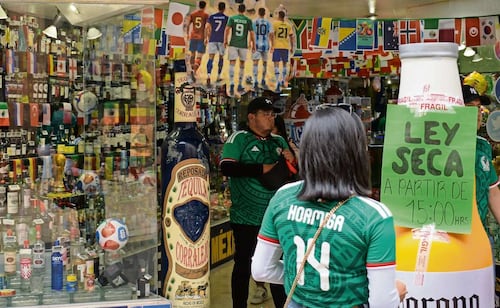
Alcohol sales restrictions during the Mexican National Team's recent match had an unintended consequence: they subsidized illegal street vendors, according to Ada Irma Cruz Davalillo, president of the Chamber of Commerce, Services, and Small Tourism (Canacope).
That is the effect of a dry law that ended up subsidizing illegal commerce. By declaring the restriction, the Government did not remove the informal commerce competitors; on the contrary, it left the field open for street vendors to set prices up to 100% above a regular cost and took all the revenue without any consequence.
Cruz Davalillo explained that the ban in the historic center and areas around the Angel de la Independencia and Monumento a la Revolución did not remove informal competitors. Instead, it created an open market for street vendors who could charge prices up to 100% higher than usual, capturing all the economic benefit without any repercussions.
She estimated that the state lost between 22.2 and 40.5 million pesos in potential revenue from the informal alcohol sales on June 30 alone. "That an operation is carried out that does not allow indiscriminate (alcohol) sales and that the informal vendors take all the profits," she added.
That an operation is carried out that does not allow indiscriminate (alcohol) sales and that the informal vendors take all the profits.
Jack Sourasky, president of the National Chamber of the Restaurant and Seasoned Food Industry (Canirac) in Mexico City, expressed disappointment with the economic impact of the World Cup. He stated that initial positive projections have not materialized, and the industry has experienced a decline in the first half of the year.
The industry has suffered in this first semester, as there has been a decrease and we do not see the expected growth.
Sourasky noted that the World Cup is a lengthy tournament, and Mexico City has only hosted five matches. The city had anticipated 5.5 million visitors, but has only seen around 800,000 so far, falling far short of expectations.
It is a very long World Cup and only five matches were held in Mexico City. We expected to have 5.5 million visitors and today we have around 800,000 people.
DistantNews Editorial
Originally published by El Universal in Spanish. Translated, summarized, and contextualized by our editorial team with added local perspective. Read our editorial standards.
More Stories

From Our Blog

What Press Freedom Means for the News You Read

What Gets Lost (and Found) When News Is Translated

The Critical Role of Diaspora Media in Global News

What Travellers Should Know About Countries with Restricted Press

A Digital Nomad's Guide to Following Local News
