


Alert on Greece's beaches for purple jellyfish: Where they are found and what to do if stung – MAP
Translated from Greek, summarized and contextualized by DistantNews.
At a glance
News
Sources not specified
Context piece
- Purple jellyfish are increasingly appearing along Greece's coasts, particularly in Evia and Fthiotida.
- An interactive map from 'iNaturalist' shows sightings across nearly all of Greece's shores, with data collected from online reports and social media.
- The jellyfish, Pelagia noctiluca, have a potent sting; advice is given on first aid, including rinsing with seawater and applying cold compresses.
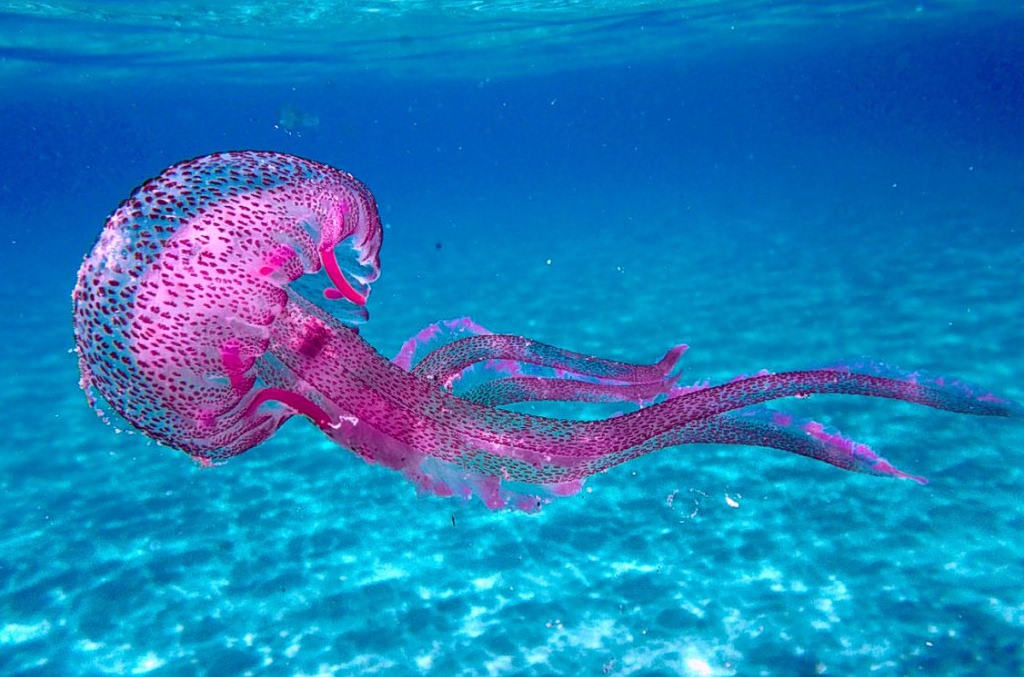
An alert has been issued for Greece's beaches due to a significant increase in sightings of purple jellyfish. These marine creatures, identified as Pelagia noctiluca, are causing concern as their presence becomes more frequent, especially along the coasts of Evia and Fthiotida, including areas like Chalkida, Arkitsa, and Drosia, as well as parts of the Pagasetic Gulf.
An interactive map maintained by 'iNaturalist,' supplemented by data from social media groups like 'Jellyfish in Greece,' illustrates the widespread nature of the phenomenon. Sightings are escalating across nearly every coastline in the country, highlighting a growing ecological concern.
The purple jellyfish are distinctive with their pink to lilac coloration, a dome-shaped bell, and prominent oral arms. Their sting is known to be strong and painful, necessitating caution. The Hellenic National Public Health Organization (EODY) identifies Pelagia noctiluca as the sole officially recognized species in its genus, noting its bioluminescent capabilities and global presence in tropical and temperate seas.
In the event of a sting, it is crucial to remove any attached tentacles without using bare hands. The affected area should be rinsed thoroughly with seawater, avoiding fresh water, which can activate remaining stinging cells. Applying ice or cold compresses can help manage local symptoms, and cortisone cream may reduce inflammation and itching. Antihistamines can address systemic symptoms, but severe or persistent reactions may require medical attention, including a potential cortisone injection at a hospital or health center.
DistantNews Editorial
Originally published by Ta Nea in Greek. Translated, summarized, and contextualized by our editorial team with added local perspective. Read our editorial standards.
More Stories



From Our Blog

What Gets Lost (and Found) When News Is Translated

The Critical Role of Diaspora Media in Global News

What Travellers Should Know About Countries with Restricted Press

A Digital Nomad's Guide to Following Local News

How the Same Story Looks Different in Different Countries
