


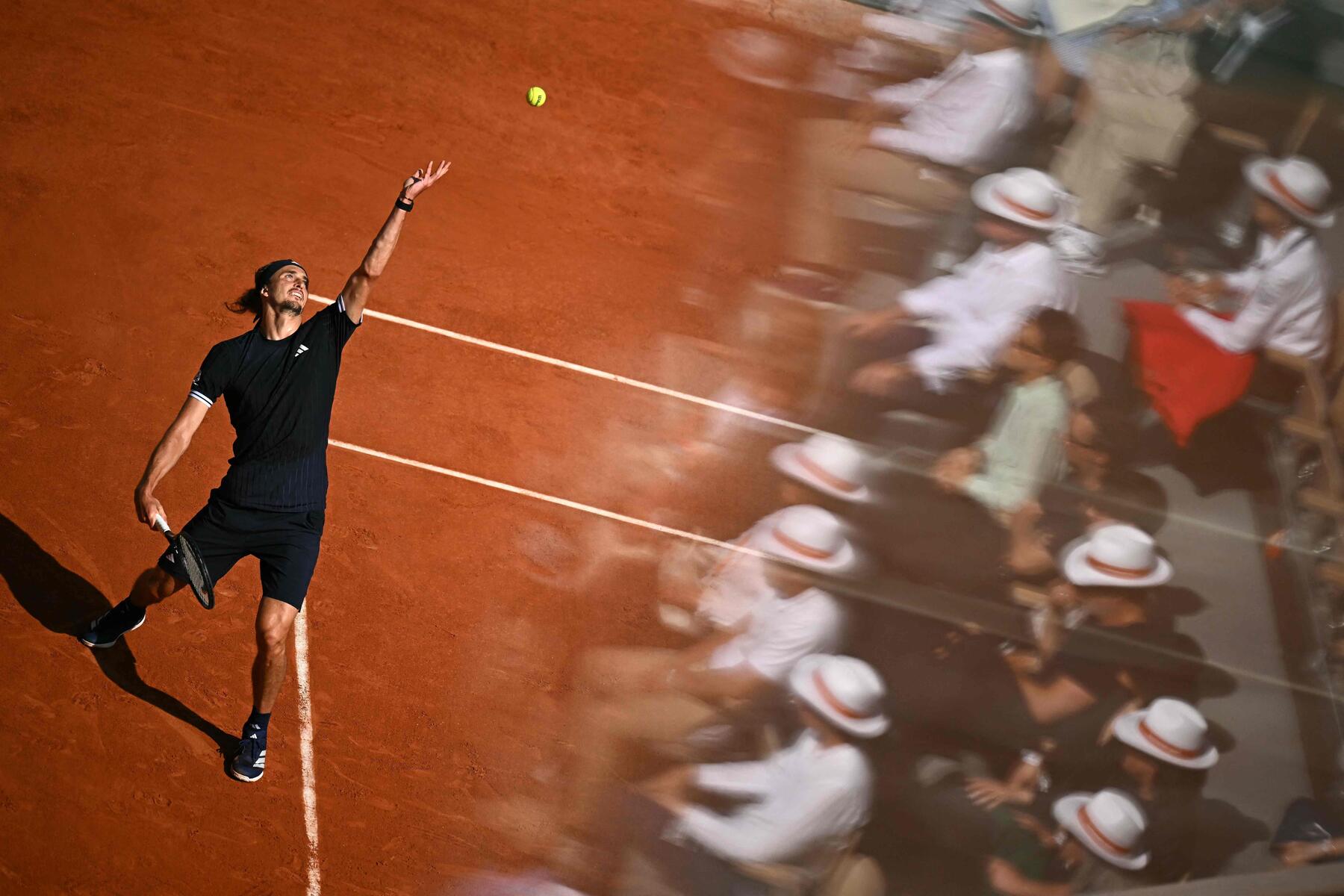
Alexander Zverev and the Final Match Point of an Exceptional Tournament
Translated from German, summarized and contextualized by DistantNews.
At a glance
Analysis
Sources not specified
Outcome reported
- The 2026 French Open is being called one of the most unusual Grand Slam tournaments in recent history due to unexpected winners and early exits of top seeds.
- For the first time in 49 years, no previous major champion reached the semifinals of any Grand Slam event this year.
- Extreme heat significantly impacted player performance, contributing to upsets and physical struggles for many top contenders.
The 2026 French Open is etching itself into Grand Slam history as an exceptionally unpredictable tournament, marked by the emergence of new champions like Mirra Andreeva and Alexander Zverev, and a significant departure from traditional seeding. For the first time in nearly five decades, none of the year's major champions managed to reach the semifinals of any Grand Slam event.
Extreme heat, with temperatures exceeding 30 degrees Celsius throughout the first week, played a pivotal role. The conditions made it difficult for players to maintain composure, and the courts required constant watering, leading to higher ball bounces and faster play. This shift in conditions proved challenging for many.
Several top players struggled with the heat and altered court conditions. Jakub Menšík, despite reaching the semifinals, was visibly affected by the heat. Two-time finalist Casper Ruud was nearly a victim in the first round and never fully recovered. Australian Open champion Elena Rybakina also failed to adapt, leading to an early exit.
The tournament saw shocking early departures, including world No. 1 Jannik Sinner, who lost in the second round despite a strong winning streak. Novak Djokovic also faltered, unable to convert a two-set lead against rising star João Fonseca, citing physical issues. Aryna Sabalenka experienced a dramatic collapse in her quarterfinal match, losing 13 of the next 14 games after leading comfortably, admitting to a deep mental struggle.
DistantNews Editorial
Originally published by Die Presse in German. Translated, summarized, and contextualized by our editorial team with added local perspective. Read our editorial standards.
More Stories



From Our Blog

What Gets Lost (and Found) When News Is Translated

The Critical Role of Diaspora Media in Global News

What Travellers Should Know About Countries with Restricted Press

A Digital Nomad's Guide to Following Local News

How the Same Story Looks Different in Different Countries
